







Gothic Revival Monks Bench
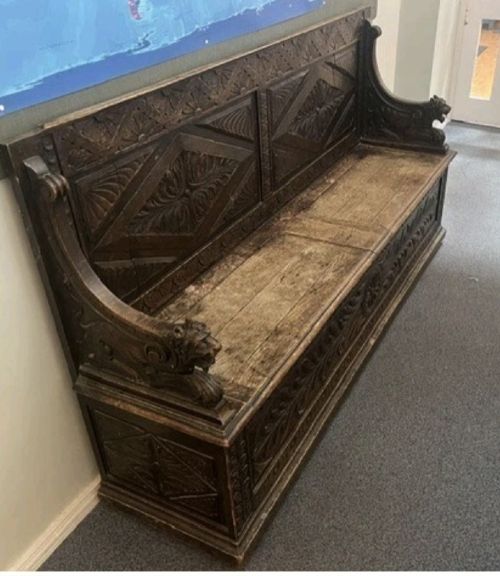
These gothic revival monks bench examples bring robust timber and pointed architecture straight into a hallway, offering sturdy seating with hidden storage.

Gothic Revival Monks Bench
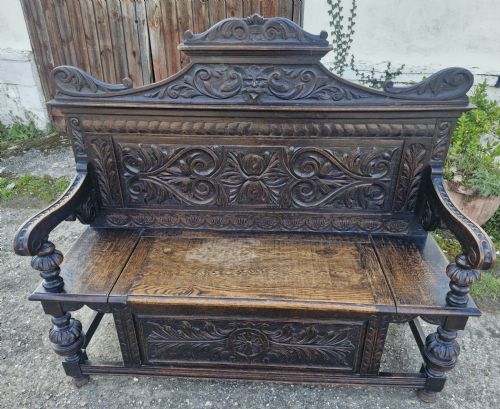
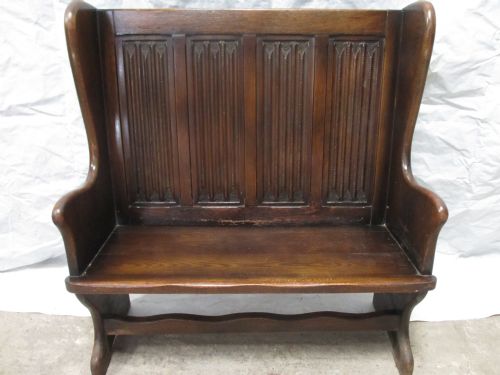
A gothic revival monks bench combines the practical seating of a hall seat with architectural motifs drawn from medieval stone buildings. These pieces appear most frequently as heavy timber settles and hall benches bearing carved panels and high backs.
The versions met on this page date predominantly from the Victorian period through to the early twentieth century. Makers drew inspiration from Jacobean, Renaissance, and baronial styles to create imposing hall furniture for domestic interiors.
How they were made
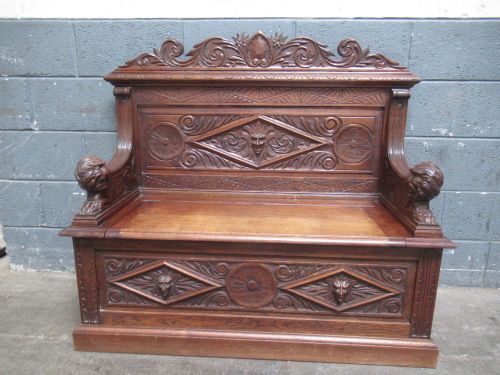
Carpenters relied primarily on solid oak and dark walnut, shaping thick timber planks into robust frames and high backs. Surfaces received deep hand-carving to render intricate panels, foliage, and figurative elements like the Green Man.
Functional hardware played a practical role in construction, utilising brass and iron for hinges on lift-up seats and storage compartments. Leather and fabric sometimes appeared as upholstery elements within the seating structure.
Gothic Revival Monks Bench Retail Price Guide 2026
Typical asking prices for gothic revival monks bench among the pieces listed under this phrase on Sellingantiques today, from the lower quarter to the upper quarter. They describe what is for sale here now, not the wider market.
Watch closely for the Green Man peering out from the foliage, keeping a watchful wooden eye on the hallway.
What varies in quality
The depth and execution of the hand-carving separate standard pieces from superior examples. Master carvers produced crisp relief work on panels and arm supports, whereas lesser pieces display shallow or mechanical tooling.
Timber selection and structural mass dictate the presence of a piece. Dense solid oak with balanced proportions and integrated storage mechanisms denotes a higher grade of workshop production.
The Gothic Revival Monks Bench Glossary
- Settle
- A wooden bench with a high back, solid arms, and enclosed base often used to block drafts in hallways. These forms provide ample space for decorative carving.
- Green Man
- A sculptural motif showing a human face surrounded by or sprouting foliage, frequently appearing in architectural woodcarving. This ancient symbol represents rebirth and spring.
- Jacobean Revival
- A nineteenth-century design style mimicking the heavy, geometric, and sombre furniture of the early seventeenth century. Pieces in this manner feature rectilinear panels and turned supports.
- Baronial
- A style descriptor denoting large, imposing furniture intended to evoke the grand scale of a medieval hall. Such objects typically incorporate heavy cornices and heraldic motifs.
Gothic Revival Monks Bench: Frequently Asked Questions
Where did people put a monks bench?
These benches traditionally stood in entrance halls and reception rooms where visitors arrived. They served as a prominent statement piece just inside the front door.
The enclosed seat also provided a practical place to store outer garments, hats, and walking sticks out of sight.
How do I date a carved oak settle?
Dating relies on examining the timber preparation, tool marks, and stylistic revival cues present in the woodwork. Victorian and later revival pieces often mix gothic motifs with nineteenth-century construction methods.
Hardware such as iron hinges and brass fittings also offer clues regarding the manufacturing period of the piece.
Are these benches comfortable for sitting?
Most examples feature upright wooden backs and solid timber seats designed for formal posture rather than lounging. They functioned primarily as sturdy hall furniture.
Owners sometimes added loose cushions or pads to soften the wooden surface during extended use.
What is the lift-up seat used for?
The hinged seat opens to reveal a concealed compartment box within the base of the bench. This cavity provided handy storage space for household items.
In period homes, families used this compartment to keep blankets, rugs, and heavy winter accessories close to the entrance.