

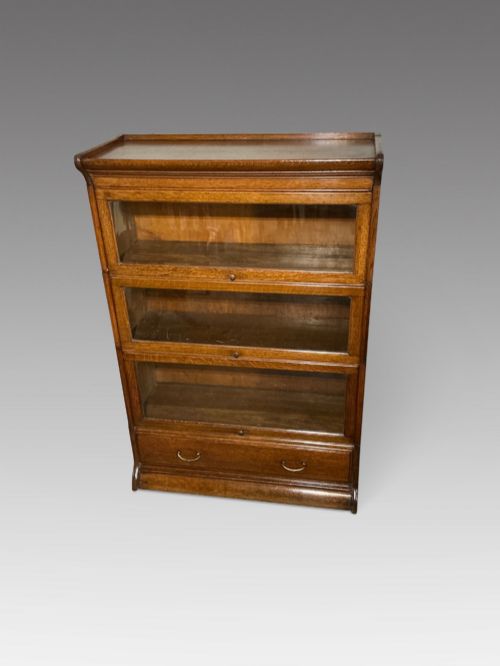
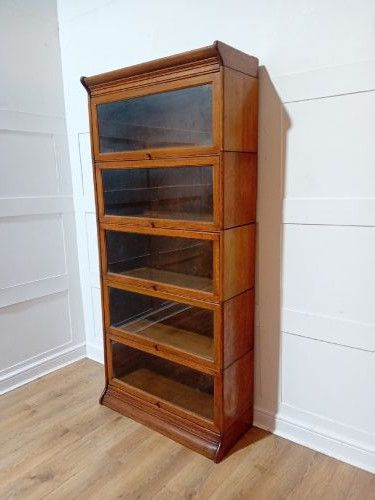
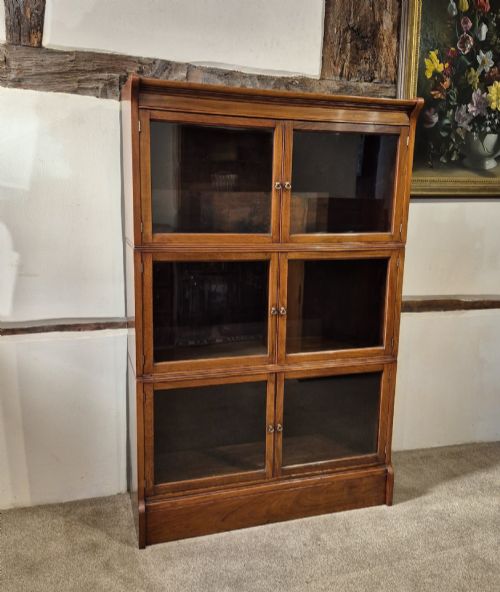
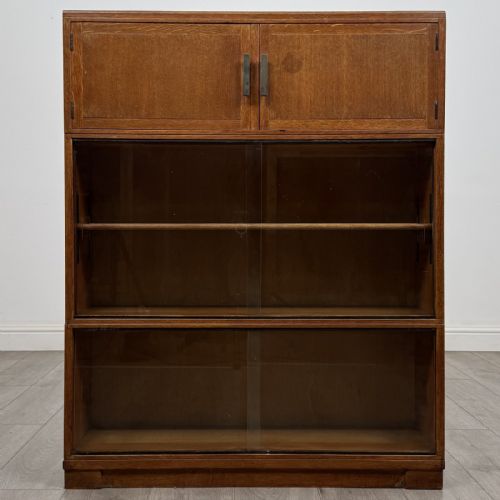
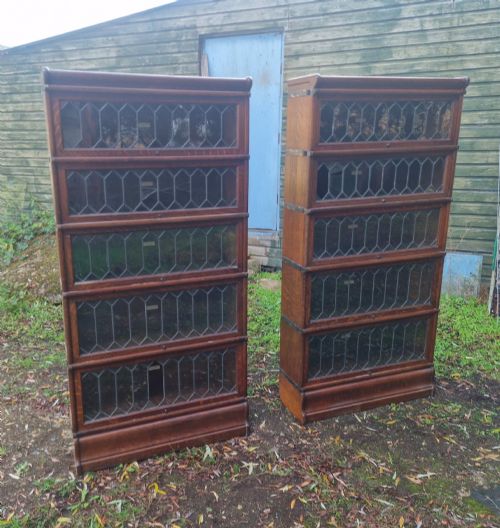
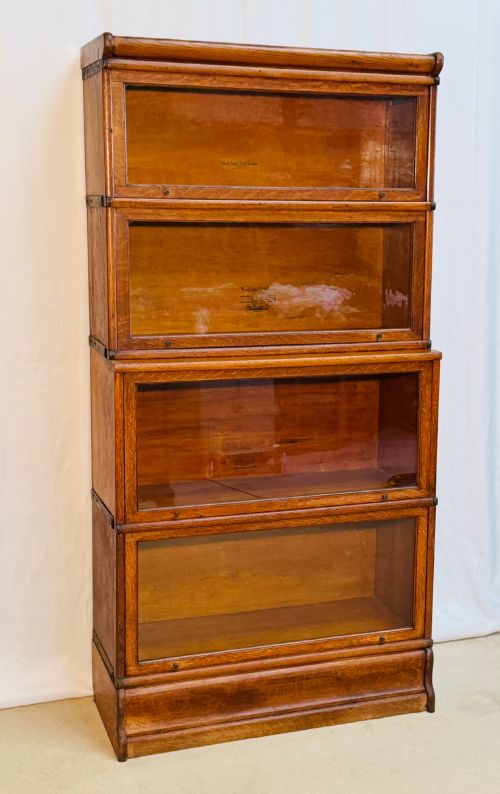
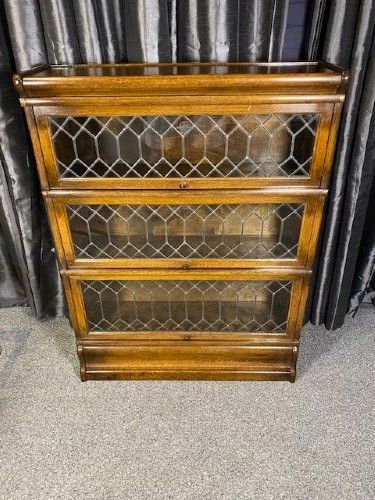
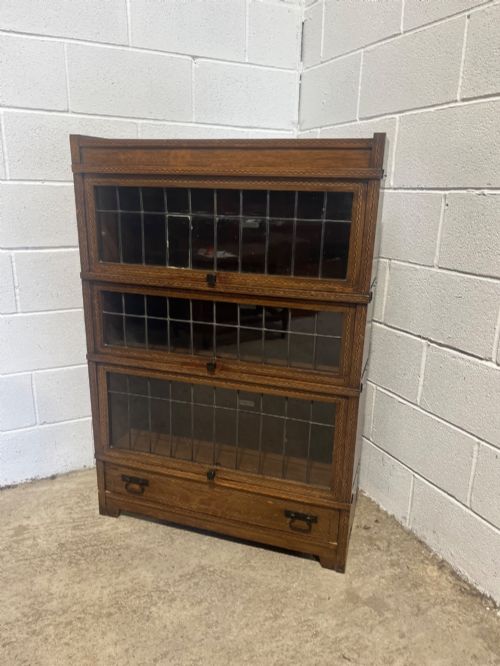
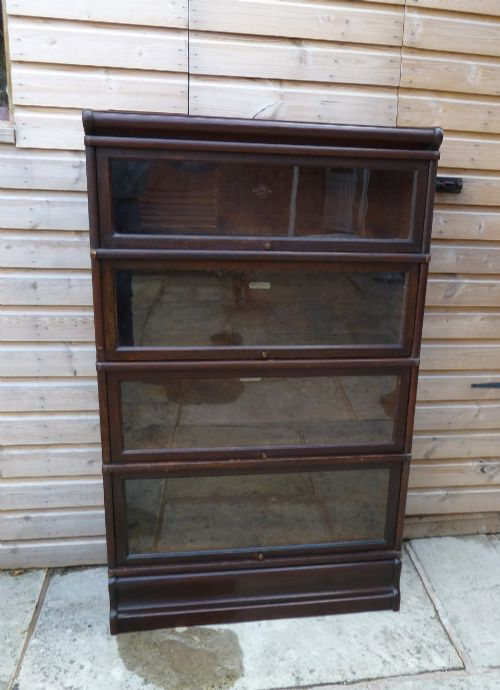
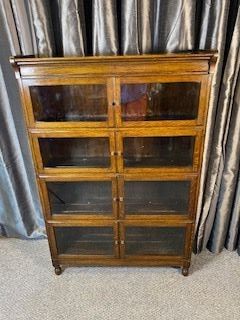
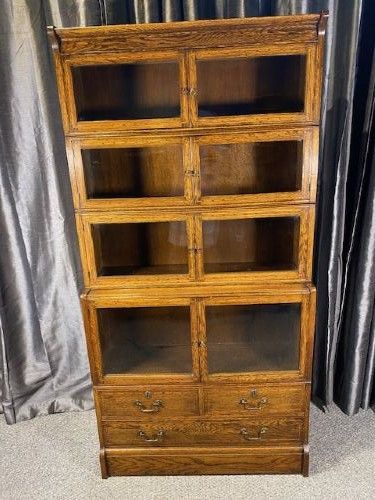
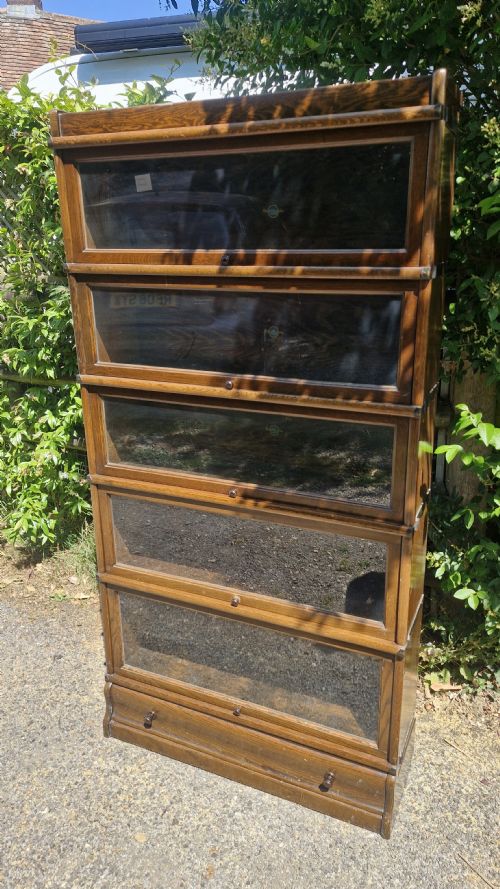
Oak Glazed Stacking Bookcase
An oak glazed stacking bookcase offers modular shelving with glass lift-up doors, designed to protect volumes while fitting flexibly into domestic spaces.
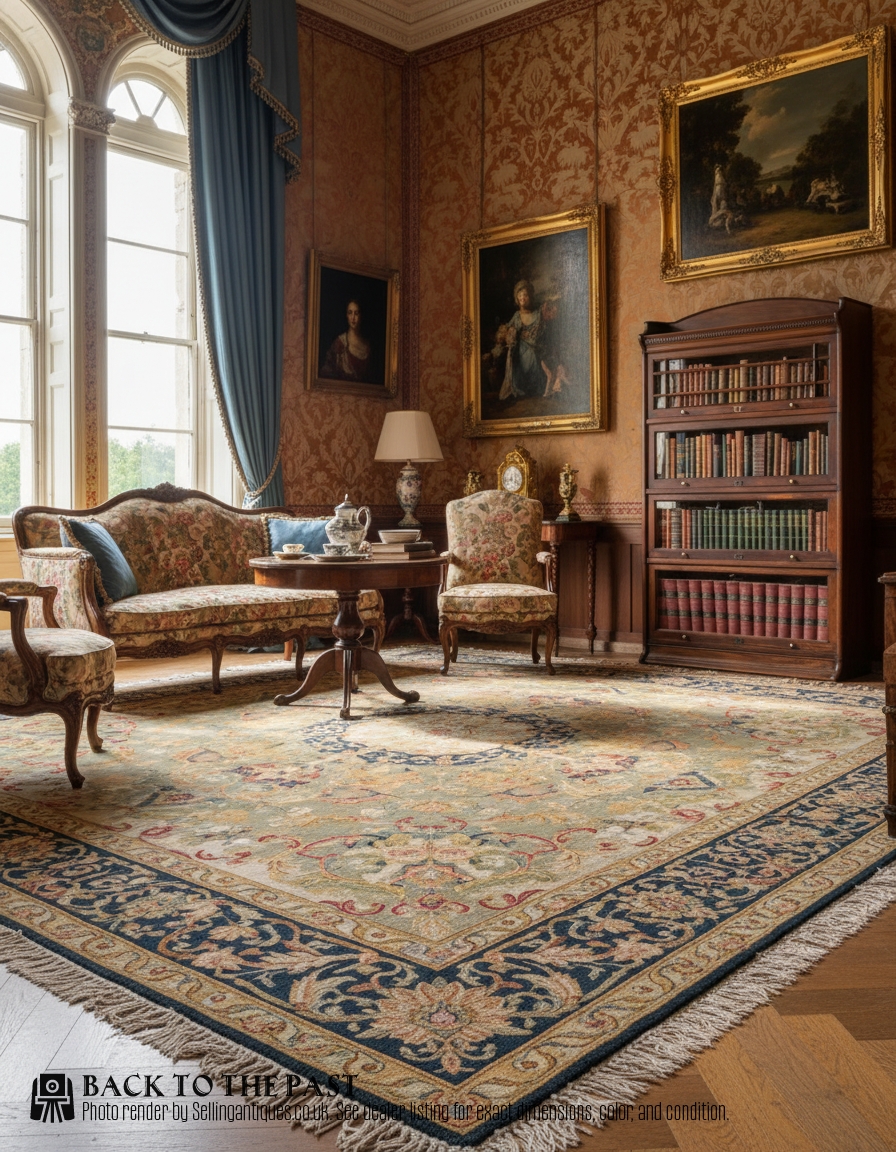
Oak Glazed Stacking Bookcase
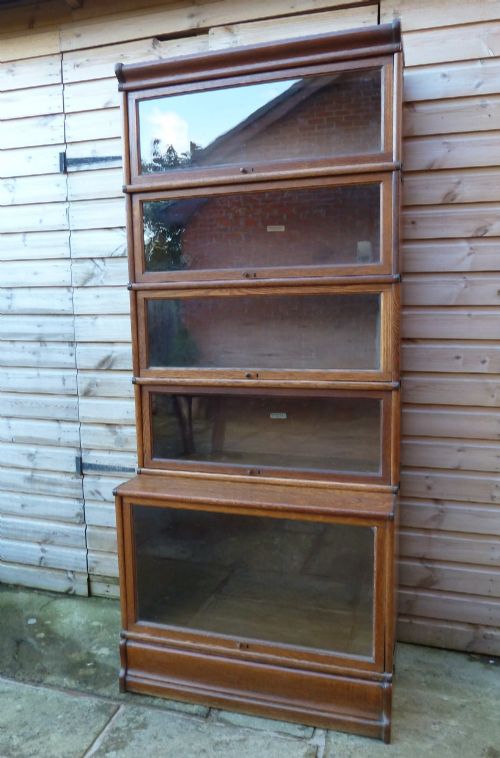
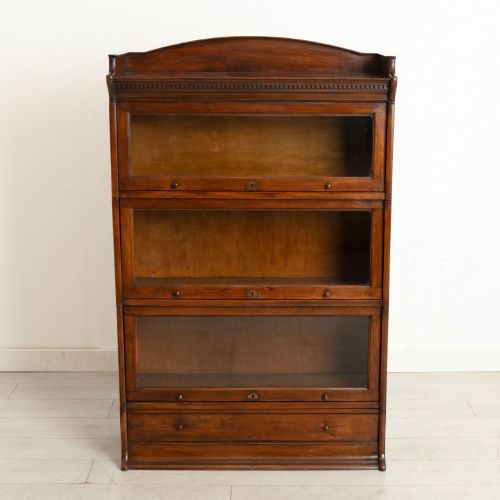
An oak glazed stacking bookcase provides modular storage through individual tier sections that sit one upon another without fixed structural joints. These sectional bookcases appear across Edwardian, 1900, 1910, 1920, 1930 and 1950 periods, reflecting sustained demand for practical home libraries.
Makers such as Globe Wernicke, Lebus, Minty, Gunn, Heals and Warwick dominate the selection. Buyers regularly encounter multi-tier cabinets featuring leaded glass panes or plain glass panels housed in solid oak frames.
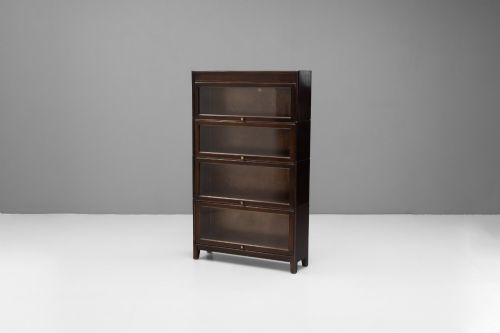
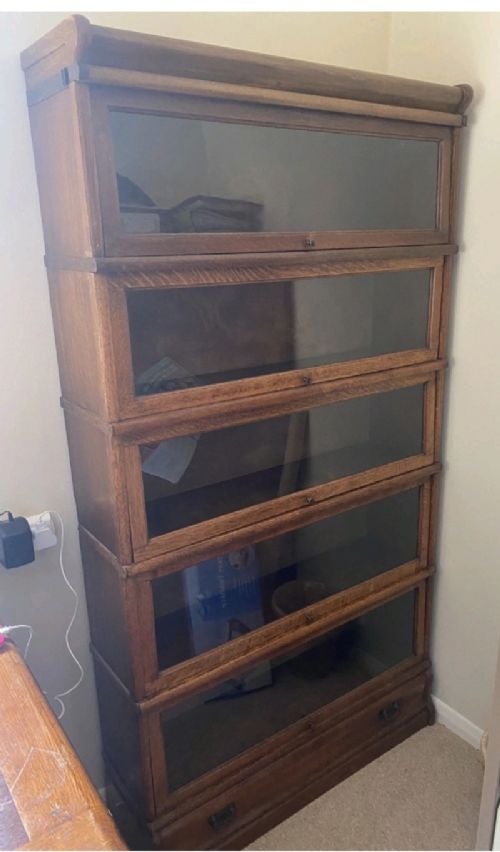
The form adapts easily from narrow three-section towers to tall four-section or six-section arrangements with supplementary storage drawers at the base. Arts and Crafts and Art Deco influences occasionally shape the overall aesthetic and handle design.
Materials and construction
Construction relies upon solid oak and golden oak timbers, sometimes enhanced with subtle wood inlay to accent the exterior framing. Individual tier units incorporate internal mechanisms that allow glazed doors to lift and slide smoothly into the recess above each shelf.
Brass hardware appears on drawer pulls and connecting brackets, while lead cames hold individual panes together in leaded glazed variations. Metal components secure the modular sections together safely while allowing disassembly for transport.
Oak Glazed Stacking Bookcase Retail Price Guide 2026
Typical asking prices for oak glazed stacking bookcase among the pieces listed under this phrase on Sellingantiques today, from the lower quarter to the upper quarter. They describe what is for sale here now, not the wider market.
Some barristers utilised these stacking cases so they could pack up their entire library into manageable boxes when travelling between court sessions.
Distinctions in quality
Quality rests upon the precision of the modular fit between individual tiers and the smoothness of the door action. Superior examples maintain crisp timber grain without excessive distortion, ensuring that each glazed section operates independently without binding.
The presence of maker stamps from established firms like Globe Wernicke or Minty distinguishes standard modular shelving from fully branded workshop pieces. Original glass panes, intact leadwork and matching timber patination across all tiers separate harmonious assemblies from mismatched sections.
Globe Wernicke·Lebus·Minty·Gunn·Heals·Warwick
The Oak Glazed Stacking Bookcase Glossary
- Sectional bookcase
- A modular piece of furniture built from separate stacking tiers that can be arranged or moved independently. Each tier contains its own shelf and door.
- Globe Wernicke
- A prominent manufacturing style and brand name associated with modular barrister bookcases. Their patented mechanical system revolutionised office and home library storage.
- Leaded glass
- Windowpanes assembled from smaller glass segments joined together by lead cames. This technique adds decorative geometric patterns to cabinet doors.
- Barrister bookcase
- A tall cabinet specifically designed with glass-fronted lifting doors to protect law books from dust in professional chambers.
- Limed oak
- A wood finishing technique that fills the grain with a whitish pigment to create a lighter, pale appearance. This finish appears on later twentieth-century interpretations.
Oak Glazed Stacking Bookcase: Frequently Asked Questions
How do stacking bookcase sections stay together?
Individual sections sit securely upon one another using simple gravity, locating pins, or side-locking brackets that prevent sliding.
The modular design allows owners to add or remove tiers depending on library size without dismantling the primary structure.
Can these bookcases be separated into individual tiers?
Yes, the defining characteristic of a sectional bookcase is that each tier lifts off independently from the base and top cornice.
This makes moving and rearranging tall cabinets significantly easier than handling a single solid piece of furniture.
What is the difference between standard glass and leaded doors?
Standard glass doors consist of a single clear pane within an oak frame, offering an unobstructed view of book spines inside.
Leaded doors divide the glass into smaller geometric segments using lead cames, adding a decorative Arts and Crafts aesthetic to the cabinet.
How should I clean and maintain antique oak?
Dust the timber regularly with a soft, dry cloth and apply a traditional beeswax polish sparingly to nourish the grain.
Avoid placing modular cabinets near direct heat sources or damp environments to prevent the oak from warping and the door mechanisms from binding.