
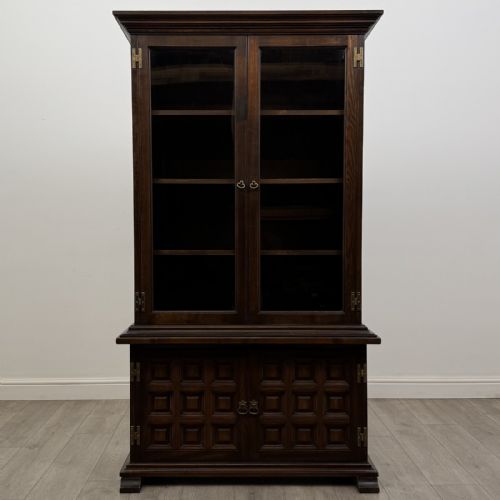
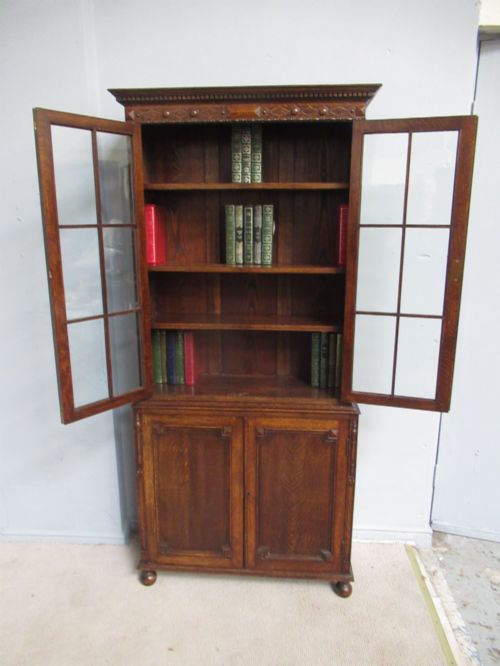
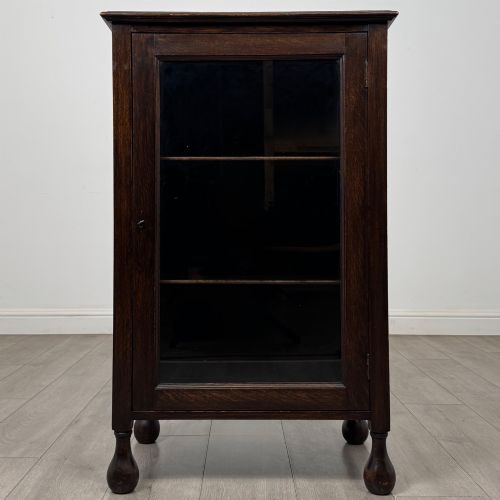
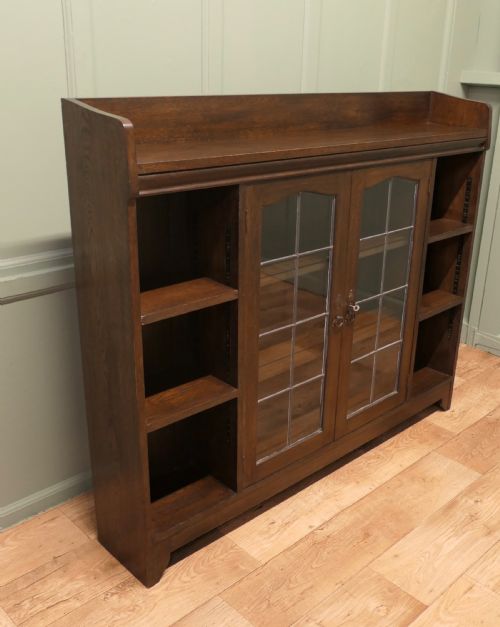
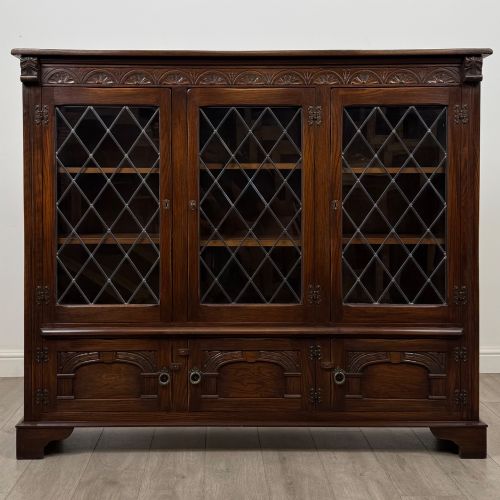
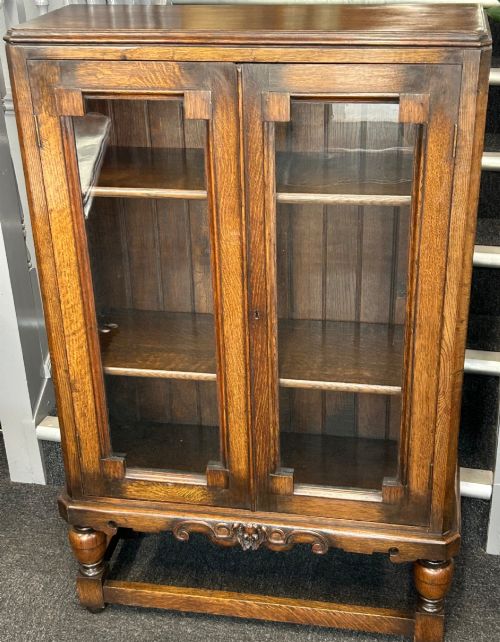
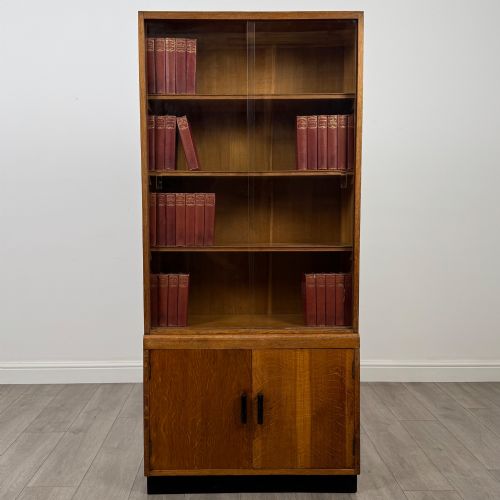

Oak Glass Door Cabinet
An oak glass door cabinet provides solid timber structure and transparent shelving to display books and domestic objects safely.
Oak Glass Door Cabinet
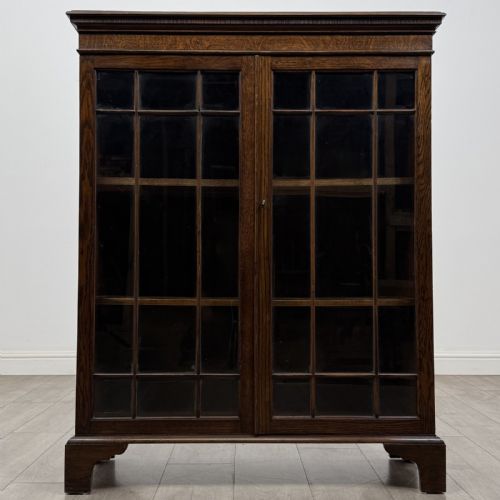
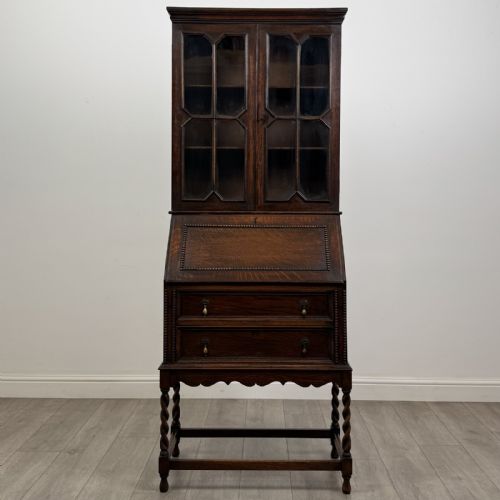
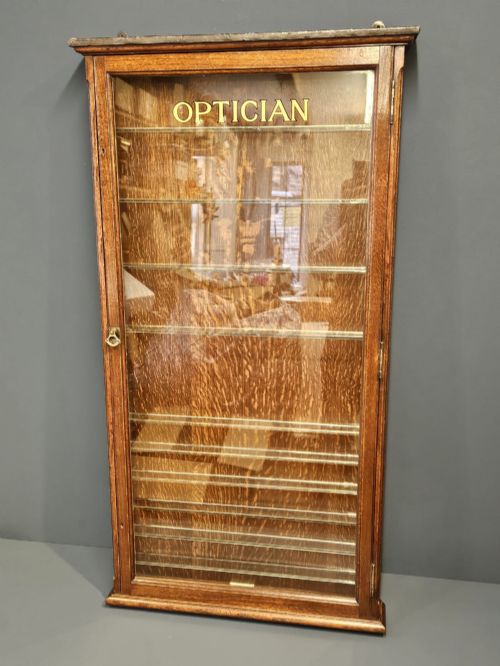
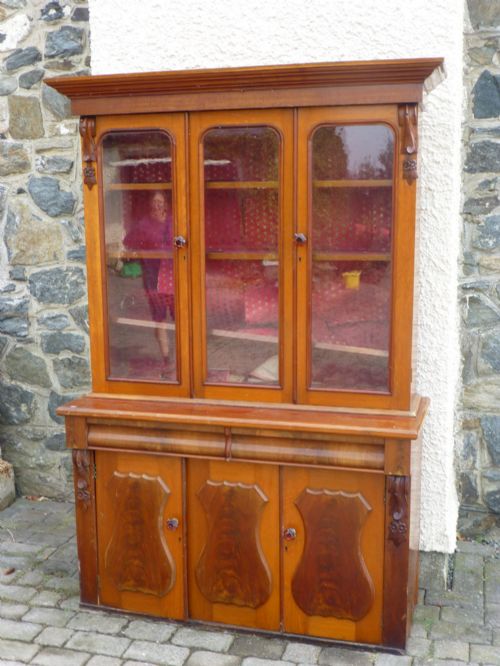
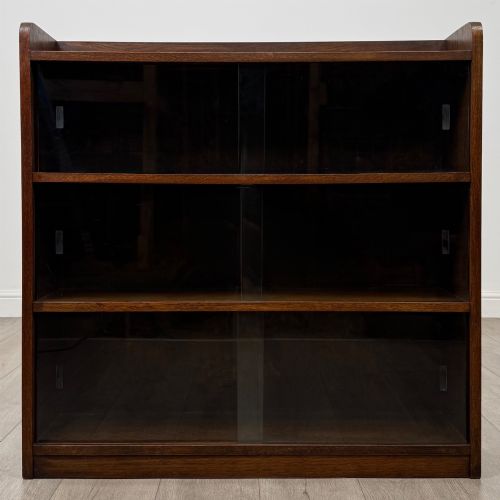
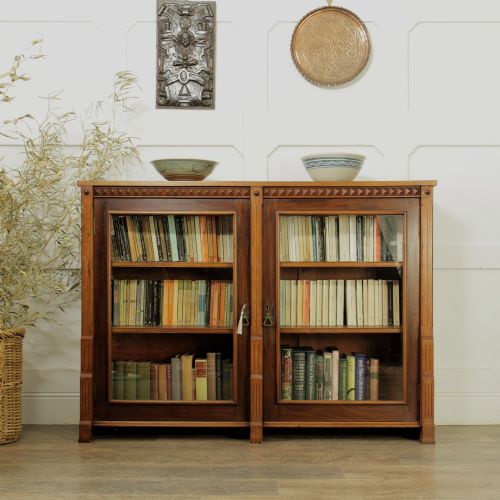
An oak glass door cabinet takes many structural forms, appearing primarily as bookcases, display cabinets, and stacking sectional units designed for home or office use. These pieces span from the late nineteenth century through the Edwardian period and into the 1930s interwar years, incorporating various regional designs.
The most frequent examples on this page date from the Edwardian period and the 1920s, often presenting as double-door bookcases or modular stacking sections. Vernacular pieces such as Welsh dressers also appear alongside formal display cabinets and glazed cupboards.
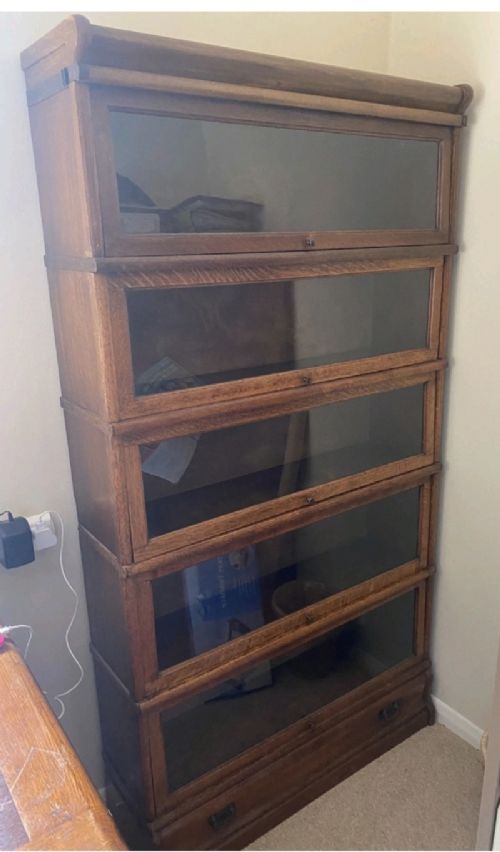
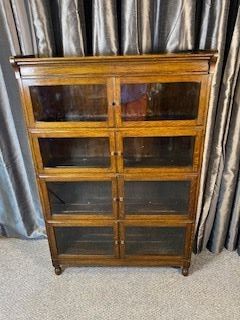
Makers and designers influenced several iterations, resulting in Globe Wernicke style barrister bookcases, Art Deco interpretations, and Jacobean Revival details. Buyers encounter everything from compact single-door cabinets to large triple-section kitchen dressers.
Materials and construction methods
Constructed predominantly from solid oak and golden oak, these cabinets employ flat glass panels, leaded glass, and sometimes mahogany or metal accents. Brass and gilt brass hardware, iron hinges, and key locks complete the primary material assembly.
Joinery techniques include sectional stacking mechanisms for modular office bookcases and carved ornamentation on Edwardian display frames. Glazing is secured within timber doors using wooden beads or lead cames to support the glass panels.
The listings here feature oak and glass constructions spanning from the Victorian era through the 1930s, including Arts and Crafts and Art Deco styles.
Distinctions in construction and finish
Quality rests upon the selection of timber grain, the weight of the solid oak timbers, and the precision of the sectional stacking mechanisms. Better examples maintain smooth operation in their glass doors and retain original brass or gilt brass hardware.
Finishes range from simple limed oak treatments to deeply carved surfaces and heavy Edwardian mouldings. Superior pieces show careful proportioning and integrated period details such as leaded glass work.
Lebus·Minty·Gunn·Phoenix Gallery
The Oak Glass Door Cabinet Glossary
- Globe Wernicke
- A modular stacking barrister bookcase system with glass fronted doors that lift and slide inward.
- Edwardian
- A stylistic period spanning from nineteen hundred to nineteen ten, noted in these listings for lighter oak tones and refined display cabinets.
- Sectional bookcase
- A set of modular cabinet tiers that stack vertically to form a tall shelving unit.
- Leaded glass
- Small panes of glass held together by lead cames to form geometric or decorative patterns within cabinet doors.
- Vernacular
- Regional furniture traditions constructed by local makers rather than large urban workshops.
Oak Glass Door Cabinet: Frequently Asked Questions
What is a barrister bookcase?
A barrister bookcase is a stacking modular cabinet featuring individual glass-fronted tiers designed to protect books.
The doors lift upward and slide inside the top of each shelf section for easy access.
How do I identify an Edwardian cabinet?
Edwardian cabinets date from the early twentieth century and frequently display lighter golden oak or restrained carved detailing.
They often combine display functions with enclosed lower storage or full-length glass doors.
Are stacking bookcases stable?
Stacking bookcases rely on modular sections resting securely on one another without permanent mechanical fasteners.
Each tier can be separated individually, which facilitates moving the entire cabinet.
What timber is used besides oak?
While oak dominates the construction, secondary timbers such as mahogany appear in specific regional vernacular pieces.
Hardware components incorporate brass, gilt brass, iron, and lead for structural and decorative details.