

Antique Glass Shelf Cabinet
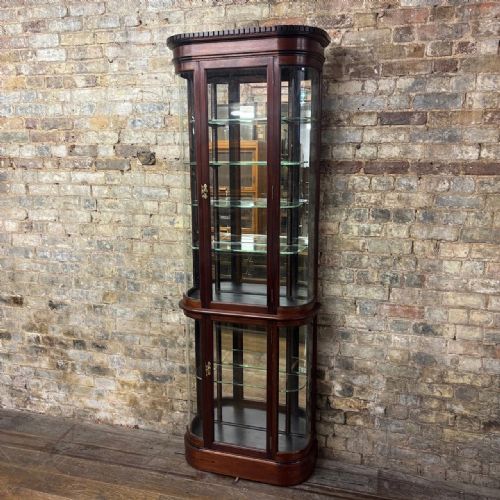
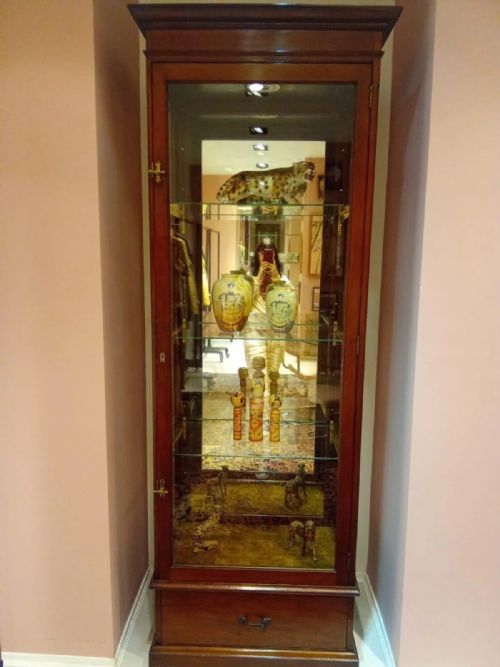
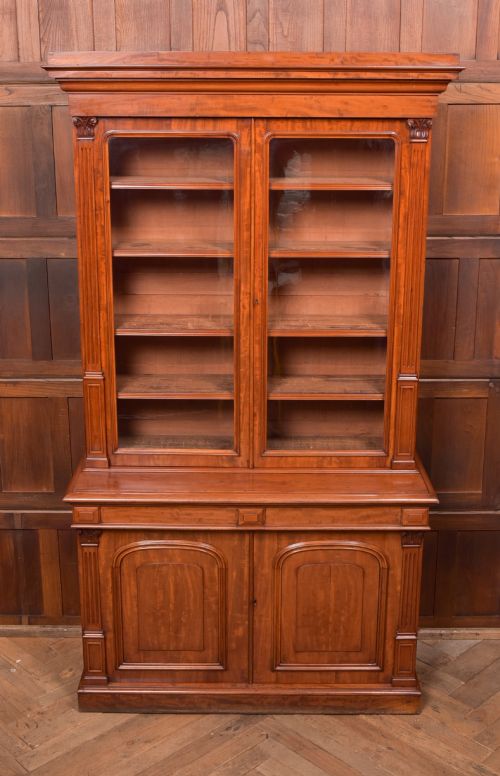
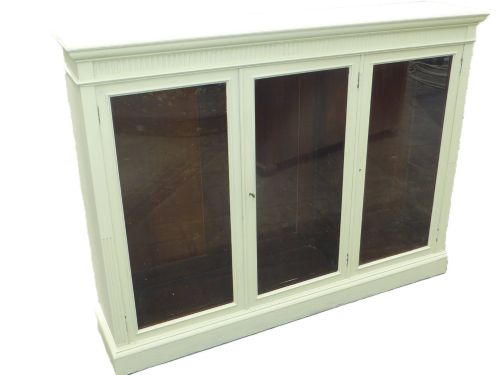
An antique glass shelf cabinet brings light and visibility to collections through glazed doors and fitted shelving.
Antique Glass Shelf Cabinet
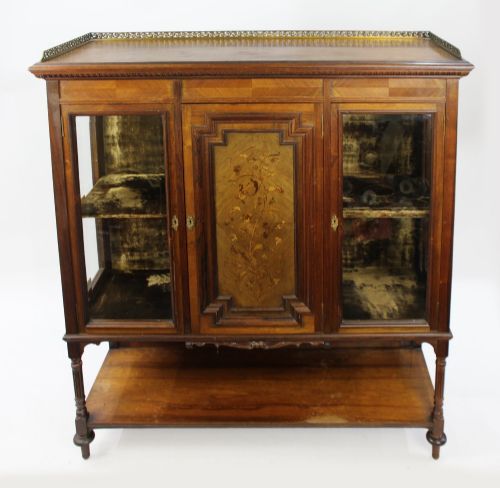
An antique glass shelf cabinet spans a diverse group of glazed storage and display furniture designed to showcase books, china, and curated objects. Buyers seeking an antique glass shelf cabinet encounter domestic display pieces alongside commercial retail counters and sectional barrister bookcases.
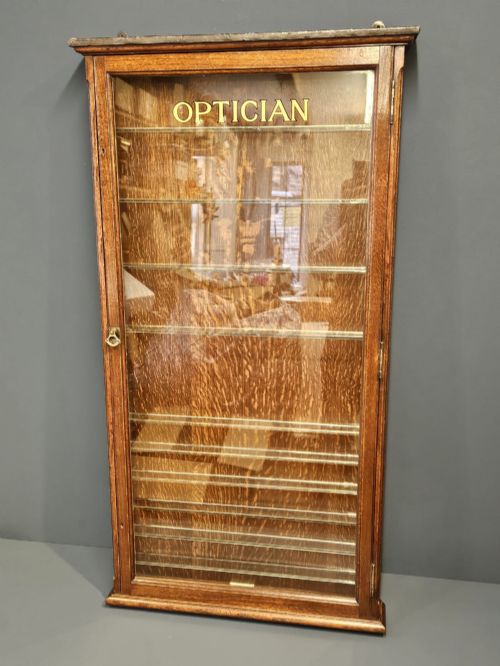
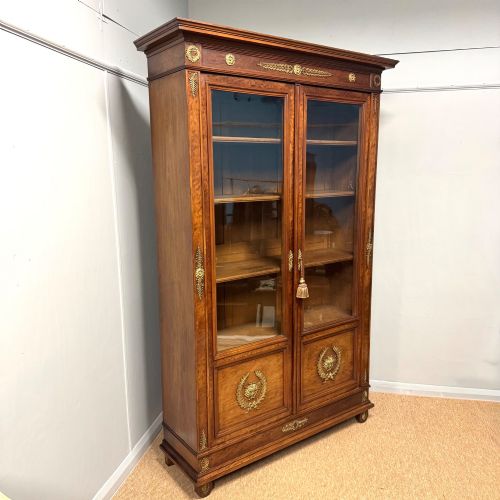
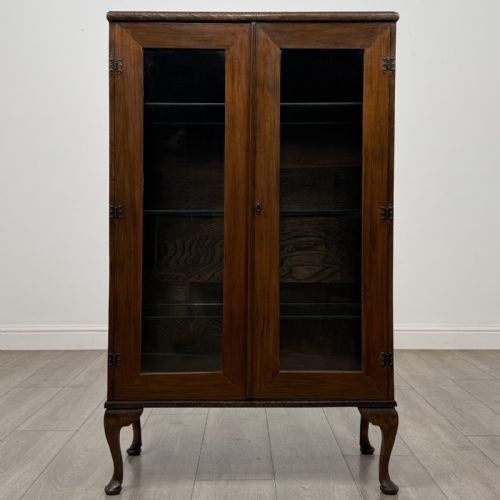
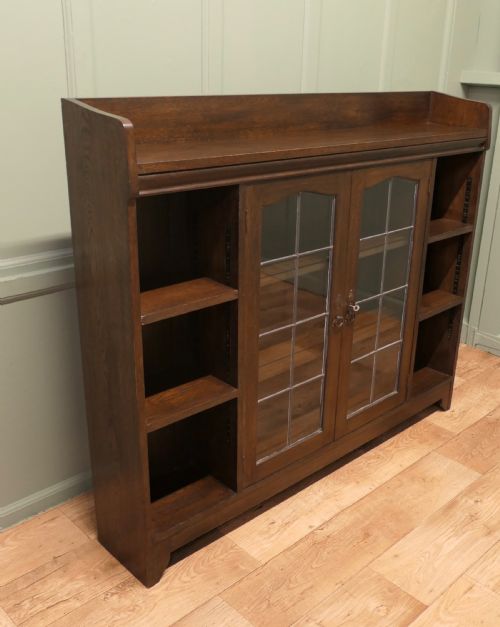
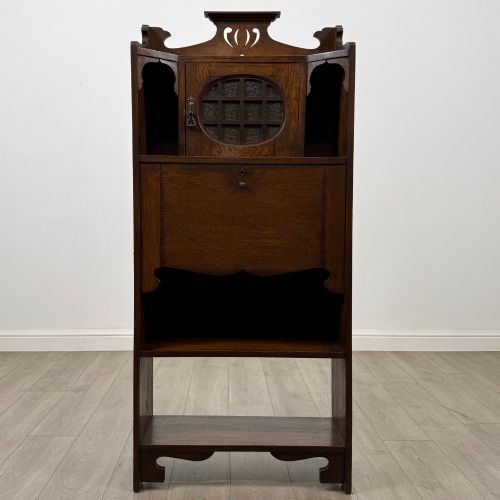
The selection ranges from Edwardian and Victorian mahogany floor-standing display units to Arts and Crafts oak bookcases and French Empire glazed bookcases. Wall-mounted opticians cabinets and walnut credenzas also populate the form, bridging utilitarian storage and formal display.
Makers and retailers such as Liberty, Globe Wernicke, and Maple & Co. shaped the evolution of these glazed cabinets through the nineteenth and early twentieth centuries. Pieces frequently incorporate adjustable glass shelves, mirrored backs, and brass or ormolu mounts to enhance interior illumination.
Materials and construction methods
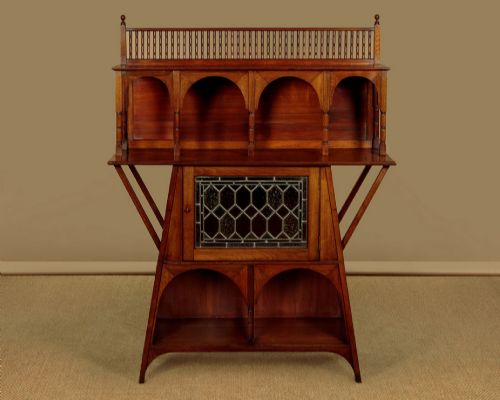
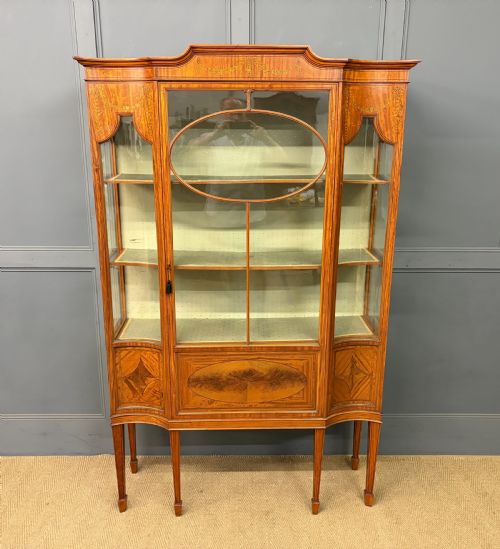
Cabinet makers built these structures primarily using timber frames of mahogany, oak, walnut, and satinwood, often enhanced with marquetry inlay or ormolu mounts. Glazing relies on lead framing or wooden astragals to hold glass panels securely within doors and side panels.
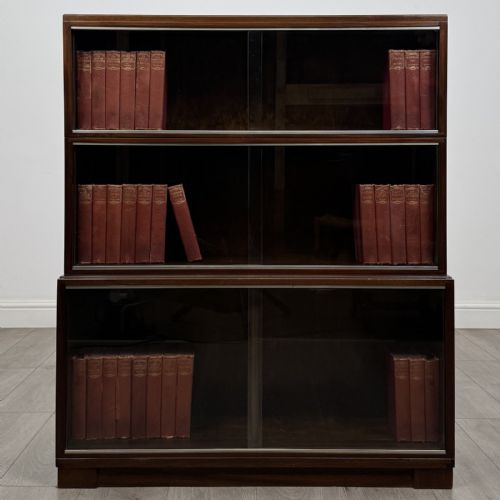
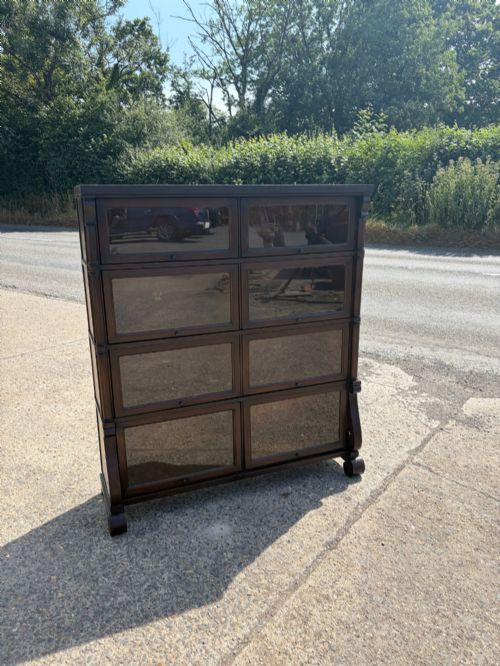
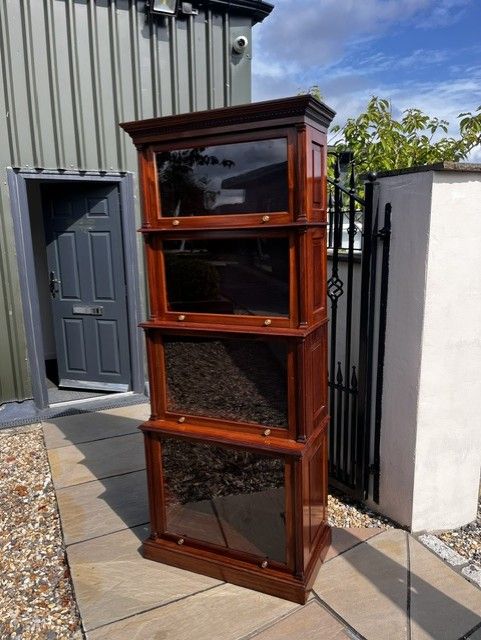
Sectional and stacking bookcases utilise clever mechanical hardware like up-and-over doors to allow modular expansion, while retail counters incorporate robust brass and iron supports. Mirror glass and polished wood surfaces work together to reflect light through internal glass shelves.
Opticians utilised specialised wall cabinets with tiny glazed compartments to keep delicate spectacles dust-free.
Distinctions in craftsmanship and design
Quality reveals itself in the choice of timber figures, such as burr walnut or figured mahogany, and the precision of inlaid satinwood or rosewood details. Superior examples exhibit refined joinery, original glass panes, and functional adjustable shelving mechanisms that operate without binding.
Maker attribution elevates certain pieces, with recognised firms like Epstein, Lambs of Manchester, or Druce & Co applying higher standards of hardware and internal finishing. The integrity of the original polish and the crispness of brass or ormolu mounts further separate standard utility pieces from exceptional commissions.
Macey·Liberty & Co·Maple & Co·Globe Wernicke·Heal's·Epstein·John Stow Ltd·Lambs of Manchester·Druce & Co
The Antique Glass Shelf Cabinet Glossary
- Sectional bookcase
- A modular bookcase built from stackable lawyer or barrister units with individual up-and-over glass doors. These cabinets dismantle into separate tiers for ease of transport.
- Credenza
- A low cabinet or sideboard, frequently featuring glass doors and mirror panels, originating in the nineteenth century for display and storage. They often include walnut or mahogany veneers with marquetry.
- Astragal
- A small wooden moulding used to hold panes of glass within a cabinet door. Fine astragals divide glazed doors into intricate geometric patterns.
- Ormolu
- Gilded bronze mounts applied to cabinet exteriors for decorative accent. This technique adds metallic contrast to polished mahogany and walnut surfaces.
- Bonheur du jour
- A small light lady's writing desk featuring an upper section with shelves and glass doors. These refined pieces combine a writing surface with display capacity.
Antique Glass Shelf Cabinet: Frequently Asked Questions
How do sectional bookcases function?
Sectional bookcases consist of individual stacking tiers with glass doors that lift and slide into the cabinet above each shelf. This modular design allows owners to add or remove layers as their collection grows.
Each tier rests securely on the one below without permanent fixing, making these cabinets surprisingly adaptable for moving between rooms or homes.
Where were shop display cabinets used?
Shop display cabinets and counters served pharmacies, opticians, and general retailers during the Victorian and Edwardian eras. Merchants used them to protect delicate stock while maintaining clear visibility for customers.
Today, these commercial pieces find new life in domestic interiors as striking storage units for collections of small curiosities and tableware.
Can shelves be adjusted in these cabinets?
Many glazed display cabinets and bookcases feature adjustable wooden or glass shelves supported by rakracks or metal pins. This adaptability accommodates books and objects of varying heights.
Original shop cabinets frequently highlight adjustable glass shelves specifically designed to maximise light diffusion throughout the interior display space.
What timber types are most common?
Mahogany and oak dominate the selection of antique glass shelf cabinets, spanning simple Edwardian uprights to elaborate Arts and Crafts designs. Walnut and satinwood appear frequently in finer credenzas and inlaid display pieces.
Makers also utilised specialised veneers like burr walnut and sycamore to create decorative visual contrast on door panels and friezes.