
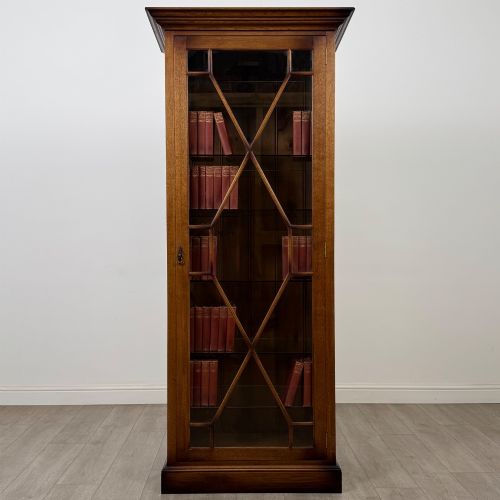
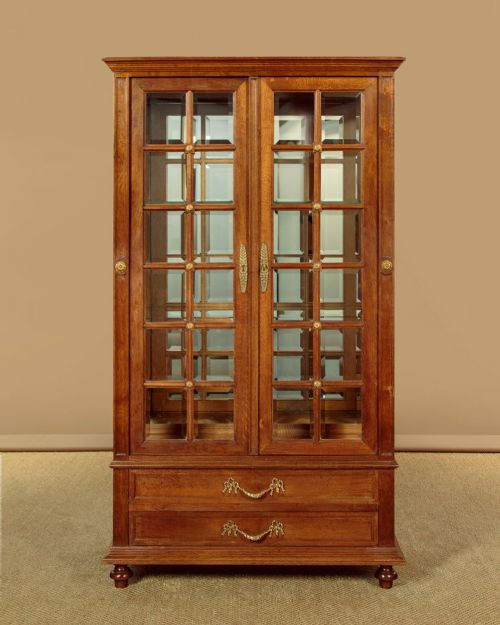


Oak Glass Display Case
An oak glass display case brings together timber and transparency, serving to protect prized objects while keeping them visible.
Oak Glass Display Case
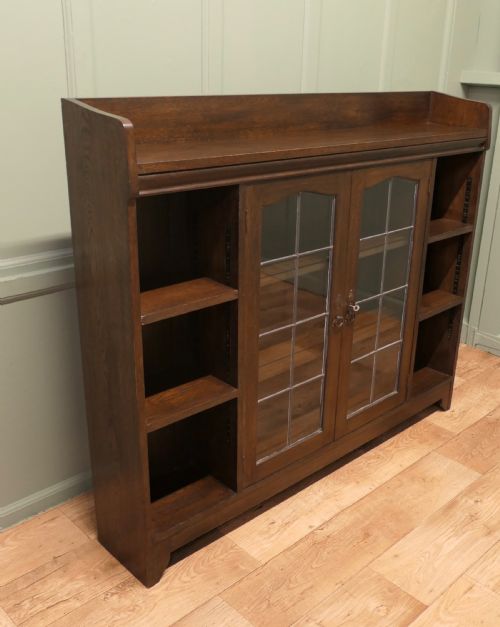
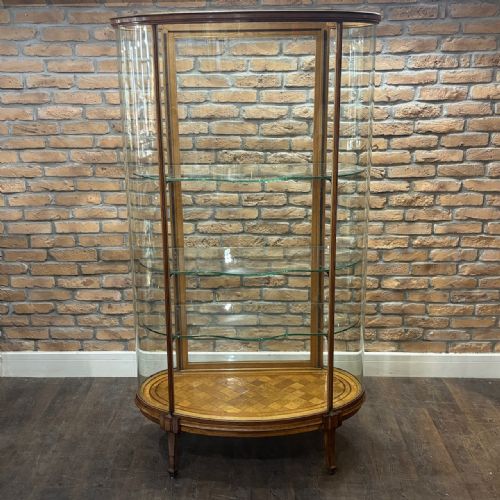
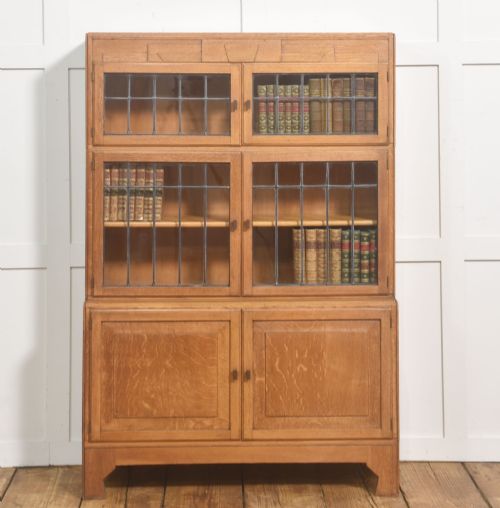
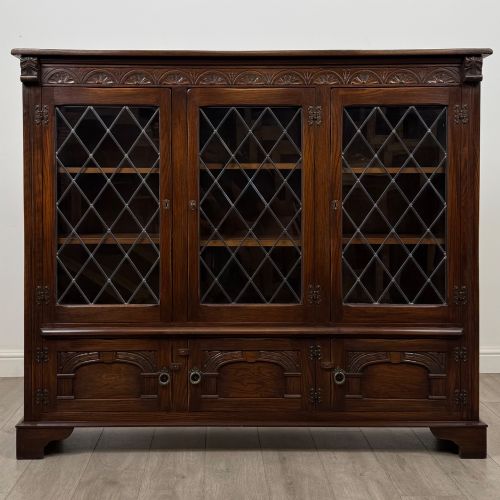
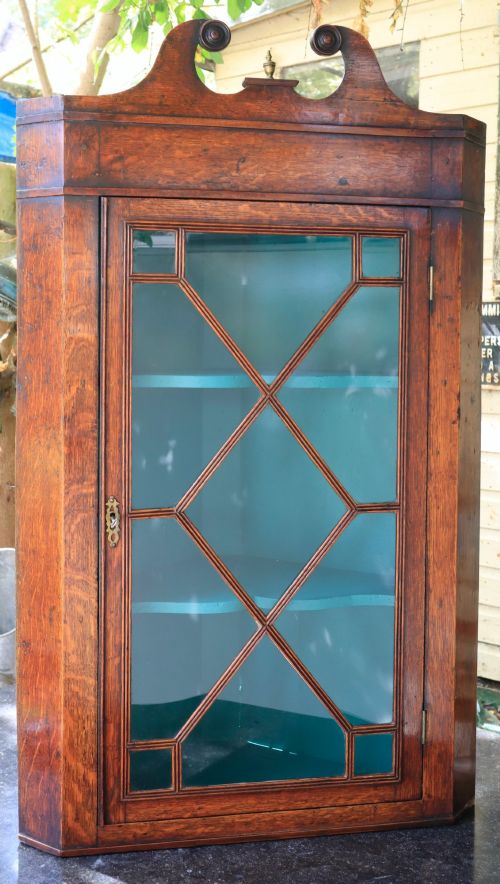
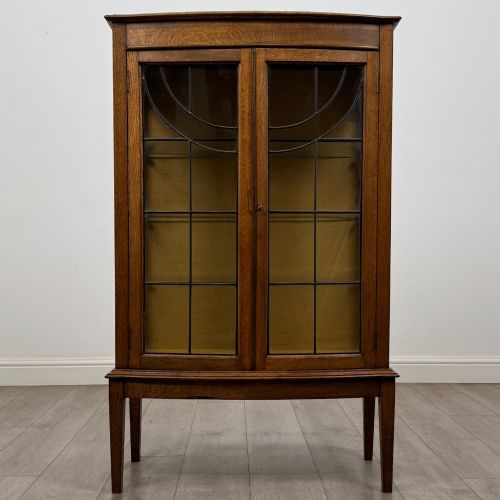
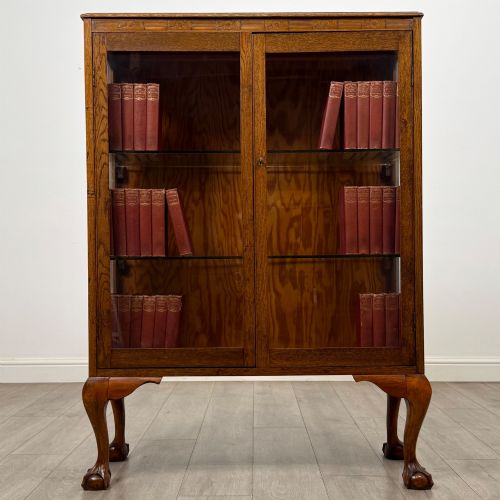
An oak glass display case encompasses domestic storage and retail display, appearing in forms ranging from tall floor bookcases and corner cupboards to tabletop counters and museum cases. Pieces spanning the Georgian, Victorian, and Edwardian eras demonstrate how timber frames were adapted to hold transparency.
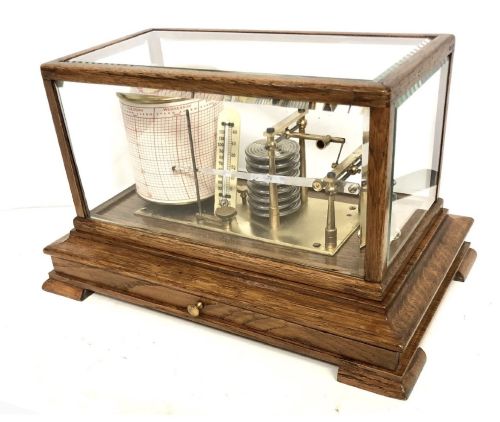
The Edwardian iterations dominate the selection, often taking the form of countertop cabinets or glazed bookcases designed for domestic use. Alongside these, 19th century shop counters and specialised barographs reveal the functional origins of heavy timber framing combined with clear panels.
Makers utilised oak as a sturdy structural medium, pairing the grain with glass to create vitrines, cabinets, and enclosed shelving. These objects reflect shifts from Georgian hanging cupboards to the retail display units of the early 20th century.
Materials and construction
Solid and veneered oak forms the primary carcass of these pieces, providing a robust frame to support heavy transparent panels. Joinery relies on traditional methods to keep large timbers stable over time.
Glass panels are integrated into doors and sides, sometimes secured with lead cording or brass fittings. Additional materials such as iron, fabric linings, and gilt mounts appear selectively to finish interiors and hardware.
Some countertop cabinets carry later chocolate advertising, hinting at a past life filled with confectionery rather than curiosities.
Judgement of standard
The standard of a piece rests on the integration of its timber frame with the transparency of its glazing, where clean lines and balanced proportions indicate deliberate design. Heavier carving or specialist shop provenance distinguishes commercial counters from domestic furniture.
Subtle details in the timber grain, the clarity of the glass, and the preservation of original brass or lead mounts elevate certain examples above standard utilitarian storage.
F. Sage & Co
The Oak Glass Display Case Glossary
- Leaded glass
- Small panes of glass held together by strips of lead, forming geometric or decorative patterns across a door or window frame.
- Barograph
- A recording barometer housed in a wooden case with a glazed lid, designed to track atmospheric pressure on a paper chart.
- Corner cupboard
- A specialised storage unit built with a triangular footprint to fit neatly into the corner of a room.
- Countertop cabinet
- A small glazed display case intended to sit upon a shop counter for retail merchandise.
Oak Glass Display Case: Frequently Asked Questions
How do I date an oak glass display case?
Dating relies on observing construction methods, timber treatment, and stylistic cues present in the frame. Edwardian and Victorian pieces often show machine-sawn elements, whereas Georgian examples display hand-cut joinery.
Hardware such as brass hinges and the composition of the glass panels offer further clues to the period of manufacture.
Were these cases used in shops or homes?
These pieces served both domestic and commercial environments depending on their original scale. Countertop units and large counters originated in retail settings for merchandise.
Tall bookcases, corner cupboards, and vitrines were built for domestic rooms to hold books and porcelain.
How should I clean the oak wood?
Maintenance requires gentle dusting with a dry, soft cloth to prevent the buildup of dirt in the grain and carved details. Avoid modern silicone sprays or heavy polishes that can damage the finish.
Occasional application of traditional wax helps nourish the timber and maintain its natural sheen.
What is leaded glass?
Leaded glass consists of individual panes joined together using flexible lead cording to create decorative patterns. This technique was popular in Arts and Crafts and Art Deco designs.
The lead strips provide structural support while framing the transparent panels.