
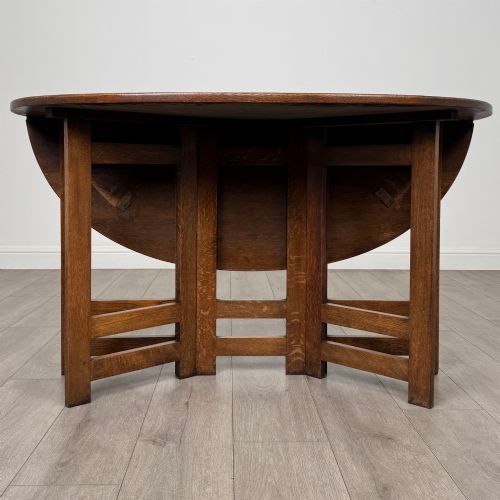
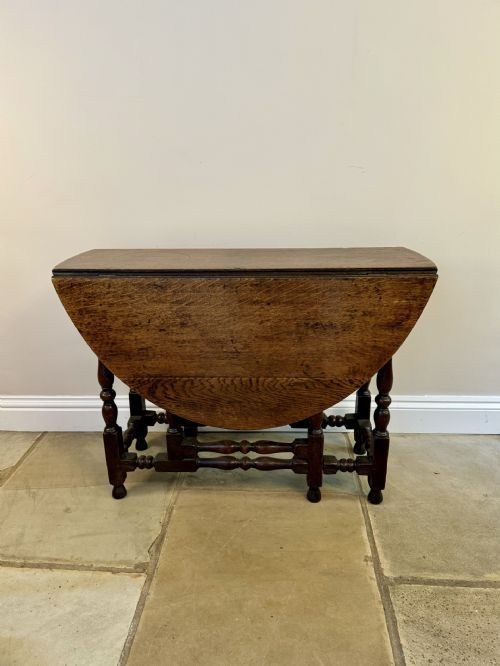
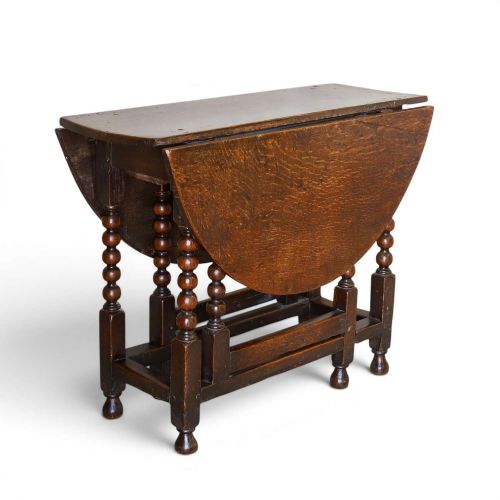
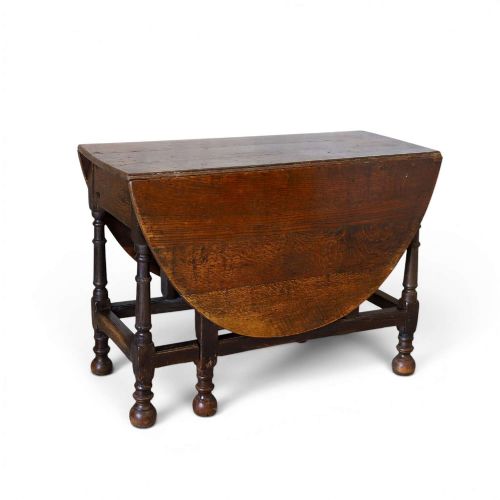
Oak Gateleg Side Table
An oak gateleg side table brings folding leaves and sturdy timber together for compact spaces, spanning centuries of English cabinet-making.
Oak Gateleg Side Table
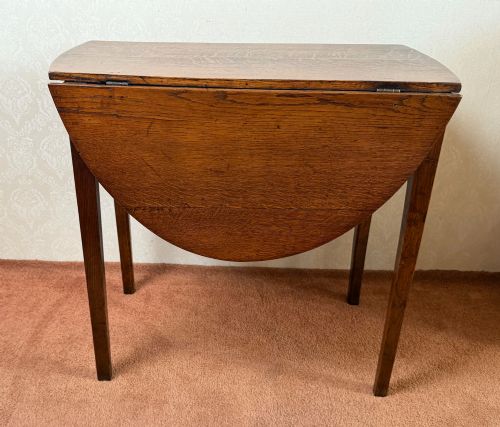
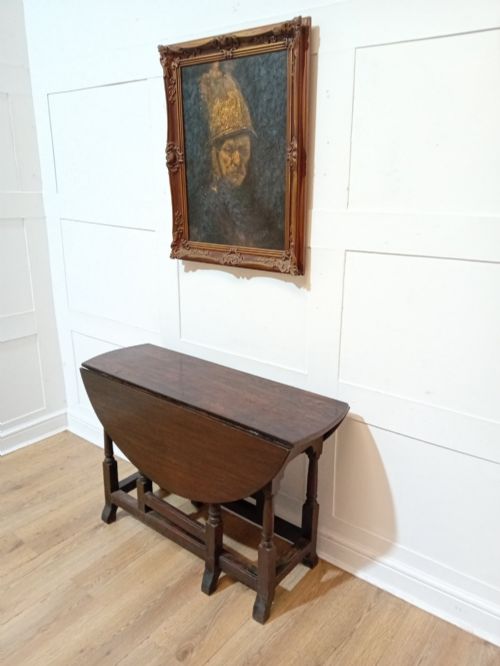
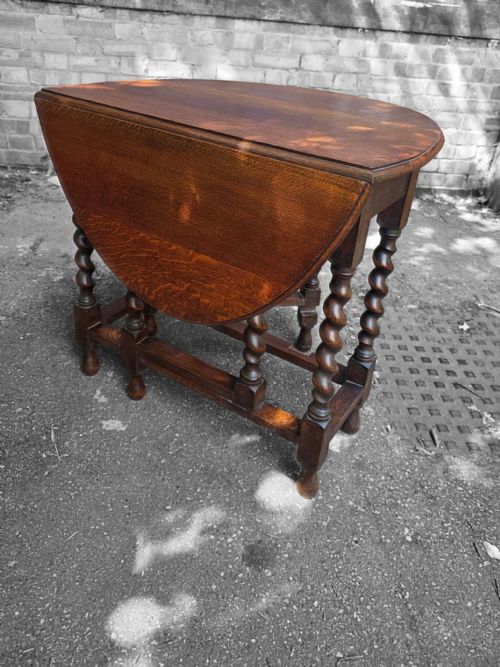
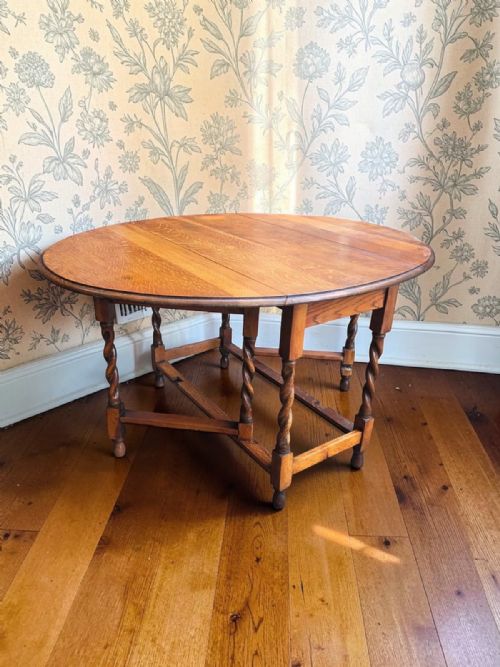
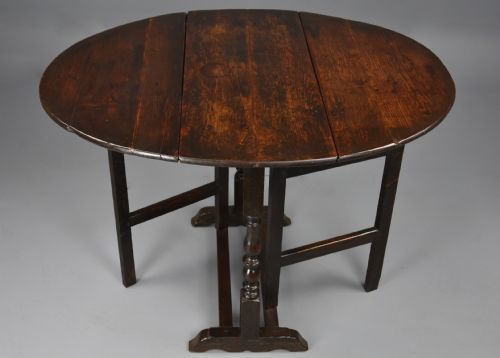
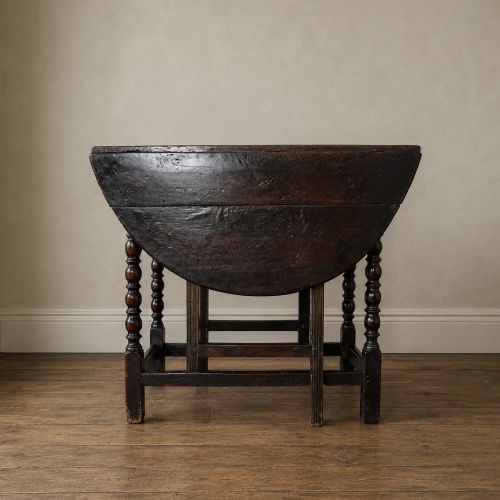
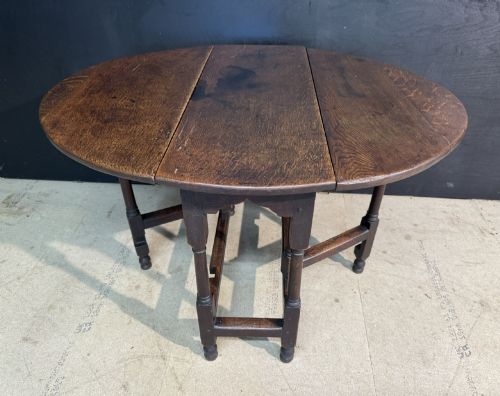
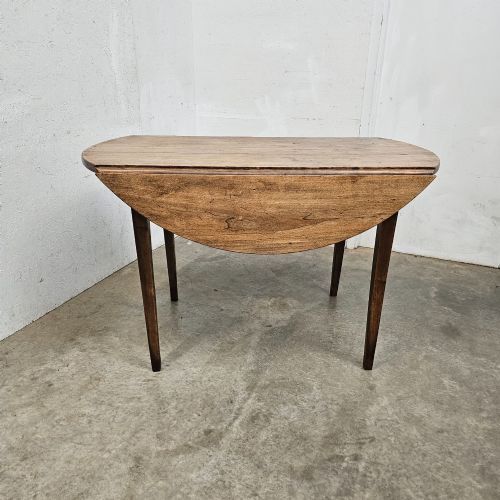
An oak gateleg side table is a folding table supported by swinging legs that pivot out to hold drop leaves, appearing frequently in 17th-century, 18th-century, and early 20th-century revival forms. These pieces function as occasional, coffee, or dining surfaces depending on their scale, ranging from small country examples to larger period designs.
The evidence shows these tables emerging across multiple eras, including the 17th century, Georgian period, and Edwardian revivals. Buyers encounter solid timber constructions designed to fold flat against a wall or sit neatly beside seating when not in use.
How they were made
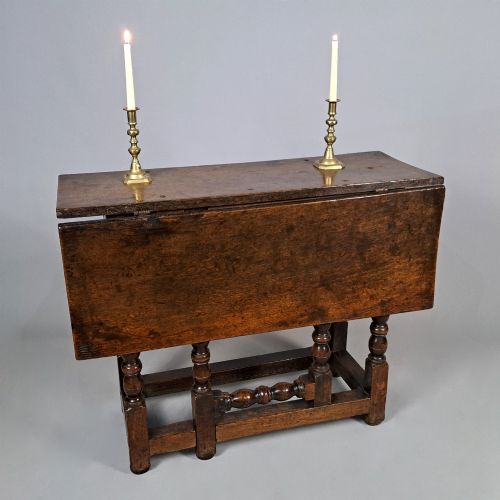
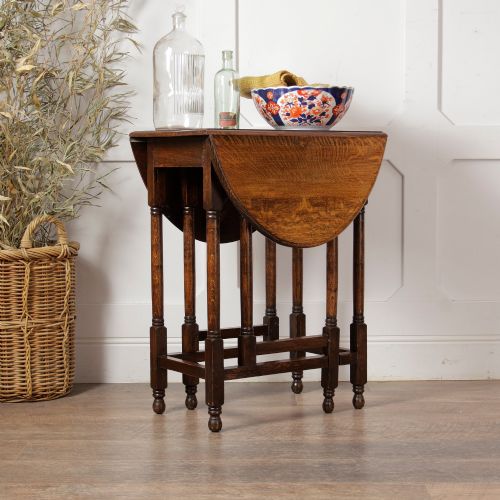
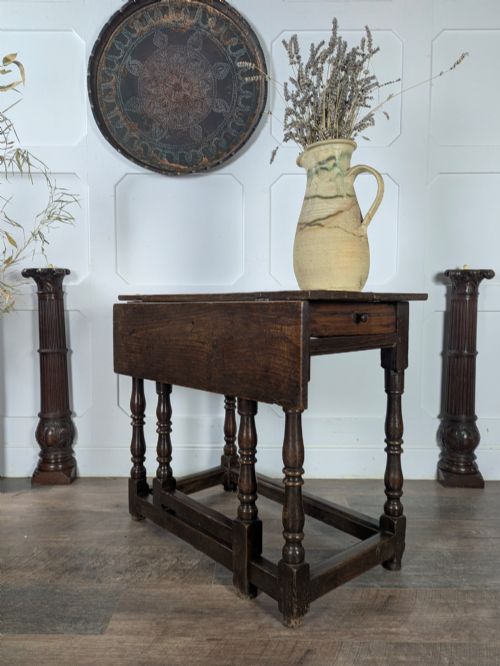
Joiners built these tables primarily using solid oak, sometimes combining secondary timbers like ash, fruitwood, elm, or iron and brass for hinges and fittings. Turning lathes shaped the legs into barley twist, bobbin turned, or baluster post profiles that supported the folding leaves.
Frames rely on traditional mortise and tenon joints to bear the weight of the hinged flaps. Original hinges and wooden pivot mechanisms define the construction of early periods, while later revivals utilise comparable jointing methods.
Early makers occasionally built these tables in surprisingly tiny proportions, creating miniature folding surfaces for seventeenth-century supper rooms.
What varies in quality
The distinction between ordinary and superior examples rests in the depth of the timber's natural patina and the crispness of the turned legs. Early 17th-century pieces with untouched surfaces and small proportions command greater attention than later mass-produced revivals.
Structural integrity of the gate action and the alignment of the drop leaves determine daily utility. Tables retaining original hinges and unblemished solid oak tops represent the upper tier of surviving examples.
The Oak Gateleg Side Table Glossary
- Gateleg
- A table with hinged leaves supported by swing-out legs that operate like a gate. This design allows the surface area to expand or contract easily.
- Drop-leaf
- A table top featuring a fixed centre section with movable flaps on either side. These flaps drop down when the supporting legs are tucked inward.
- Barley twist
- A decorative turning technique resembling a twisted rope. This style appears frequently on table legs from the 17th century and later revivals.
- Patina
- The surface sheen and colour developed by wood over decades of handling and exposure. Good examples display a warm, deep tone acquired through age.
- Bobbin turned
- A style of leg shaping that resembles a series of rounded spools or bobbins threaded end to end. It is a common feature on 17th-century English tables.
Oak Gateleg Side Table: Frequently Asked Questions
What is an oak gateleg side table used for?
These tables serve as flexible surface areas in domestic spaces, functioning as side tables, coffee tables, or small dining surfaces. The folding leaves allow the footprint to change depending on available room.
Historically, they provided practical eating and working spaces that could be pushed aside when not in use. Today, they fit easily beside seating or along hallways in modern homes.
How do I date an antique oak gateleg table?
Dating relies on examining the turning style of the legs, the construction of the frame, and the type of hinges used. Pieces featuring bobbin or baluster turnings and hand-forged iron hinges typically point to the 17th century.
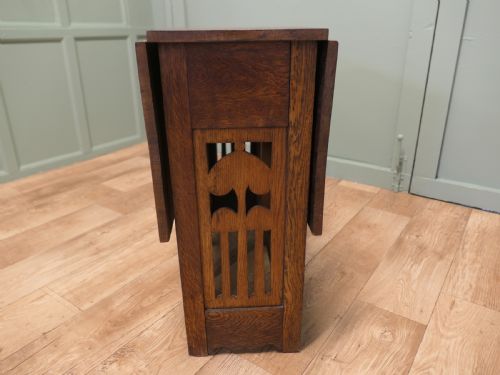
Later Edwardian and 1920s revivals display machine-cut timber and standardised fixings. Comparing the grain and overall proportions against known period examples helps clarify the era of manufacture.
Are all gateleg tables made of solid oak?
While the primary timber across these listings is solid oak, makers occasionally incorporated secondary woods like ash, fruitwood, elm, and brass or iron for hardware. Regional country pieces might utilise local hardwoods alongside the main oak structure.
Checking beneath the leaves and around the frame reveals the secondary materials used in construction. Solid oak remains the dominant material across both early periods and later revivals.
How do I care for antique oak furniture?
Maintenance involves keeping the timber away from direct heat sources and sudden temperature shifts that cause wood to split. Regular dusting with a dry cloth protects the finish without stripping the natural oils.
Applying a traditional beeswax occasionally helps nourish the surface and preserve the patina. Avoid modern silicone polishes that build up and alter the appearance of the antique finish.