






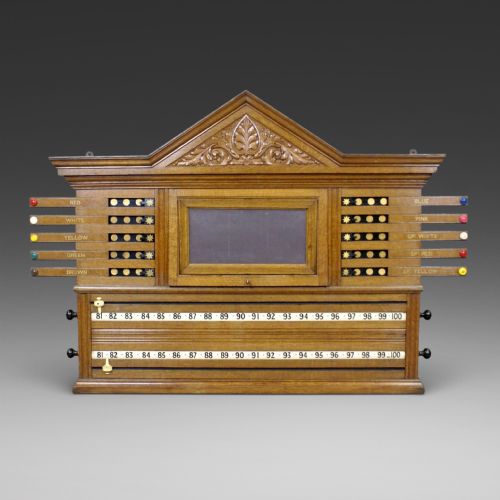

Oak Game Cabinet
An oak game cabinet brings together the serious pursuits of the nineteenth century in timber, brass, and cut glass.

Oak Game Cabinet
An oak game cabinet serves as a sophisticated vessel for social pastimes, housing decanters, scoreboards, and compendiums within robust timber frames. These pieces merge storage with entertainment, frequently combining dry bar facilities with compartments for cards or board games.
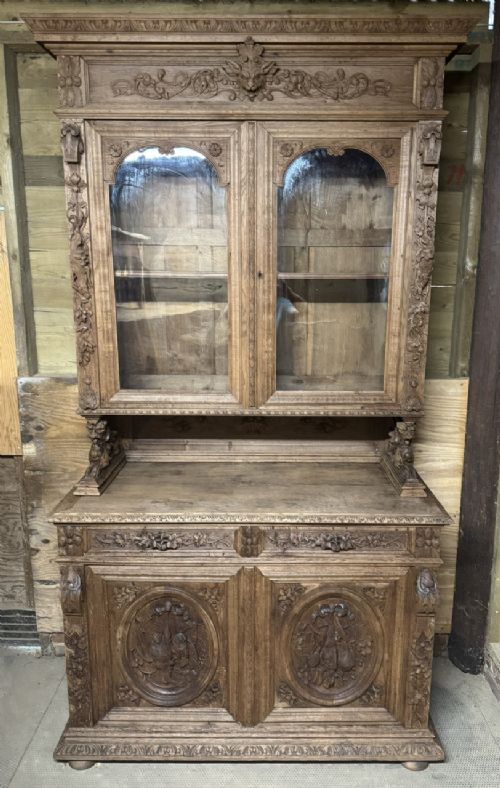
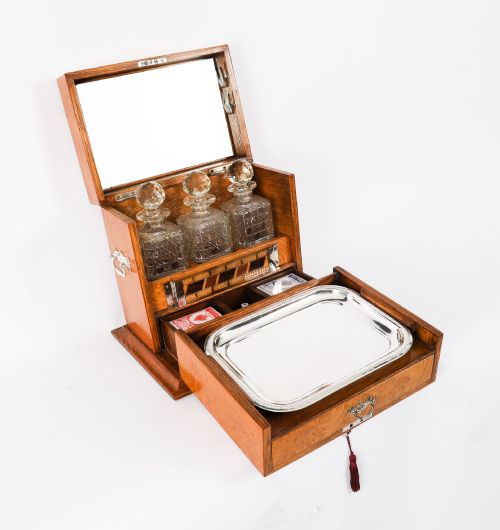
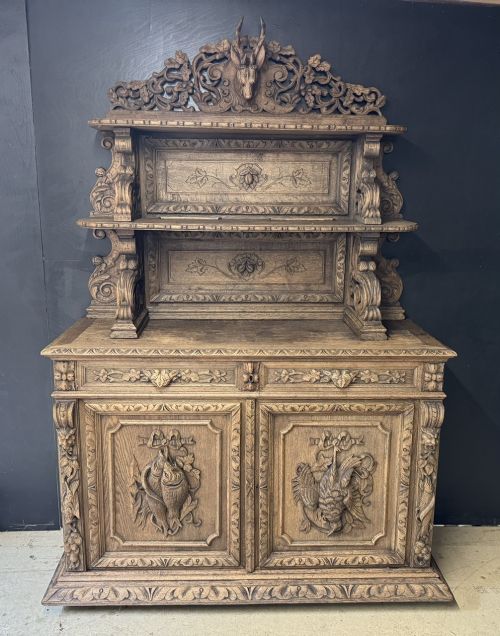
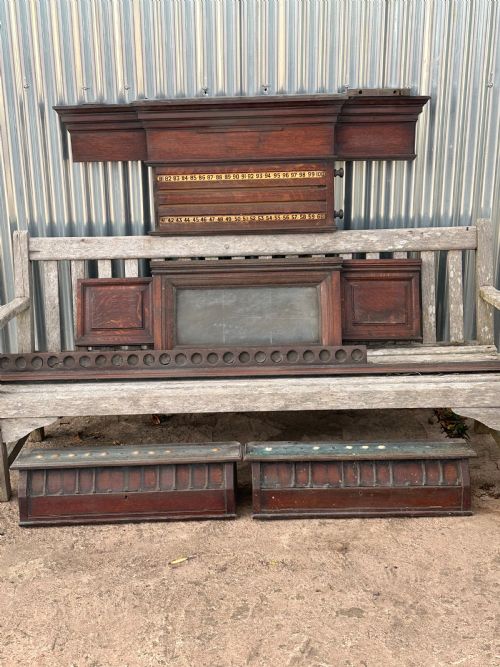
The versions met on this page span the nineteenth century and the Edwardian era, taking the form of tantalus and games compendiums, buffet de corps game cupboards, and dedicated scoreboards. French styles such as French Renaissance Revival, French Hunt Style, and French Provincial appear alongside English examples.
Constructed primarily from oak, these cabinets often incorporate brass hardware, cut glass decanters, silver plate, slate, glass, mahogany, and bone to complete their intricate interior arrangements.
What varies in quality
The standard of carving and the selection of timber dictate the hierarchy of these pieces, moving from simple utilitarian scoreboards to elaborate French hunting sideboards with deeply carved panels. Blonde and pale oak selections contrast with darker nineteenth-century finishes.
Internal complexity sets the finer examples apart, such as integrated three-decanter tantalus mechanisms combined with dry bar and games compendium compartments, complete with cut glass and silver plate.
Oak Game Cabinet Retail Price Guide 2026
Typical asking prices for oak game cabinet among the pieces listed under this phrase on Sellingantiques today, from the lower quarter to the upper quarter. They describe what is for sale here now, not the wider market.
Some nineteenth-century gentlemen required a locked tantalus to ensure the brandy decanter survived long enough to greet their evening guests.
Thurston & Co. of London
The Oak Game Cabinet Glossary
- Tantalus
- A locking drink cabinet holding decanters visible yet inaccessible without a key. This device kept nineteenth-century hosts' best spirits secure from household staff.
- Games Compendium
- A fitted box or cabinet containing equipment for multiple board and card games. These sets often included cribbage boards, dice, and chess pieces alongside cards.
- Buffet de Corps
- A substantial two-section storage piece, often featuring carved oak game cupboard doors. French country houses utilised these large cupboards for provisions and dining equipment.
- Scoreboard
- A wall-mounted or cabinet-enclosed tally board utilising sliding wooden pointers or brass markers. Billiards, snooker, and pool rooms relied on these to track points across frames.
- French Renaissance Revival
- A nineteenth-century design movement emulating sixteenth-century French architecture and furniture. Pieces show dense relief carving, strapwork, and mythological motifs.
Oak Game Cabinet: Frequently Asked Questions
How do I date an oak game cabinet?
Nineteenth-century examples often display deep relief carving associated with French Renaissance Revival or French Hunt styles, alongside blonde oak finishes from the 1880s.
Edwardian pieces tend to feature lighter pale oak tones and cleaner lines, while mid-nineteenth-century items incorporate slate beds and heavier brass fittings.
Are decanters always included with a tantalus?
Many compendiums and dry bar cabinets retain their original cut glass decanters and silver plate accessories, fitted securely into dedicated wooden or brass frames.
Some cabinets focus purely on games storage, housing scoreboards, carved panels, and compendium drawers without the drinking apparatus.
How should I care for nineteenth-century oak?
Maintain the timber with traditional wax polish to preserve the grain of blonde, pale, or dark oak surfaces without sealing the wood. Protect brass hardware, silver plate, and cut glass inserts from excessive moisture.
Keep the cabinets away from direct heat sources to prevent the movement of heavy panelled doors and carved sections.