





Antique Hunting Cabinet
An antique hunting cabinet brings robust regional woodwork and historic field sports directly into a modern interior.

Antique Hunting Cabinet
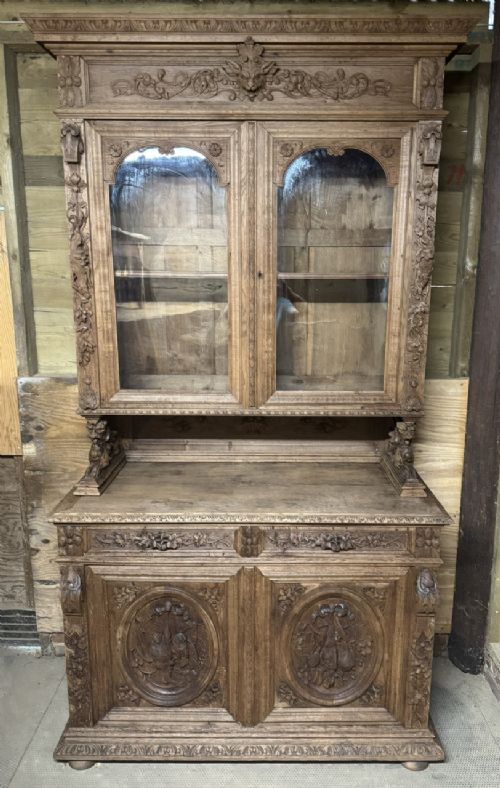
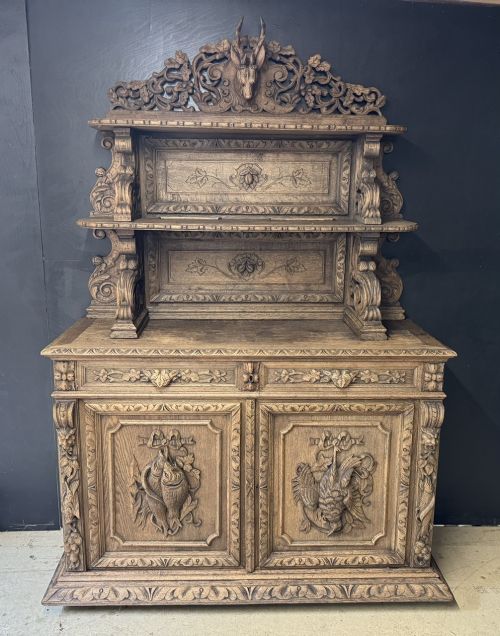
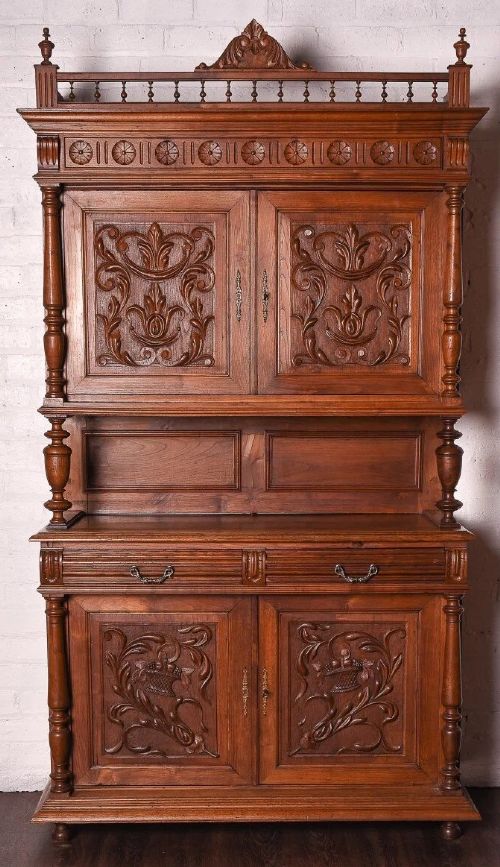
When you search for an antique hunting cabinet, you are looking at substantial storage furniture built from sturdy hardwoods like oak and walnut, frequently bearing deep relief carving related to woodland pursuits and game. The pieces you are most likely to meet on this page hail from the nineteenth century, reflecting French Renaissance Revival and provincial hunt styles alongside British iterations.
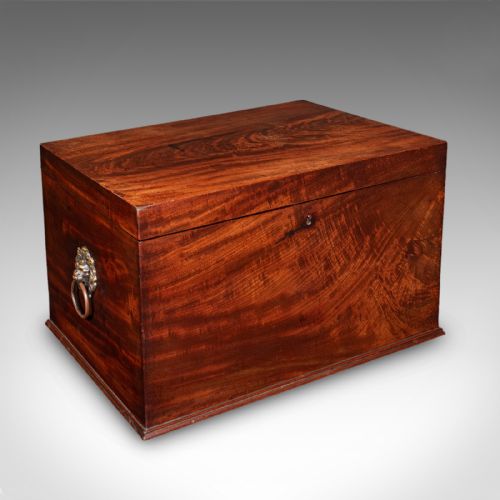
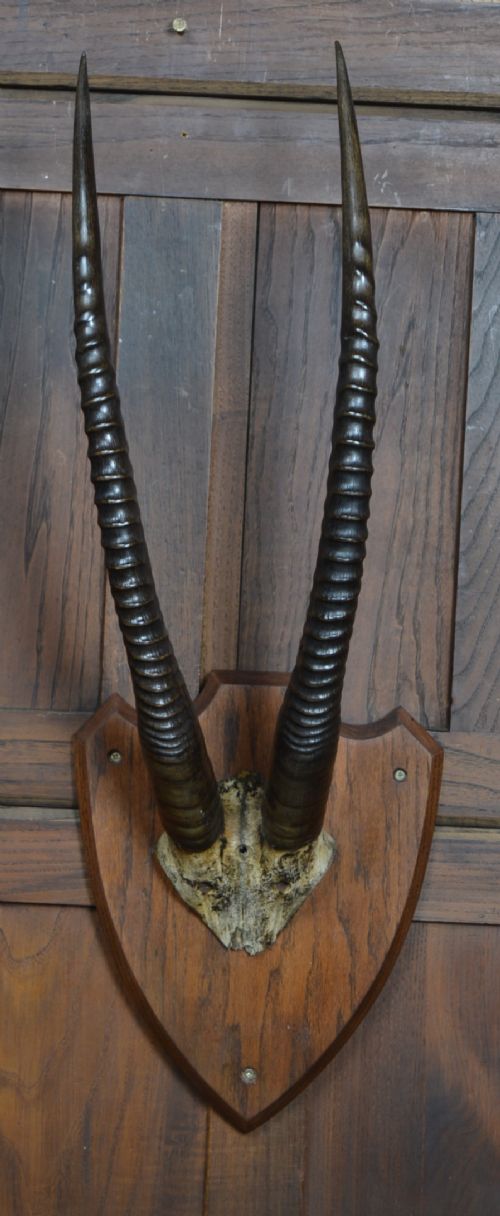
The inventory on this page spans distinct forms including large sideboards, cellarettes, game cupboards, and buffets de corps. Alongside heavy timber storage, related taxidermy mounts and horn objects appear, broadening the rustic scope of nineteenth-century sporting interiors.
Materials and construction
Carpenters relied primarily on solid oak, walnut, and mahogany to build these heavy storage units, often employing timber panels carved in high relief with motifs of game, foliage, and sporting trophies. Iron and brass hardware, such as hinges, handles, and locks, provided the necessary mechanical strength for large doors and fitted cellarettes.
Makers incorporated specialised details like inlaid veneers on Georgian sideboard forms and mounted natural horn elements on Edwardian decorative pieces. The joinery reflects traditional cabinetmaking standards designed to support massive timber superstructures and heavily laden storage interiors.
Antique Hunting Cabinet Retail Price Guide 2026
Typical asking prices for hunting cabinet among the pieces listed under this phrase on Sellingantiques today, from the lower quarter to the upper quarter. They describe what is for sale here now, not the wider market.
Object types recorded include sideboards, cellarettes, buffets de corps, and taxidermy horn mounts.
Judging the work
Quality rests in the depth, crispness, and artistic ambition of the carved ornamentation across the timber panels and doors. Pieces displaying fluid, deeply undercut motifs of game and foliage demonstrate superior hand-carving compared to shallow or mechanically finished surfaces.
The selection of primary timber sets the standard for structural integrity and visual depth, particularly where figured walnut or dense oak shows minimal distortion over time. Superior examples also maintain original brass or iron hardware that complements the scale of the cabinetry.
Gillingtons
The Antique Hunting Cabinet Glossary
- Buffet de corps
- A large traditional French storage cabinet or sideboard featuring upper and lower cupboard sections. These pieces provide monumental display and storage capacity for dining rooms.
- Cellarette
- A lockable container or cabinet designed specifically for storing bottles of wine and spirits. Regency examples often incorporate fitted internal compartments for secure bottle storage.
- Renaissance Revival
- An architectural and decorative style popular in the nineteenth century that draws on sixteenth-century classical motifs. Cabinets in this mode feature bold architectural mouldings and prominent relief carving.
- Taxidermy mount
- A preserved animal specimen prepared for display as a decorative wall or table object. Horn mounts from the Edwardian period reflect the Victorian and early twentieth-century fascination with natural history.
Antique Hunting Cabinet: Frequently Asked Questions
What is an antique hunting cabinet used for?
These large storage pieces were originally designed to hold game, wine, and dining ware in country houses and hunting lodges.
Today, they serve as striking sideboards or drinks cabinets in living spaces and dining rooms, offering substantial concealed storage.
How do I date a French hunting cabinet?
Nineteenth-century examples frequently employ heavy oak or walnut with French Renaissance Revival carving styles depicting game and foliage.
Examining the internal construction, timber shrinkage, and hardware helps distinguish mid-nineteenth-century work from later revivals.
Are horn objects part of hunting collections?
Mounted horns and horn gongs frequently accompany sporting furniture from the Edwardian era and the early twentieth century.
These items reflect the natural history aesthetic and the decorative traditions of historic hunting lodges.
How do I care for carved oak furniture?
Solid oak and walnut benefit from stable indoor humidity levels away from direct heat sources to prevent timber splitting.
Regular dusting with a dry cloth and occasional application of appropriate furniture wax keeps the carved surfaces nourished.