




Oak Foyer Console Table
An oak foyer console table offers the right presence for an entrance hall, combining sturdy timber with useful surface space.
Oak Foyer Console Table
An oak foyer console table provides a practical surface for an entrance hall or passage. The selection spans the eighteenth century, the Victorian era, and the early twentieth century.
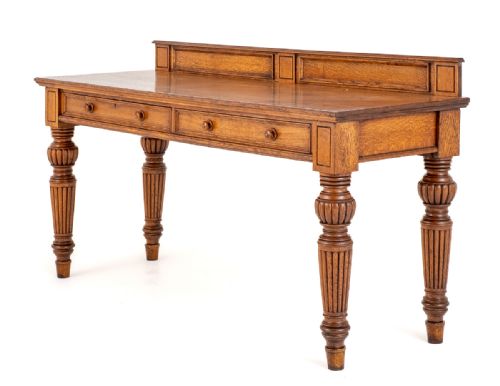
These pieces appear under various designations including hall tables, serving tables, and centre tables. Most examples date from the nineteenth century, including specific years like 1860, 1880, and 1890.
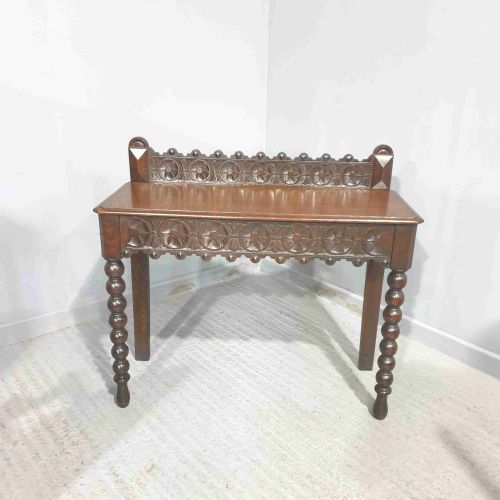
Makers utilised regional tastes, resulting in distinct stylistic groups such as Jacobean Revival, Gothic Revival, and Irish Rococo Revival. A buyer typically encounters these items configured as side tables or freestanding hall furniture.
How they were made
Construction relies primarily on solid oak, shaped through traditional cabinet-making and carving techniques. Many pieces incorporate heavy relief carving, particularly on legs and aprons.
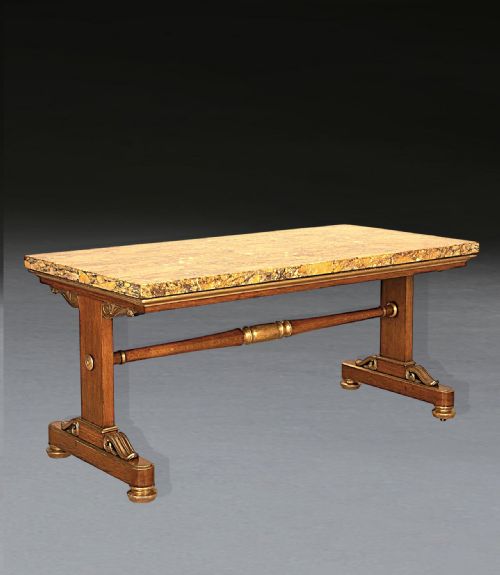
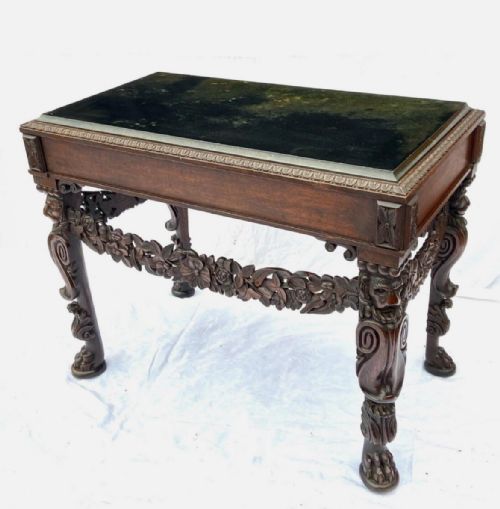
Certain examples combine the timber frame with inset marble tops, utilising materials such as Siena marble and green marble. Giltwood accents occasionally complement the primary oak structure.
Several tables feature carved lion masks and hairy paw feet, ensuring your incoming post is closely guarded by wooden beasts.
What varies in quality
The refinement of the carving dictates much of the distinction between pieces, ranging from simple country execution to elaborate lion masks and paw feet. The integration of imported stone tops, such as marble, elevates the formal ambition of the furniture.
Proportion and structural harmony separate standard utilitarian hall tables from more ambitious Revival designs. The handling of the timber grain and the crispness of the joinery complete the hierarchy.
The Oak Foyer Console Table Glossary
- Console table
- A table designed to stand against a wall, frequently fixed or supported by two front legs. These pieces serve entrance halls and reception spaces.
- Centre table
- A freestanding table meant to be viewed from all sides, placed in the middle of a room rather than against a wall. Some hall tables share this designation in the inventory.
- Giltwood
- Wood that has been treated with gold leaf or gold paint to provide a metallic surface finish. It appears alongside marble in Regency-influenced works.
- Siena marble
- A yellow-brown Italian marble featuring dark grey or purple veins. This decorative stone provides a contrasting top for timber frames.
Oak Foyer Console Table: Frequently Asked Questions
Where should I place a console table?
These pieces suit entrance halls, corridors, and reception spaces where surface area is needed without obstructing movement.
Because they stand flush against walls, they hold items like correspondence or decorative objects while maintaining clear pathways.
How do I care for an oak table?
Keep the timber away from direct heat sources and sudden humidity changes to prevent the wood from splitting.
Regular dusting with a dry cloth preserves the finish without requiring heavy chemical polishes.
Are these tables freestanding?
Most examples function as side tables or console tables designed to sit against a vertical surface. Centre tables in the selection allow for placement in open spaces.
Check the base construction to understand how the piece distributes its weight.