



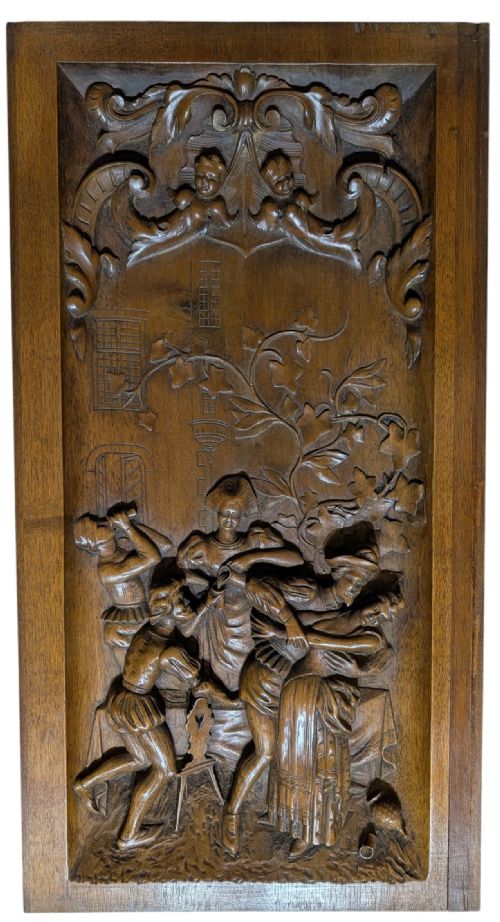


Oak Figural Carving
Oak figural carving brings sculptural presence into a room, capturing faces and bodies hewn from timber across several centuries.
Oak Figural Carving
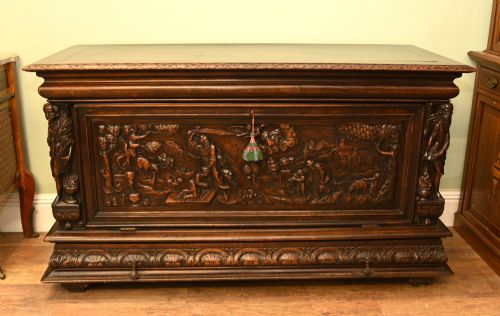
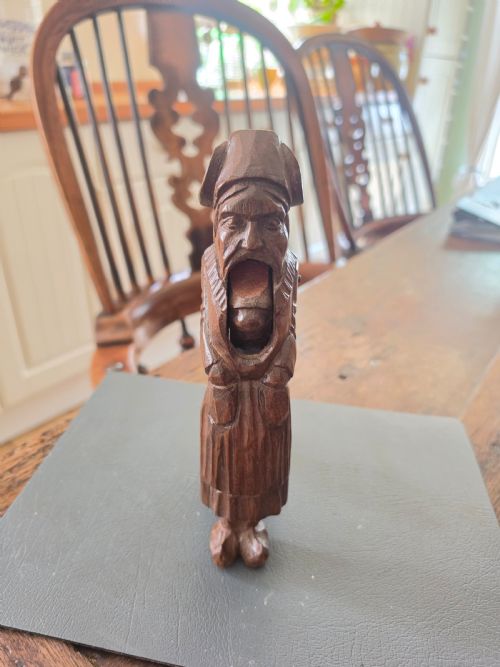
When searching for oak figural carving, you encounter objects ranging from seventeenth-century panels and chests to nineteenth-century armchairs and cupboards. These pieces integrate human or animal figures directly into their wooden structure, displaying styles from Jacobean and Renaissance Revival to French Breton.
The version most commonly met on this page is the nineteenth-century revival piece, often heavily carved with architectural elements, caryatids, or figural medallions. Alongside these sit earlier seventeenth-century survivals, presenting simpler yet robust figural expressions in dark timber.
Materials and construction
These works rely primarily on solid oak, occasionally accompanied by walnut, elm, and iron fixings, shaped through hand carving and joinery. Artisans utilised chisels and gouges to undercut faces and drapery, creating depth directly within the dense grain of the timber.
Many items incorporate secondary materials like brass, glass, and wool tapestry panels alongside the carved wood. Construction methods shift from early pegged framing to nineteenth-century panel assembly and applied ornament.
Oak Figural Carving Retail Price Guide 2026
Typical asking prices for oak figural carving among the pieces listed under this phrase on Sellingantiques today, from the lower quarter to the upper quarter. They describe what is for sale here now, not the wider market.
A solitary St. Bernard dog watches over the inkwells, reminding us that figural carving occasionally prefers a loyal hound to a king.
Assessing quality and execution
Quality rests upon the crispness of the chisel work and the anatomical understanding behind each face or figure. Finer examples display lively expression and proportion, whereas lesser pieces rely on repetitive, shallow scoring.
The integration of the figure into the architectural frame also dictates standard. Superior objects make the carving feel structural rather than pasted on, whereas lower-tier items treat the figures as mere surface decoration.
The Oak Figural Carving Glossary
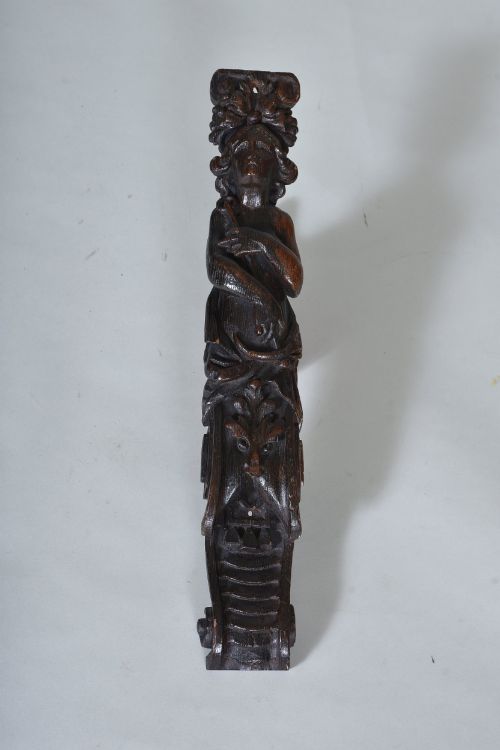
- Caryatid
- A sculpted female figure serving as an architectural support in place of a column or pilaster. They frequently appear on pedestals and cabinet corners.
- Coffer
- A large wooden chest used for storage, often heavily decorated with panels and carvings. Early examples frequently employ joined oak construction.
- Renaissance Revival
- A nineteenth-century design movement drawing inspiration from sixteenth-century motifs. This style heavily influences many cabinets and cupboards on the page.
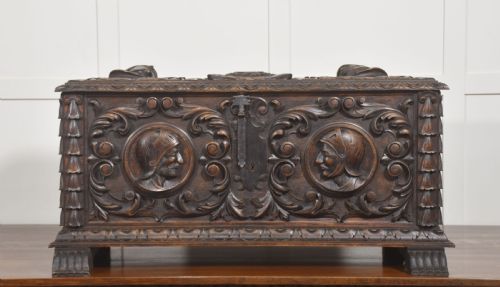
- Medallion
- An oval or circular plaque bearing a carved portrait or figural scene. These embellish panels on coffers and sideboards.
Oak Figural Carving: Frequently Asked Questions
How do I date a carved oak panel?
Dating relies on tool marks, timber shrinkage, and the specific style of the figural costume. Seventeenth-century work shows hand-riven boards and irregular chisel application.
Later nineteenth-century revival pieces display mechanical saw marks and softer, more uniform surface patination. Comparing the joinery to known period examples confirms the era.
Where were Breton armchairs made?
Breton armchairs originate from the Brittany region of France, known for distinct regional furniture traditions. They frequently incorporate figural panels depicting local figures in traditional dress.
These chairs reached popularity in the nineteenth century and were exported widely. Their heavy oak frames showcase characteristic regional carving.
Can I use an antique cupboard daily?
Antique cupboards and cabinets function well for modern storage if placed away from direct heat sources. Oak tolerates normal indoor humidity provided the environment remains stable.
Internal shelves and doors operate best when hinges receive occasional light maintenance. Regular dusting preserves the carved surfaces without damaging the finish.