



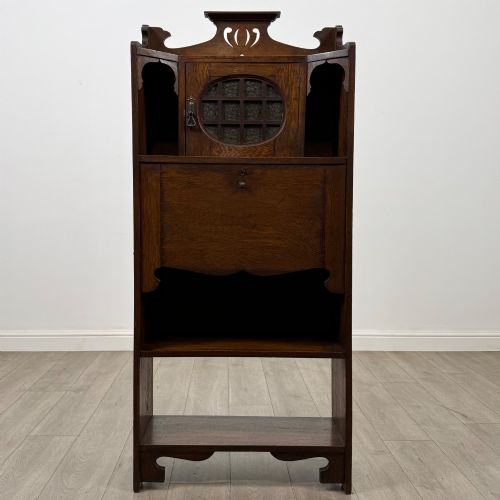
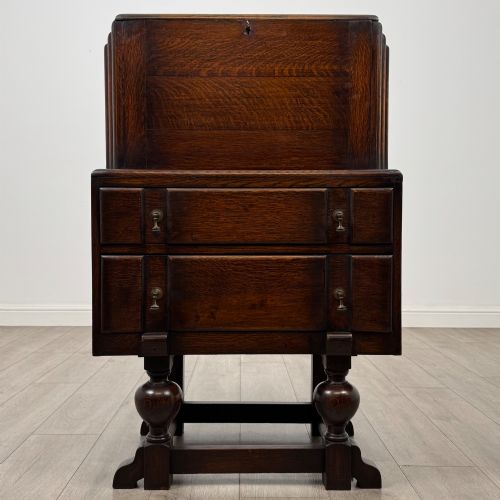
Oak Drop Front Bureau
An oak drop front bureau provides a sloping fall that conceals pigeonholes and drawers, offering a practical writing surface with enclosed storage.
Oak Drop Front Bureau
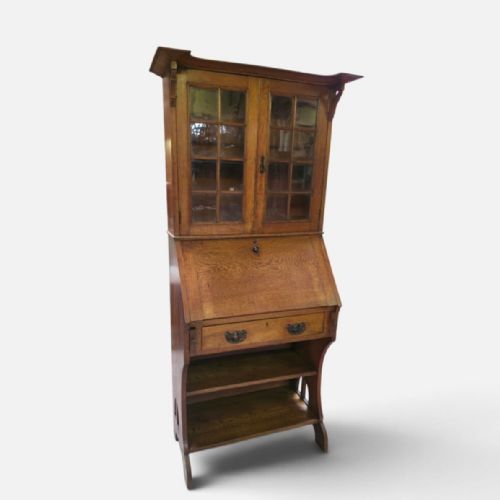
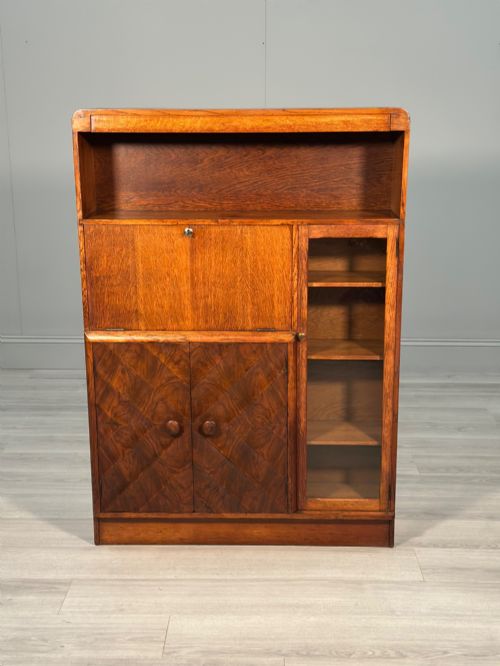
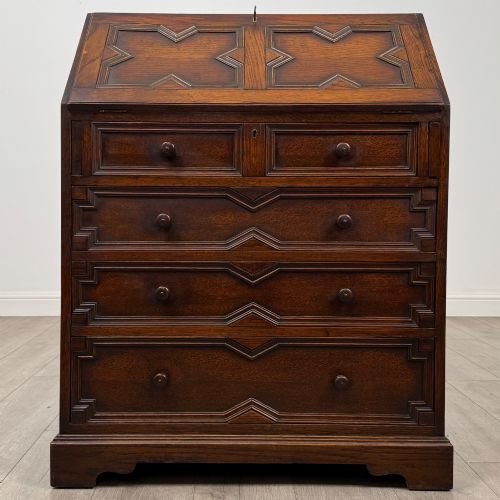
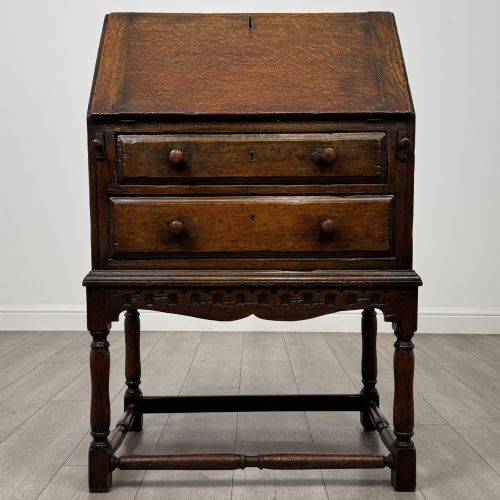
An oak drop front bureau brings together centuries of cabinet making, appearing in forms that range from simple 17th century vernacular pieces to elaborate Georgian bureau bookcases and 20th century Edwardian variations. Buyers seeking this phrase encounter formats varying from compact corner bureaus to tall cabinets fitted with glazed upper bookcases.
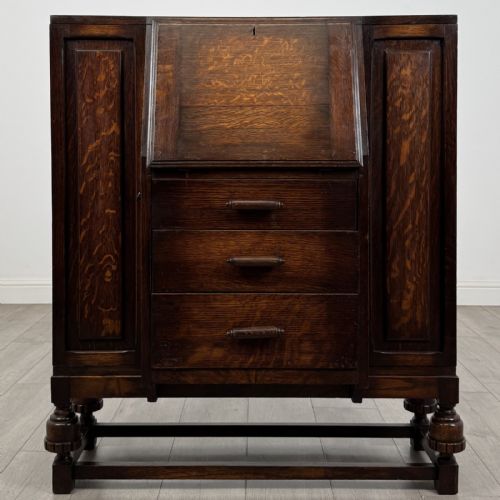
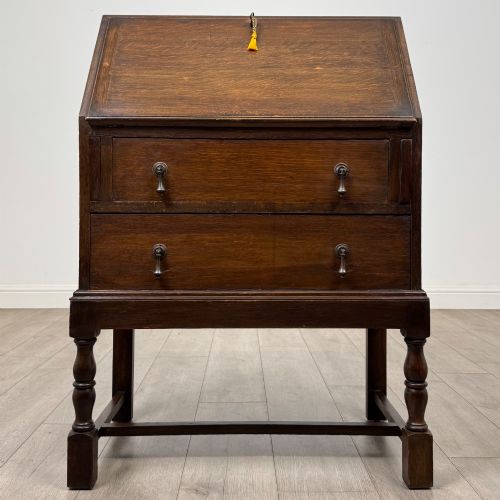
The Edwardian period contributes a large portion of the selection in golden or ebonised oak, alongside revival pieces reflecting Jacobean and Tudor tastes. Earlier examples from the 18th century often display Georgian or George I proportions, featuring solid construction and fitted interiors with small drawers and pigeonholes.
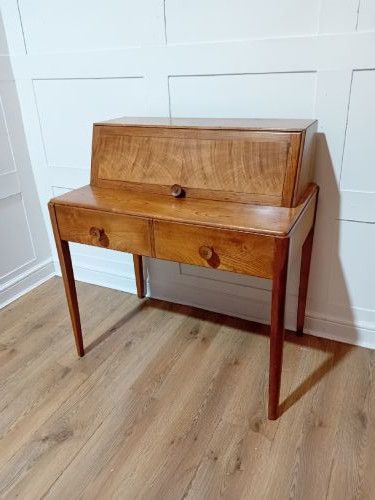
Makers from the Arts and Crafts movement also left their mark on the form, producing distinctive designs during the early decades of the 20th century. Whether meeting a vernacular 17th century strong box or a 1930s Cotswold school writing desk, the fundamental purpose remains a sloping fall front that opens to form a writing ledge.
Materials and construction methods
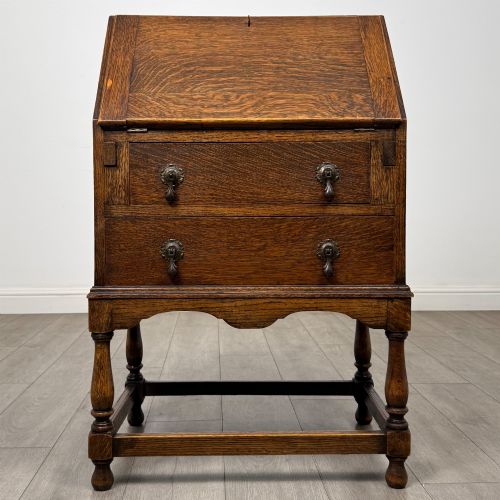
Cabinet makers utilised solid oak and oak veneers, frequently pairing the timber with brass handles, hinges, and escutcheons. Iron hardware occasionally appears on earlier 17th century pieces, while glass panels define the doors of upper bookcase sections.
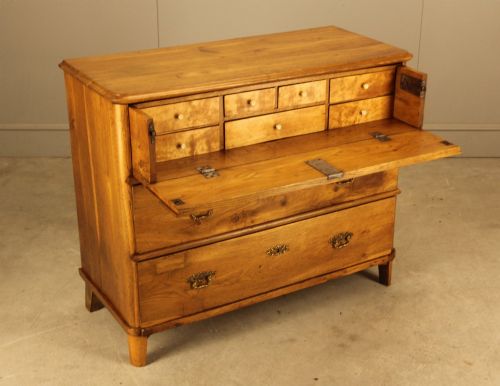
Construction techniques involve panel and frame assembly for the carcase and fall front, complemented by dovetail joints on internal and external drawers. Secondary timbers such as mahogany and pine sometimes line the interior compartments and drawer interiors.
Oak Drop Front Bureau Retail Price Guide 2026
Typical asking prices for oak drop front bureau among the pieces listed under this phrase on Sellingantiques today, from the lower quarter to the upper quarter. They describe what is for sale here now, not the wider market.
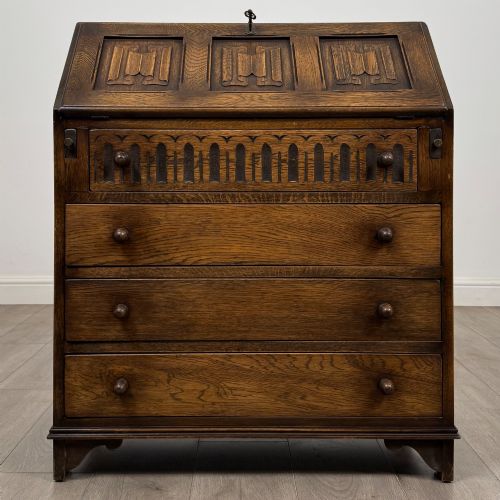
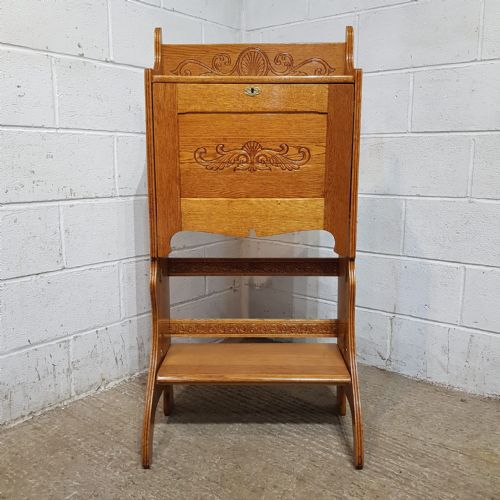
At least one piece incorporates a carved Green Man motif, watching over the correspondence from within the Edwardian era.
Distinctions in craftsmanship and design
The standard of an oak drop front bureau rests upon the selection of timber, the grain figuring, and the integration of parquetry or carved details such as linenfold motifs and Green Man masks. Superior examples display meticulous hand dovetailing and intricate interior joinery within the pigeonholes and secret compartments.
Proportion and execution define the hierarchy of these desks, where pieces attributed to known Cotswold school workshops or specific makers demonstrate refined execution compared to mass produced commercial alternatives. The complexity of the bureau bookcase configuration and the presence of original brassware further elevate the standing of a piece.
Arthur Basil Reynolds·Stanley Webb Davies·Robert Mouseman Thompson·Harris Lebus·Larkin
The Oak Drop Front Bureau Glossary
- Fall front
- The hinged sloping panel that drops forward to create a flat writing surface and conceals the inner compartments. It remains the defining characteristic of this furniture type.
- Bureau bookcase
- A dual purpose piece comprising a writing bureau base beneath an upper shelving cabinet enclosed by wooden or glass doors. These combinations frequently date from the Georgian era.
- Linenfold
- A style of carved wooden panelling that resembles folded vertical lengths of fabric. This ornamentation appears on Edwardian and revival oak furniture.
- Parquetry
- Geometric patterns formed by small pieces of fitted wood veneer inlaid into a surface. Examples occur on select 17th century pieces.
- Pigeonhole
- A small open compartment built into the interior writing well for sorting letters and papers. These are often flanked by miniature drawers and hidden compartments.
Oak Drop Front Bureau: Frequently Asked Questions
What is an oak drop front bureau?
An oak drop front bureau is a writing desk featuring a hinged writing flap that opens forward at an angle. This panel conceals an interior arrangement of small drawers, compartments, and pigeonholes.
Such desks evolved from storage chests into dedicated writing furniture during the 17th century and continued through the Georgian and Edwardian eras in various revival styles.
How do I identify a Georgian bureau?
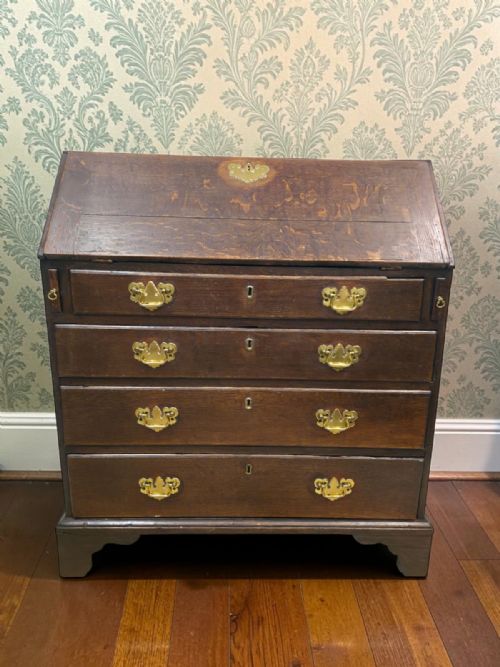
Georgian bureaus typically display solid oak or mahogany construction with clean structural lines, bracket feet, and hand-cut dovetails on the drawer construction. The interior fittings often include secret compartments and classically proportioned pigeonholes.
Later Edwardian revival pieces may imitate these proportions but often utilise lighter oak finishes, machine cut joints, or applied decorative carving like linenfold.
Were these desks used for writing?
These pieces served as functional workstations for correspondence and record keeping in homes and offices. Dropping the front panel created a stable desktop while keeping documents securely locked away behind the fall.
When closed, the sloping lid protected the writing materials from dust and kept the room tidy by hiding the interior paperwork.