


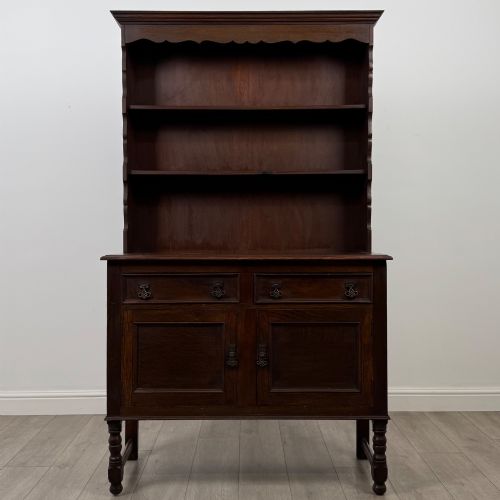
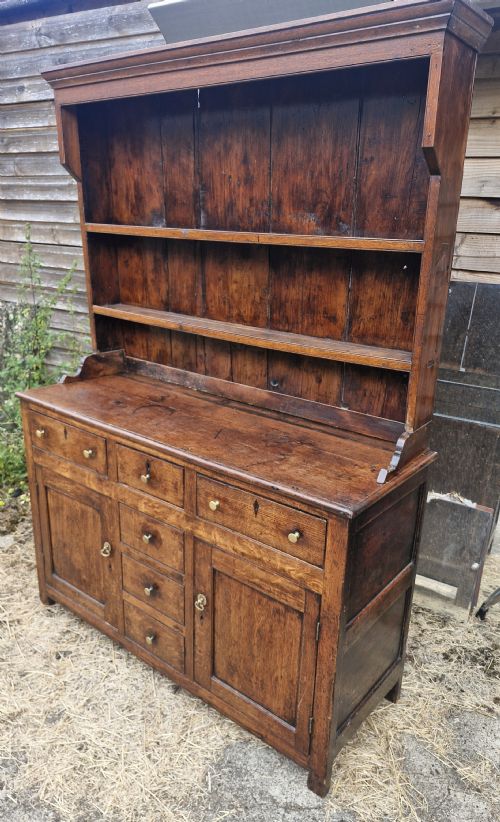
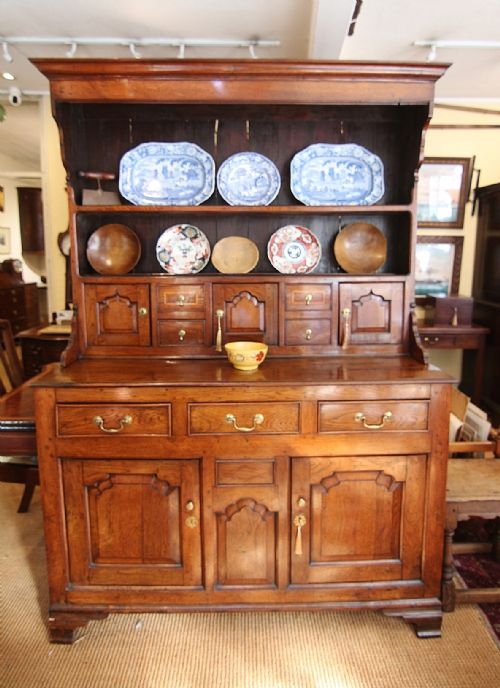
Oak Dresser with Hutch
An oak dresser with hutch brings sturdy timber and practical display shelving straight from farmhouse kitchens into modern dining rooms.
Oak Dresser with Hutch
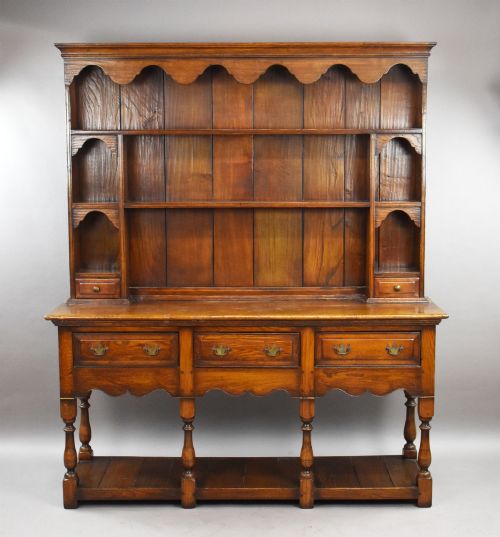
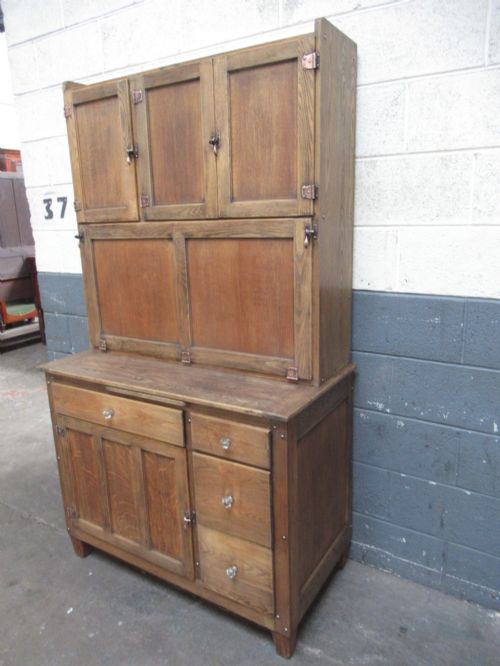
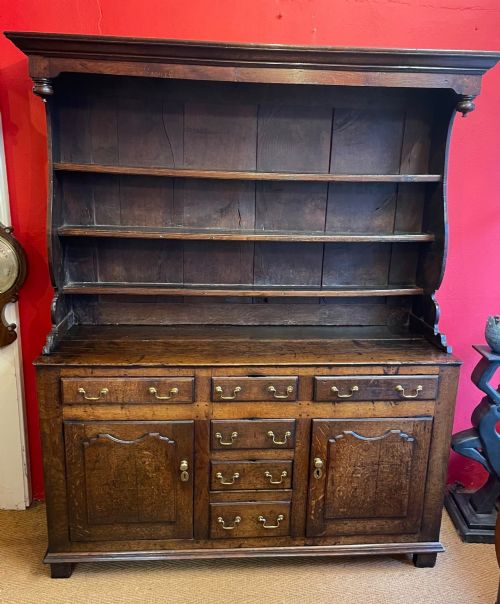
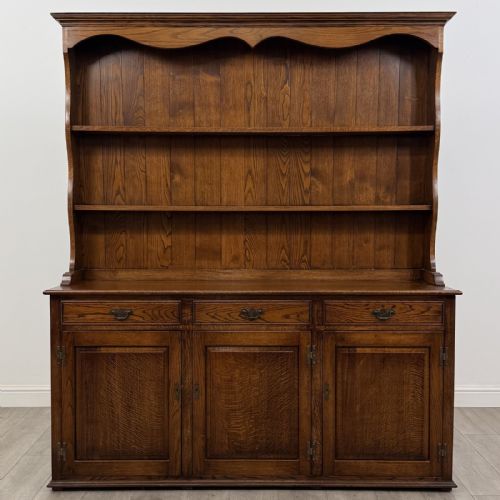
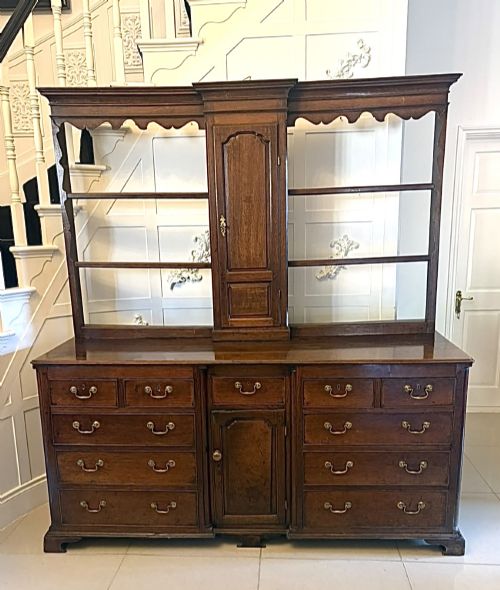
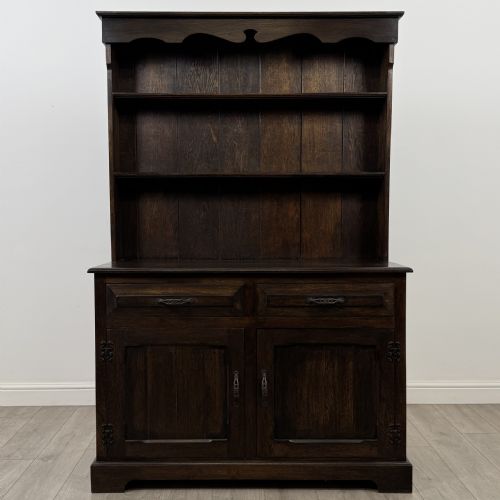
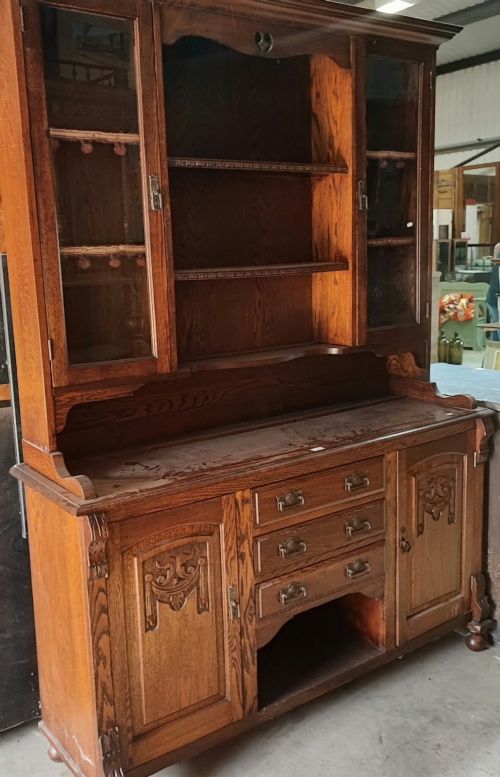
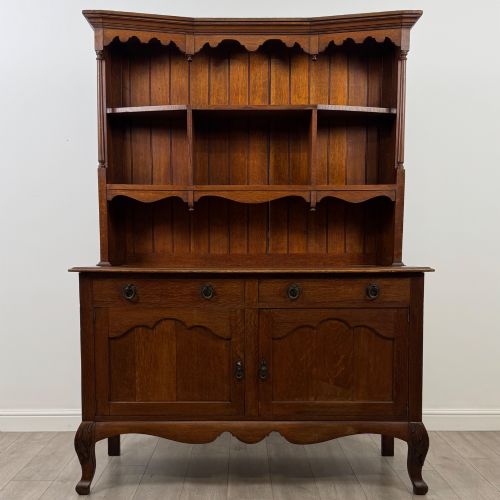
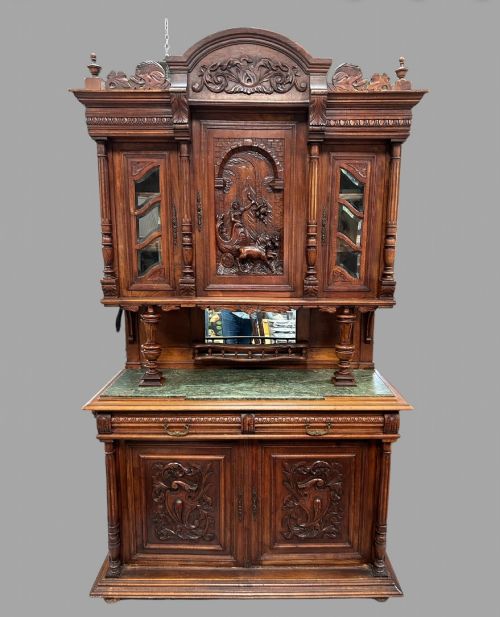
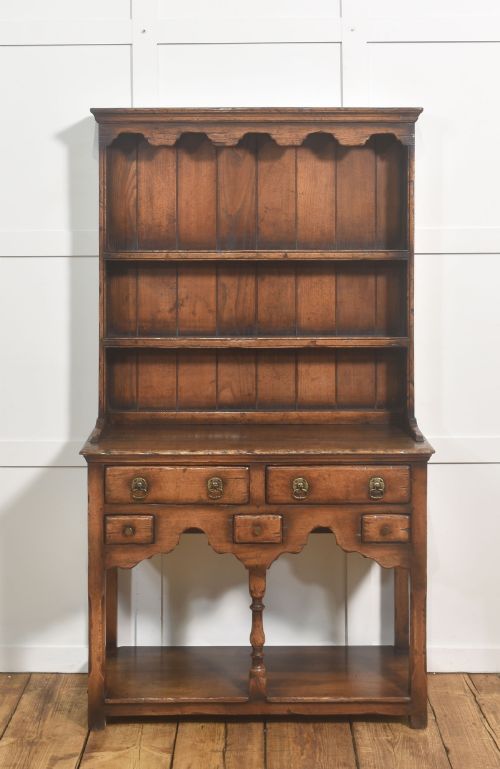
An oak dresser with hutch combines a lower base of drawers or cupboards with an upper plate rack or cabinet designed for displaying tableware. Pieces span the eighteenth, nineteenth and early twentieth centuries, encompassing Georgian, Victorian and Edwardian eras.
The most common examples on this page are Welsh dressers and country farmhouse pieces built in solid oak. Styles range from plain English country vernacular to decorative Georgian designs with breakfront drawers and potboard bases.
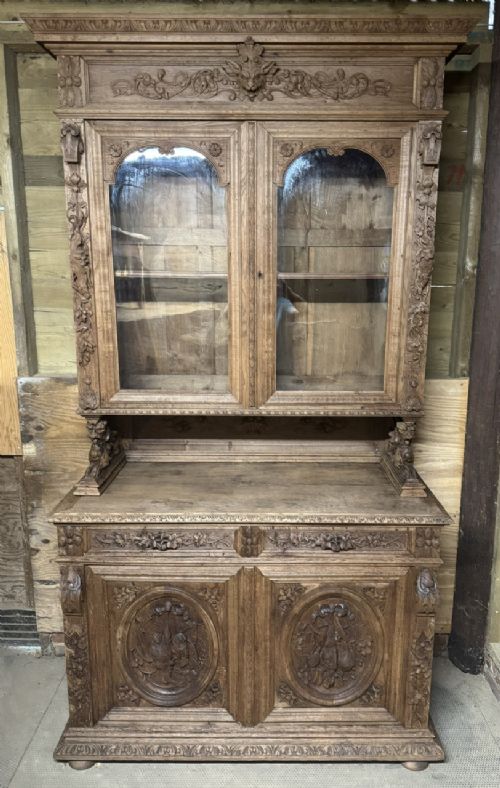
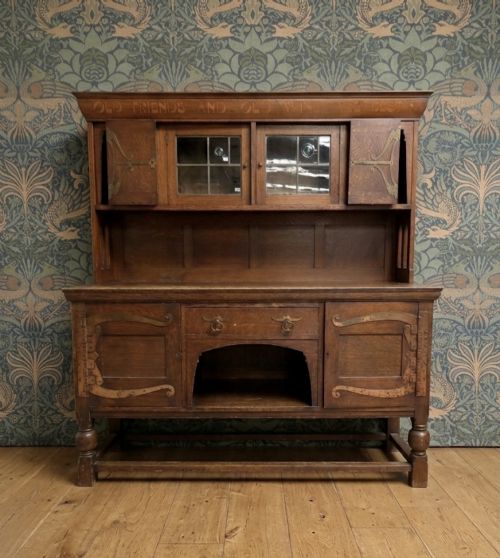
Makers and workshops also produced Arts and Crafts interpretations alongside revival styles during the later nineteenth and early twentieth centuries. Regional variations appear in listings from South Wales and provincial French workshops working in walnut and fruitwood.
Distinguishing quality across examples
Quality rests upon the selection of timber, the integrity of the original joints and the crispness of any carved geometric details. Early eighteenth-century joined pieces display superior hand-craftsmanship compared to mass-produced revival items from the twentieth century.
Proportion and untouched patination elevate a piece, particularly where original brass drop handles, potboards and plate racks remain intact. Alterations to upper tiers or replaced hardware alter the historical standing of older examples.
Oak Dresser with Hutch Retail Price Guide 2026
Typical asking prices for oak dresser with hutch among the pieces listed under this phrase on Sellingantiques today, from the lower quarter to the upper quarter. They describe what is for sale here now, not the wider market.
Certain Georgian pieces feature carved wooden kings peering out from the woodwork, keeping a stern watch over the dining room china.
Ambrose Heal for Heal & Son·Shapland and Petter
The Oak Dresser with Hutch Glossary
- Plate rack
- An upper shelving unit attached to the base of the dresser, specifically designed to display plates upright. These structures often feature grooved plate rails and shaped friezes.
- Potboard
- An open slatted lower shelf situated near the floor between the legs of a dresser. This feature originated for storing heavy pots and pans in country kitchens.
- Breakfront
- A piece of furniture whose central section projects forward from the flanking sides. This configuration creates architectural depth on drawer fronts and base cabinets.
- Joinery
- The wooden framing method used to construct furniture without relying on modern metal fasteners. Joined oak furniture utilises pegged mortise and tenon joints.
- Welsh dresser
- A traditional regional form featuring a lower sideboard combined with an open shelving superstructure. They frequently incorporate cupboard bases or side drawers.
Oak Dresser with Hutch: Frequently Asked Questions
What is the difference between a Welsh dresser and a standard sideboard?
A Welsh dresser includes an upper plate rack or hutch for displaying ceramics mounted on top of the lower storage base.
Sideboards consist only of the lower cabinet or drawer section without any upper shelving superstructure.
How do I distinguish an eighteenth-century dresser from a later revival piece?
Eighteenth-century examples display hand-cut joinery, pegged framing and deep natural patination acquired through centuries of use.
Revival pieces from the twentieth century often utilise cleaner machine-cut components and uniform surface finishes.
Were all of these dressers originally made in oak?
While oak is the predominant timber seen across the listings, makers also utilised walnut, fruitwood, mahogany and elm.
Some provincial pieces incorporate secondary woods like pine within their internal framework and drawer construction.
How were potboards used in historic kitchens?
Potboards provided an open low-level shelf between the legs of early dressers to keep heavy cooking vessels off damp flagstone floors.
Over time, this practical kitchen storage evolved into a decorative platform for displaying copper and ceramic kitchenware.