

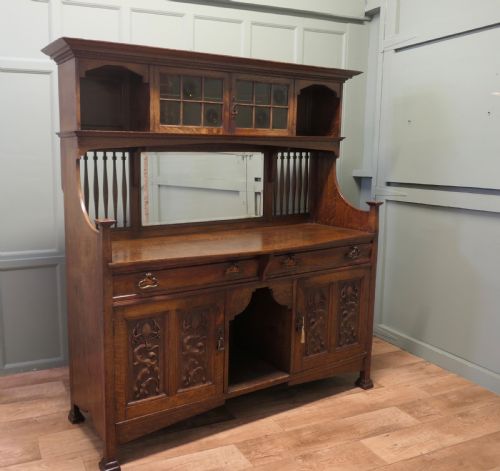
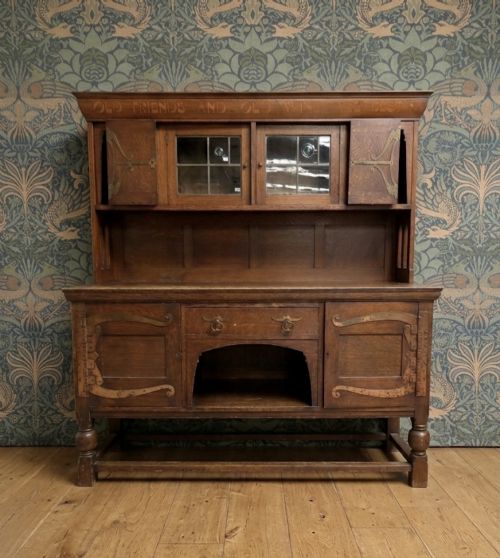


Leaded Glass Oak Buffet
These leaded glass oak buffet pieces bring robust timber and glazed leadwork together, offering both storage and display for the home.
Leaded Glass Oak Buffet
A leaded glass oak buffet combines heavy timber framework with glazed cupboard doors, frequently taking the form of sideboards, dressers, and display cabinets. These items originate predominantly from the Victorian, Edwardian, and early twentieth-century periods, capturing the spirit of the era.
The dominant aesthetic across these listings aligns closely with the Arts and Crafts movement, alongside instances of Tudor and Jacobean revival styles. Buyers encountering this selection will regularly find sideboard and cabinet combinations designed to anchor a dining room or hallway.
How they were made
Construction relies heavily on solid oak, shaped into substantial sideboards and cabinet dressers using traditional joinery methods. Metal fixtures in brass, copper, and iron appear frequently on doors and drawer fronts.
The distinctive glazing uses lead came to hold individual panes of glass securely within the wooden framework. This combination of glass and lead creates intricate geometric or floral patterns across the cabinet doors.
Leaded Glass Oak Buffet Retail Price Guide 2026
Typical asking prices for leaded glass oak buffet among the pieces listed under this phrase on Sellingantiques today, from the lower quarter to the upper quarter. They describe what is for sale here now, not the wider market.
Listings feature oak combined with leaded glass, brass, copper, and iron across Victorian and Edwardian periods.
What varies in quality
Distinction in quality often rests on the attribution to notable retail houses and designers of the period. Pieces bearing documented workshop origins command greater attention from collectors.
The execution of the carved ornamentation and the precision of the leaded glass assembly differentiate standard production items from exceptional examples.
Ambrose Heal for Heal & Son·Liberty & Co.
The Leaded Glass Oak Buffet Glossary
- Leaded glass
- Glass panes held together by strips of lead called came. This technique allows for decorative geometric designs within cabinet doors.
- Arts and Crafts
- A design movement valuing handcraftsmanship and simple forms over mass production. It heavily influences the sideboards and cabinets found in this category.
- Sideboard
- A large piece of furniture used for storing dining utensils and serving food. They frequently incorporate display shelving and cupboards.
- Jacobean Revival
- A style reviving seventeenth-century British furniture characteristics. It appears in the heavy carved detailing of specific oak cabinets.
Leaded Glass Oak Buffet: Frequently Asked Questions
Where should I place an oak buffet?
Dining rooms and large hallways provide natural settings for these substantial storage units. Their presence anchors a room while offering practical display space.
Ensure adequate clearance for cabinet doors to open fully without obstruction from surrounding furniture.
How do I care for leaded glass?
Clean the glass panes gently using a soft cloth and mild cleaning solution applied to the cloth rather than directly sprayed. This prevents moisture from seeping behind the lead came.
Inspect the lead joints periodically to ensure the glass remains stable within the wooden frame.
What periods do these pieces span?
The selection encompasses late nineteenth-century Victorian pieces alongside Edwardian examples up to around nineteen-ten. Stylistic shifts reflect both revival movements and the rise of the Arts and Crafts aesthetic.
Dates generally align with the turn of the twentieth century.
How do I identify Arts and Crafts pieces?
Look for honest construction, visible timber grain, and minimal yet purposeful carved ornamentation. Metalwork fittings in brass or copper often display hand-beaten textures.
These designs prioritise utility and straightforward craftsmanship over excessive decoration.