


Oak Dining Buffet
An oak dining buffet serves as the anchor of a room, bringing substantial presence and functional storage for dining service.
Oak Dining Buffet
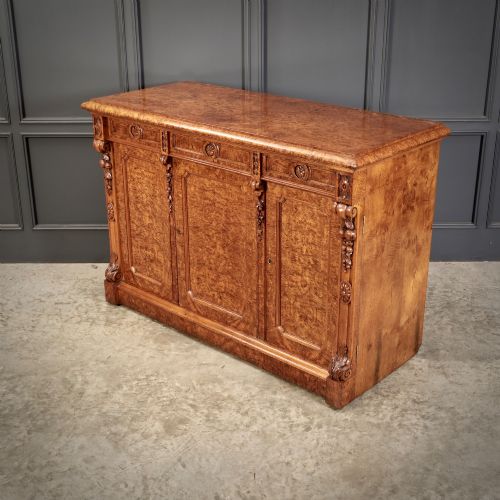
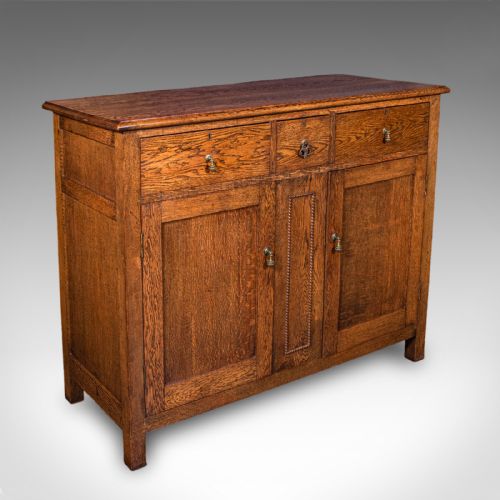
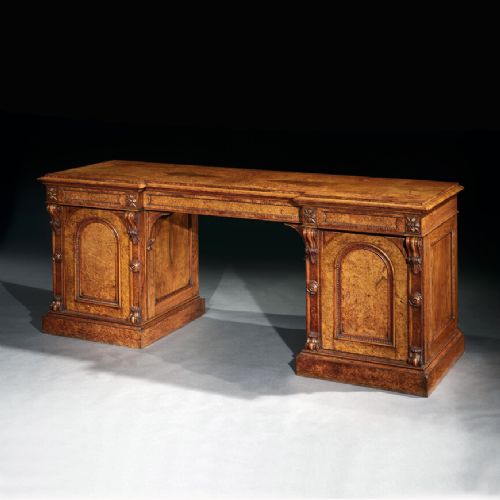
An oak dining buffet encompasses heavy storage pieces designed for food preparation, serving, and display in dining spaces. The inventory spans from the eighteenth century through the twentieth century, with nineteenth-century Victorian and Edwardian examples appearing most frequently.
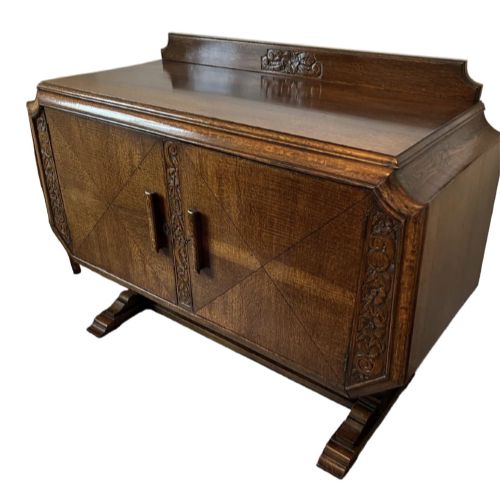
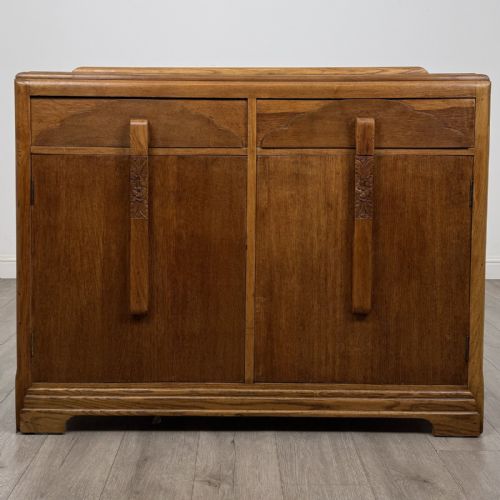
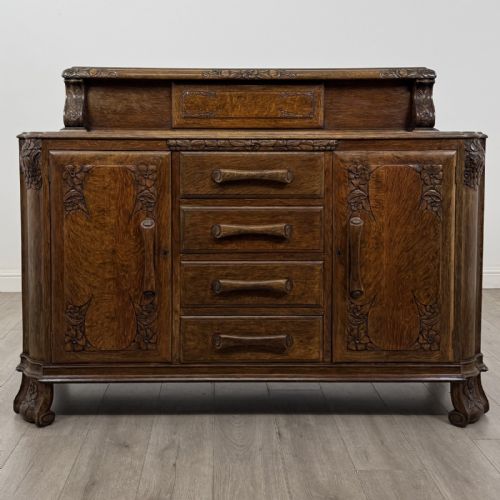
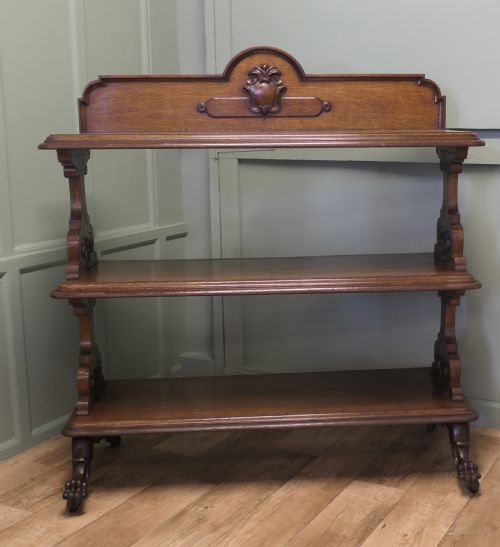
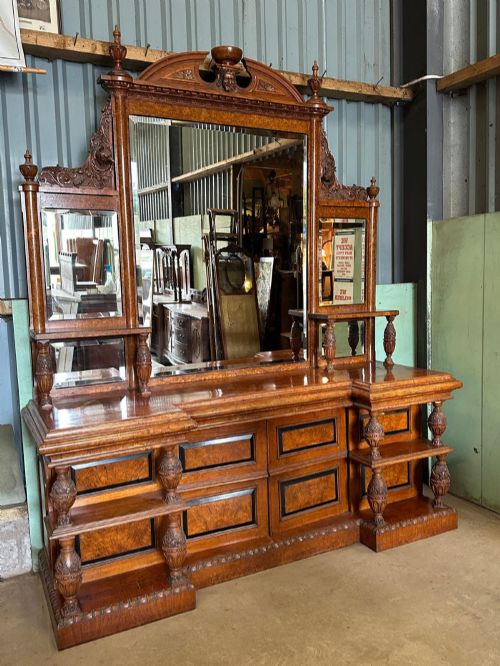
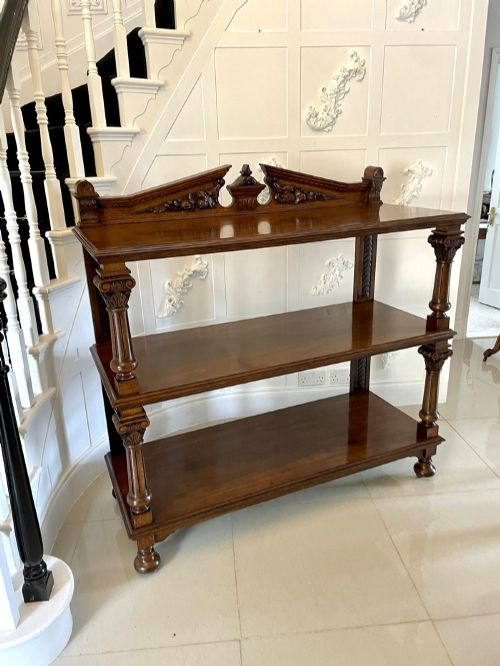
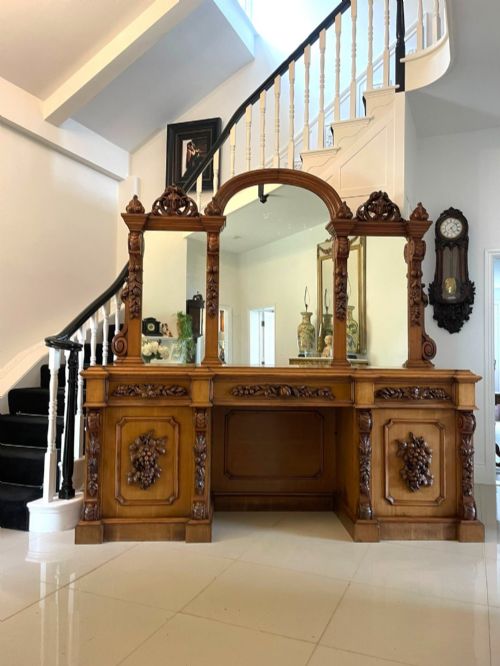
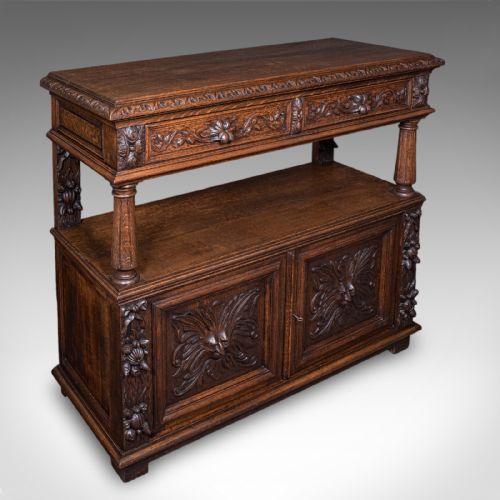
Makers and cabinetmakers produced these pieces in forms ranging from monumental Victorian carved sideboards and mirror-back cabinets to low servers, dumbwaiters, and court cupboards. Stylistic influences across the selection include Jacobean Revival, Gothic Revival, Arts and Crafts, and Art Deco.
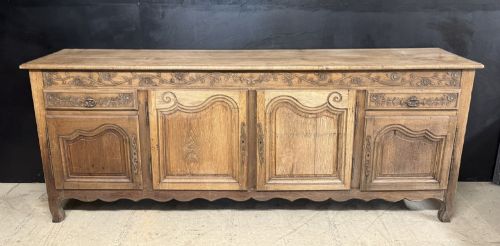
Buyers will encounter regional variations, such as French provincial low buffets and Scottish servers, alongside standard English golden oak and pollard oak iterations.
Materials and Technique
Cabinetmakers relied primarily on solid oak and figured timbers like pollard oak, burr walnut, and mahogany, accented with brass hardware, glass panels, and iron fittings. Timber selection dictated the visual weight, ranging from deeply figured pollard grain to bleached and limed finishes.
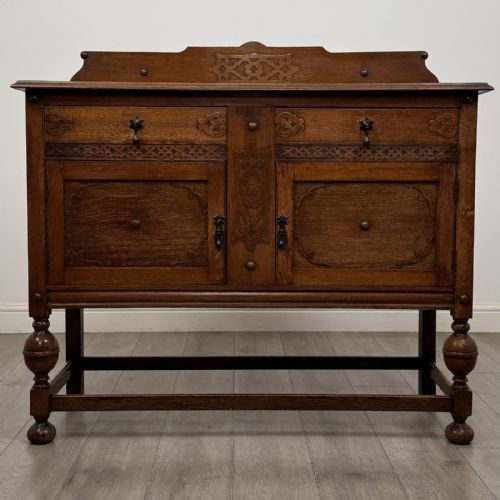
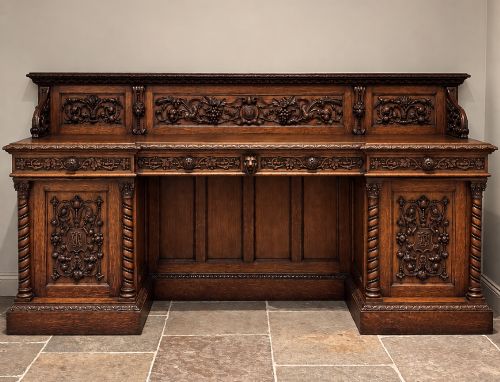
Construction techniques involve traditional joinery, heavy carving, and parquetry tops. Artisans employed lathe work for barley-twist supports and applied elaborate relief carving characteristic of revivalist aesthetics.
Oak Dining Buffet Retail Price Guide 2026
Typical asking prices for oak dining buffet among the pieces listed under this phrase on Sellingantiques today, from the lower quarter to the upper quarter. They describe what is for sale here now, not the wider market.
Listings span from the 18th century to the 1930s, featuring oak alongside pollard oak, walnut, and mahogany.
Assessing the Standard
Quality rests in the selection of timber figures, such as pollard oak or burr walnut veneers, and the depth and crispness of hand-carved ornamentation. Pieces demonstrating superior cabinetmaking maintain tight joinery and integrated hardware without relying on mass-produced machine detailing.
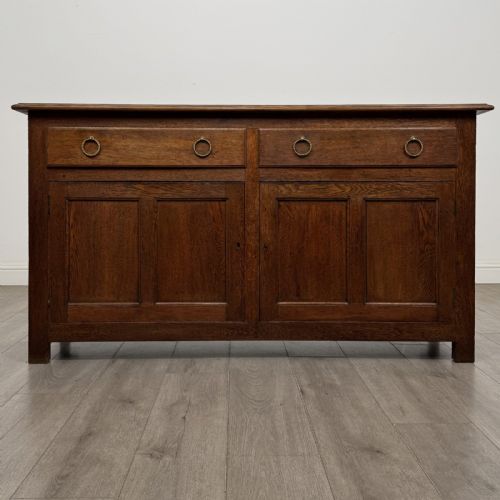
The sophistication of the stylistic execution, whether a restrained Arts and Crafts aesthetic or a complex Victorian Renaissance Revival design, determines the relative standing of each piece.
Heals of London·Gomme
The Oak Dining Buffet Glossary
- Pollard oak
- Oak timber harvested from pollarded trees, yielding a dense, highly figured, mottled grain pattern prized for decorative furniture panels.
- Barley-twist
- A turned column or support carved in a helical spiral resembling a twisted rope, common in seventeenth-century and revival furniture.
- Court cupboard
- A traditional enclosed piece of furniture featuring multiple tiers, used for displaying plate and storing provisions.
- Dumbwaiter
- A tiered serving table or stand utilised for holding dishes and silverware near the dining table without requiring servant attendance.
- Parquetry
- Geometric mosaic woodwork arranged in patterns, frequently utilised for decorative table and sideboard tops.
Oak Dining Buffet: Frequently Asked Questions
What is an oak dining buffet used for?
These pieces provide substantial storage capacity for dining room china, silver, and table linens while offering a surface for serving food.
They also serve as display furniture for decorative objects, particularly variations featuring upper shelves or mirror backs.
How do I identify a Victorian oak buffet?
Victorian examples typically exhibit heavy proportions, deep hand-carving, and elaborate architectural details inspired by Gothic or Renaissance revival styles.
Dark finishes and substantial brass or iron hardware are standard characteristics of this period.
What distinguishes Arts and Crafts buffets?
Arts and Crafts pieces emphasise honest construction, plain surfaces, and natural timber grain rather than heavy applied ornamentation.
They often feature subtle geometric lines and handcrafted copper or brass fittings.
Where should I place a buffet in my dining room?
Buffets fit flush against a primary dining room wall, acting as a functional sideboard during meals and a focal point when unladen.
Ensure adequate clearance around the piece for doors and drawers to open fully.