
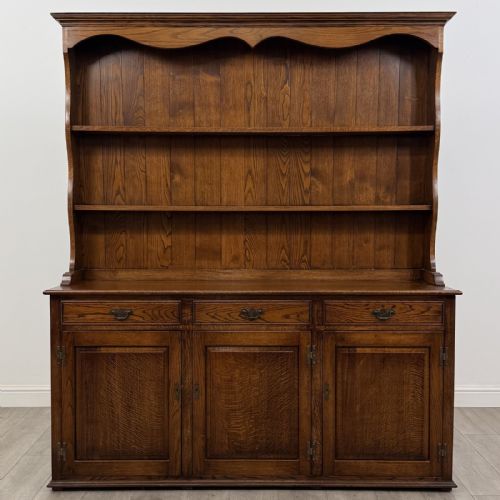
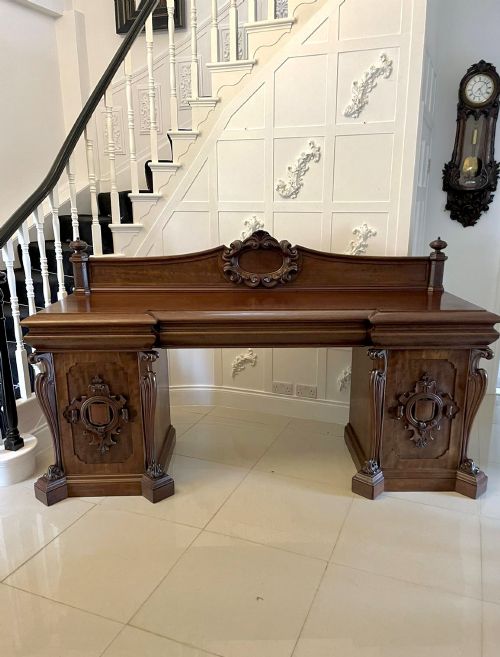
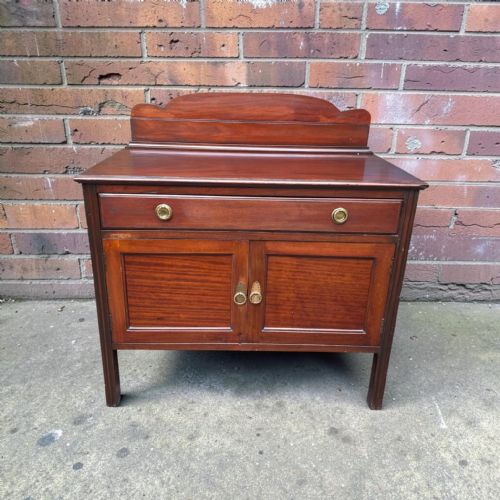
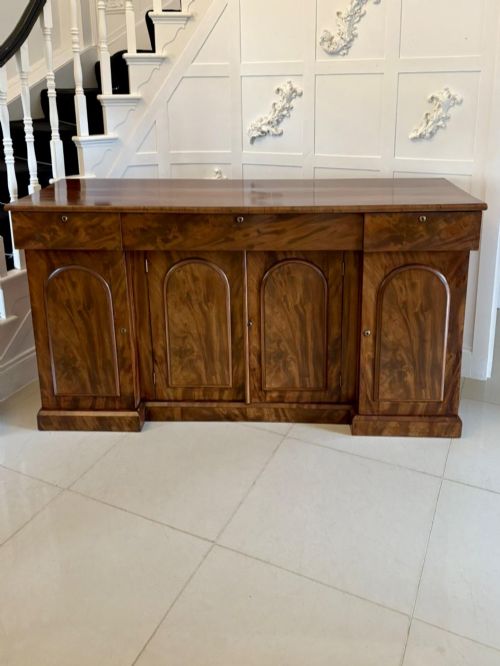
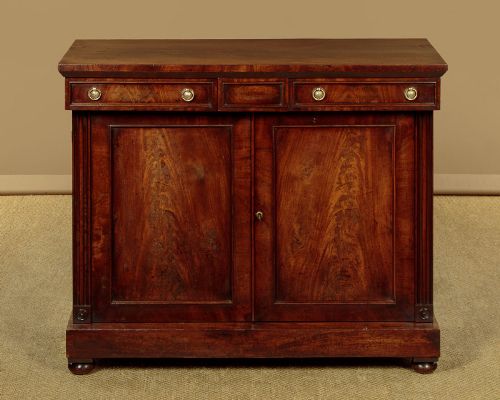
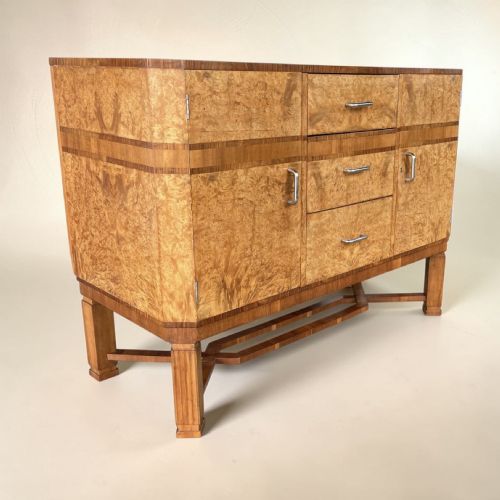
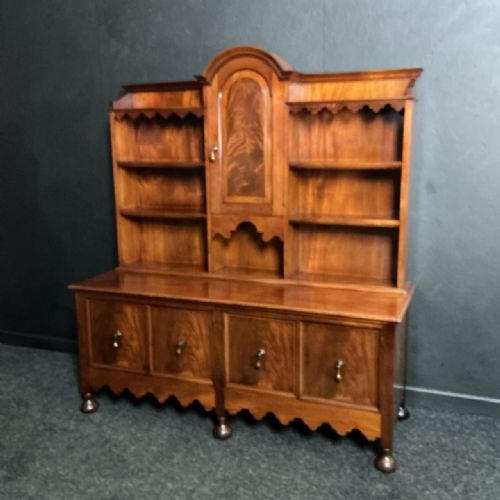
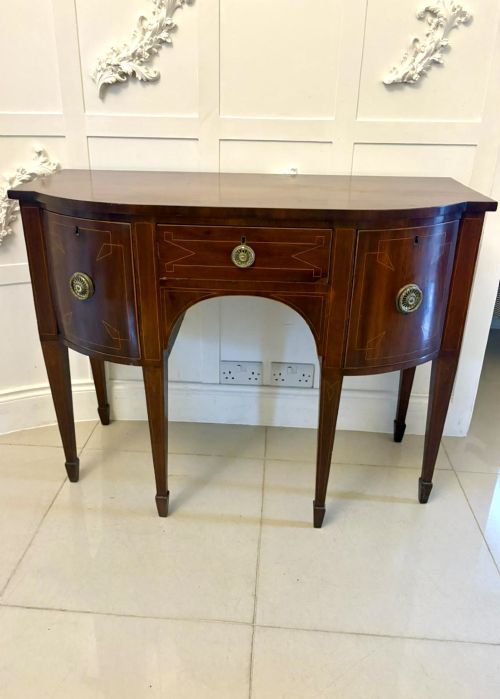
Wooden Dining Room Sideboard
A wooden dining room sideboard anchors a room with grain and proportion, serving family meals and storing silver.
Wooden Dining Room Sideboard
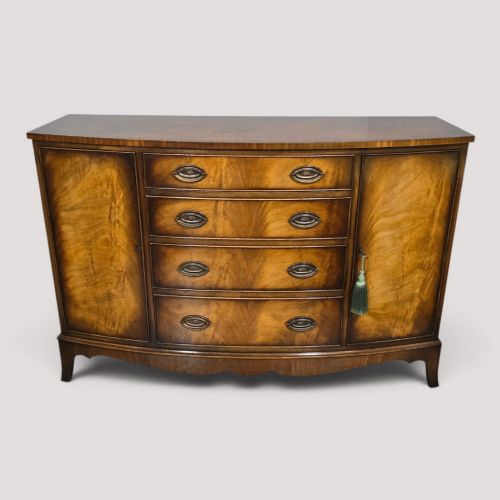
A wooden dining room sideboard brings centuries of dining traditions into a modern interior, offering surface space for serving and enclosed storage for tableware. When you search for this phrase, you meet pieces ranging from Georgian and Regency eras to Victorian, Edwardian, and Art Deco periods.
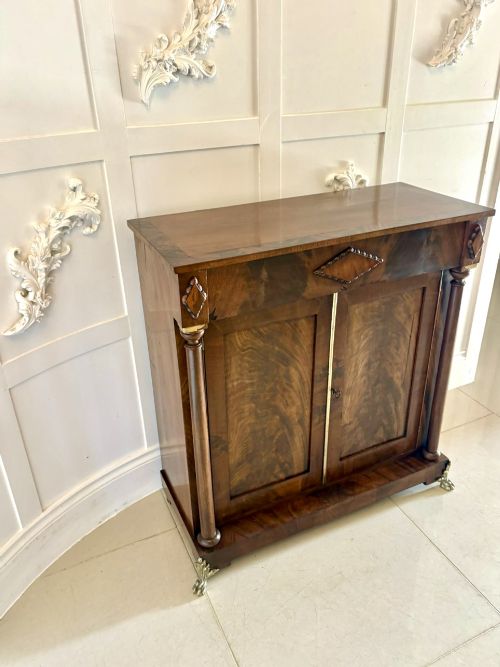
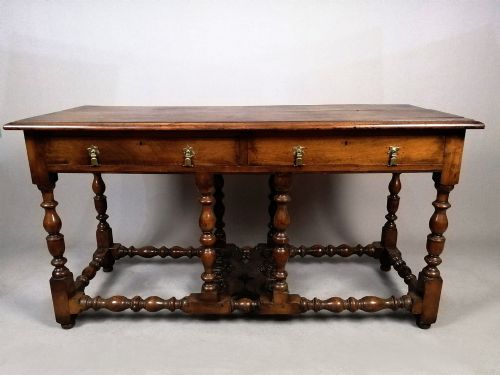
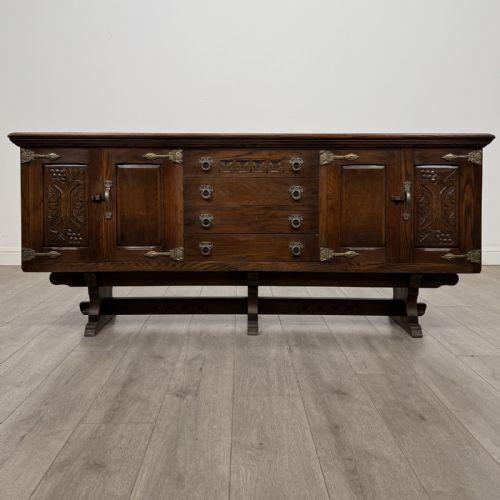
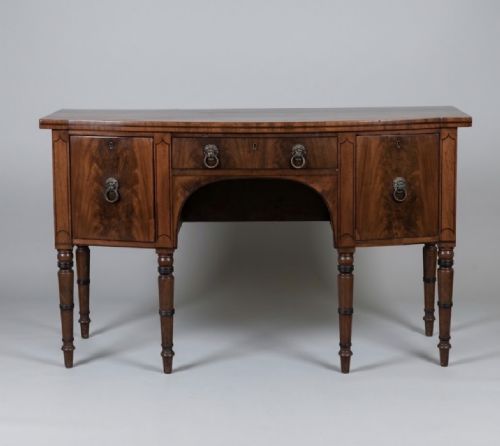
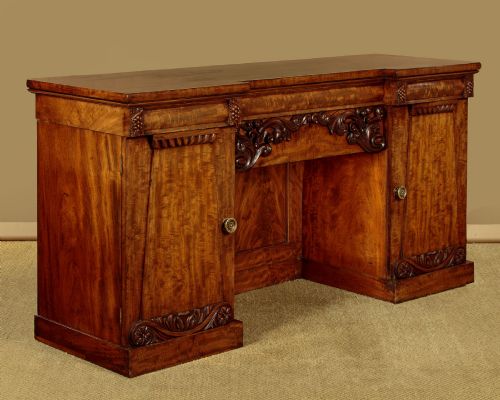
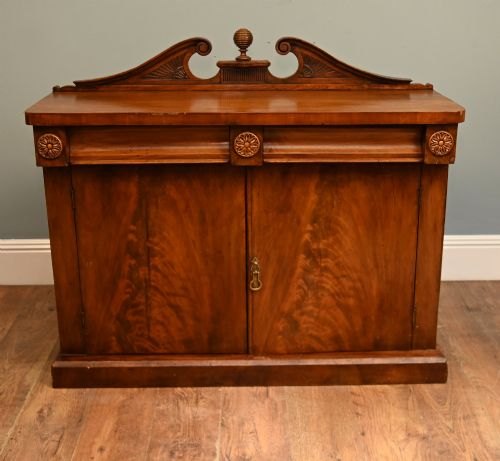
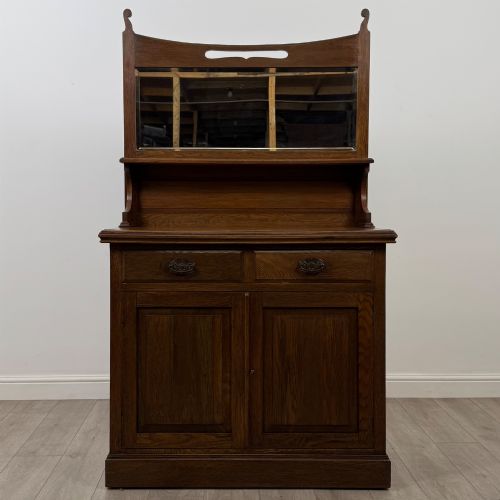
The most frequent examples on this page are mahogany sideboards from the nineteenth century, alongside oak and walnut variations. Forms extend from bow-front and breakfront server tables to chiffoniers, buffets, and tall cupboards with mirrored or carved backs.
Origins span formal eighteenth-century designs bearing Sheraton or Hepplewhite influences down to sturdy Edwardian utility and twentieth-century modernism. Each type reflects the dining habits and interior fashions of its decade, from grand Georgian dining rooms to compact Edwardian homes.
Materials and construction
Cabinet makers relied primarily on mahogany, oak, and walnut, often applying flame or figured veneers to create striking surface patterns across drawer fronts and doors. Inlaid details in boxwood and contrasting timbers add linear framing to geometric and classical motifs.
Structural integrity relies on traditional joinery, complemented by brass handles, escutcheons, and occasional marble tops on Victorian iterations. Glass panels appear in cabinet doors, while internal compartments accommodate cutlery sets and serving platters.
Forms range from simple serving tables and bow-front cupboards to mirror-backed chiffoniers and fitted cutlery cabinets.
Assessing craftsmanship
Quality reveals itself in the selection of timber, where matched flame mahogany or burr walnut veneer shows deliberate grain continuity across the front. Finer pieces demonstrate precise inlay work and well-fitted drawers that run smoothly within their carcases.
Carved ornament distinguishes standard production from exceptional work, seen in crisp foliage and classical details executed by skilled hands. The weight and finish of original brass hardware further separate everyday storage items from distinguished dining furniture.
Maurice Adams·M. D. Miller & Sons
The Wooden Dining Room Sideboard Glossary
- Bow-front
- A convex curved cabinet front popular in Regency and Georgian cabinet making. This profile softens the angles of a dining room.
- Breakfront
- A piece of furniture where the central section projects forward from the flanking cupboards. It creates depth and visual balance.
- Chiffonier
- A compact sideboard equipped with enclosed lower cupboards and often a shelf superstructure. They emerged in the nineteenth century for smaller spaces.
- Serpentine
- A horizontally undulating front curve resembling a snake, featuring a convex centre flanked by concave wings. It demands advanced woodworking skill.
Wooden Dining Room Sideboard: Frequently Asked Questions
How do I style a sideboard in a modern dining room?
Pair the wooden tones with simple ceramics or glassware to let the grain and period details stand out.
Keep the surface uncluttered so the proportions of the piece remain the visual focus of the room.
What is the difference between a sideboard and a buffet?
Sideboards traditionally feature cupboards and drawers arranged for serving food and storing dining linen.
Buffets often stand slightly taller or include open shelving and back structures intended for displaying serving dishes.
How do I date an antique wooden sideboard?
Examine the timber selection, hardware, and structural joinery visible inside the drawers and carcase.
Georgian and Regency pieces lean towards architectural lines and inlay, while Victorian examples favour heavier carved ornament.
Can I use a sideboard in a hallway or living room?
These pieces fit naturally into hallways for correspondence storage or living rooms to hold books and glassware.
Their shallow depth allows them to sit against walls without blocking circulation routes in domestic spaces.