
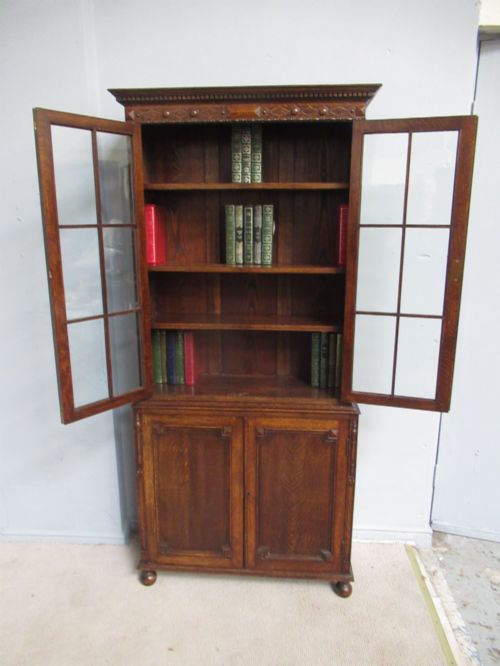
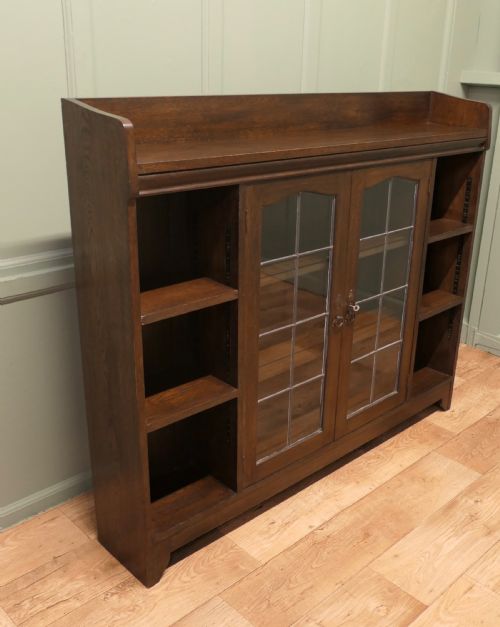
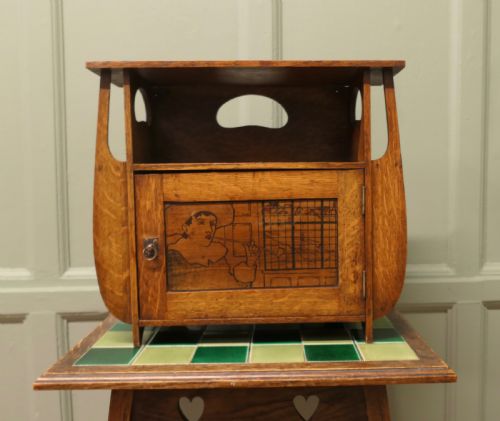
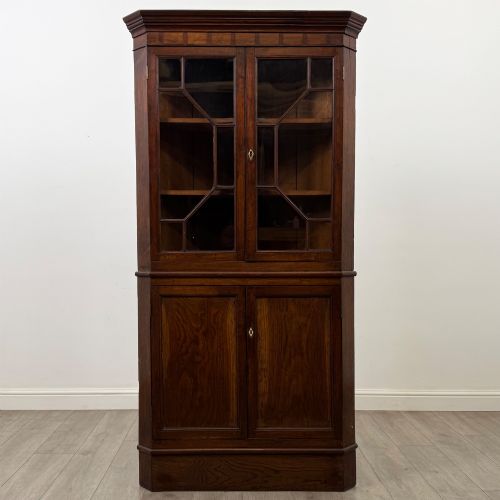
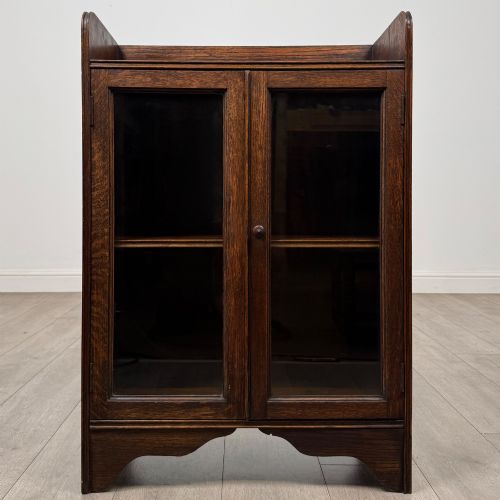
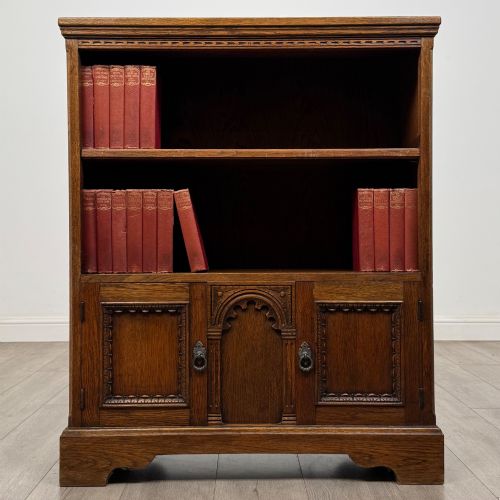
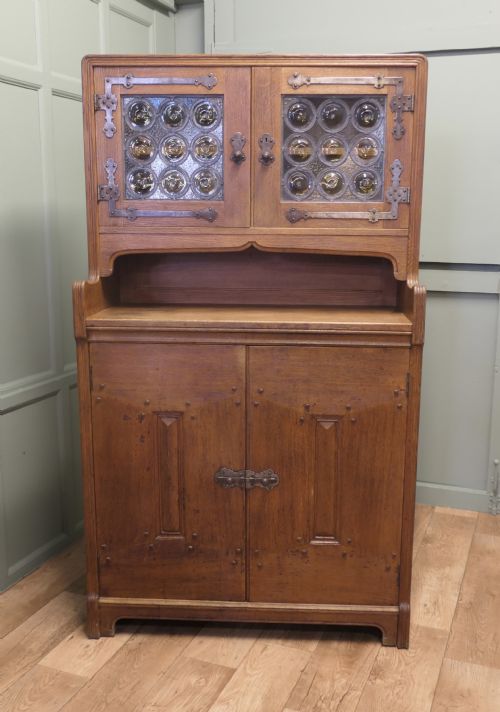
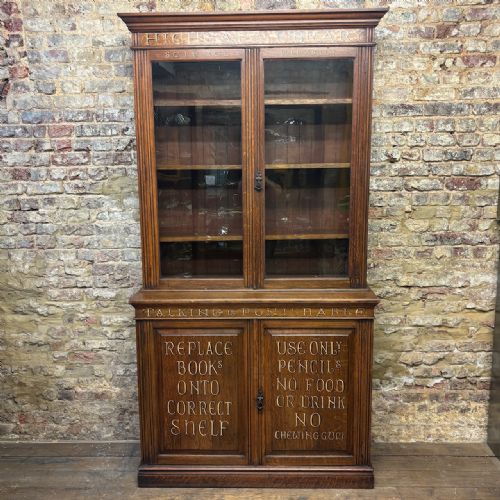
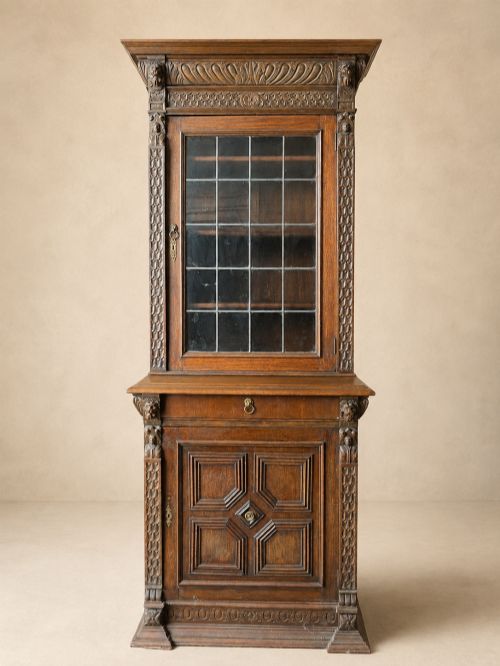
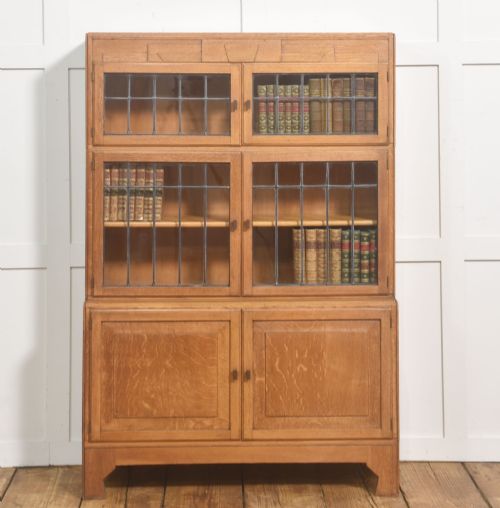
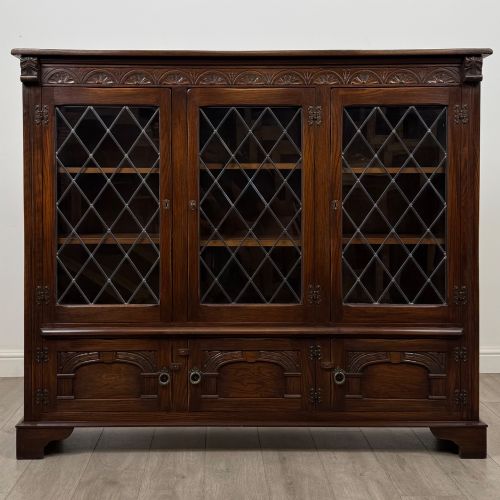
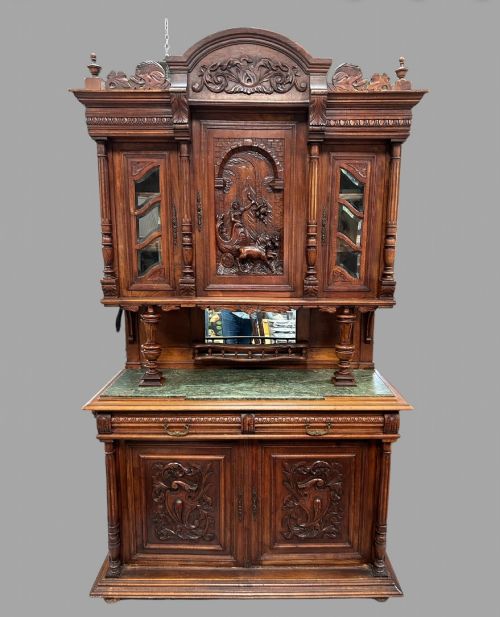
Oak Cupboard Display Cabinet
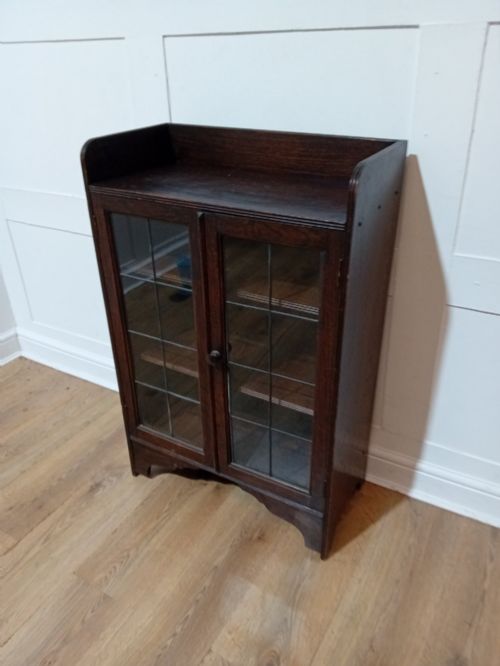
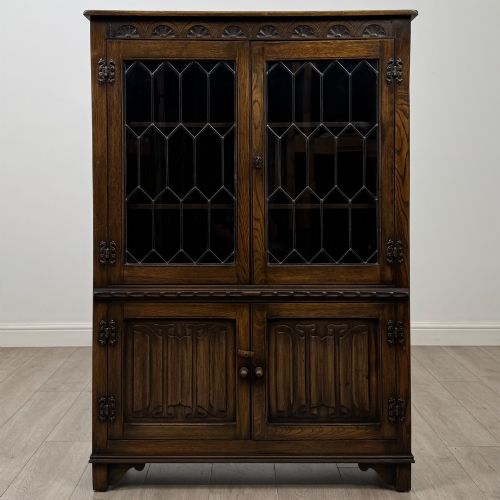
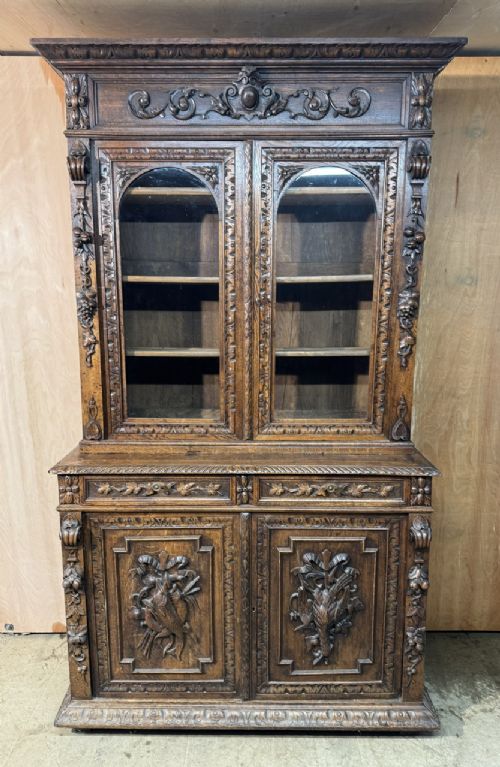
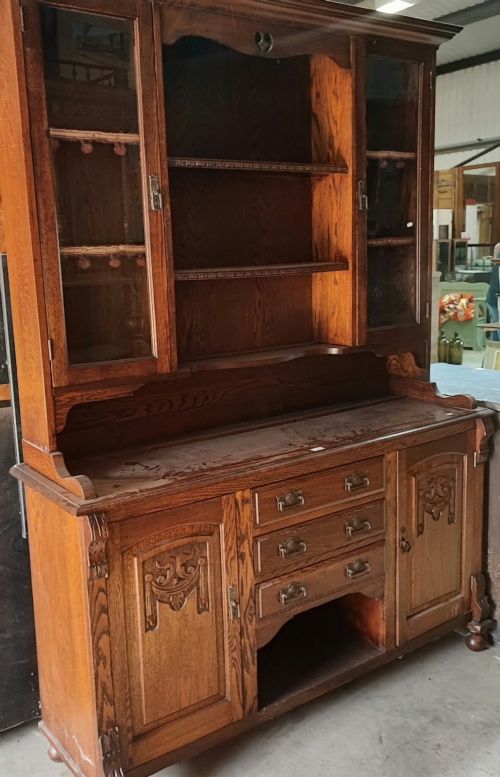
These heavy oak cupboard display cabinet pieces combine enclosed storage with glass fronts to show off collections.
Oak Cupboard Display Cabinet
An oak cupboard display cabinet serves the dual purpose of keeping items safe behind timber doors while exhibiting prized possessions through glazed panels. These pieces span centuries of domestic storage, ranging from towering floor-standing units to compact corner designs.
Edwardian and Victorian examples dominate the selection, often taking the form of tall glazed cabinets, dressers, or bookcases with lower cupboards. Buyers frequently encounter regional variations such as Welsh dressers and corner cupboards built for specific domestic spaces.
The aesthetic reaches from plain utilitarian school bookcases to heavily carved Jacobean revival styles and streamlined Art Deco or Arts and Crafts forms. Oak provides a robust structural backbone across all these varied historical periods.
Materials and construction
Makers relied primarily on solid oak, frequently augmented by tiger oak figures, pollard oak growths, or golden oak finishes. Secondary timbers like mahogany sometimes appear alongside structural iron, brass handles, and leadwork securing individual window panes.
Cabinetmakers utilised traditional joinery to marry heavy timber frames with delicate glass viewing areas. Glazing methods range from simple wooden bars to leaded lights, while doors swing on brass hinges above panelled timber cupboard bases.
Listings feature oak combined with glass, brass, lead, iron, fabric, metal, and walnut across multiple centuries.
Quality factors
The refinement of the surface carving and the selection of the oak grain set superior examples apart from standard utility furniture. Master cabinetmakers balanced heavy proportions with balanced linenfold panels, fine mouldings, and well-chosen tiger oak figuring.
Structural integrity depends on how cleanly the timber has aged and how securely the glazed doors hang within their frames. Finer pieces demonstrate precise joinery that keeps heavy oak doors aligned over decades of use.
Liberty
The Oak Cupboard Display Cabinet Glossary
- Glazed cabinet
- A storage piece featuring glass doors or side panels designed for displaying porcelain or books. These allow light to enter while keeping dust away from the contents.
- Dresser
- A dual-purpose form combining lower cupboards or drawers with upper open shelves or display cabinets. They originated in kitchens and dining rooms for storing tableware.
- Corner cabinet
- A specialised storage unit built with a triangular footprint to fit snugly into room angles. They maximise awkward spaces using either wall-hanging or floor-standing designs.
- Tiger oak
- Oak timber exhibiting distinctive contrasting growth ring patterns that resemble tiger stripes. Craftsmen prized this specific figuring for decorative door panels.
- Linenfold
- A carved wood panel motif resembling folded cloth or vertical parchment rolls. This decorative technique appears frequently on revival furniture styles.
Oak Cupboard Display Cabinet: Frequently Asked Questions
Where were these cabinets used?
They served primarily in dining rooms, kitchens, and libraries to hold china, books, and provisions. Corner versions utilised vacant angles in smaller rooms.
Larger dressers and bookcases often stood in principal reception rooms or large country house kitchens.
How do I date an oak cabinet?
Dating relies on architectural styles, construction methods, and hardware such as hinges and brass pulls. Georgian pieces show different proportions and joinery compared to Victorian or Edwardian revivals.
Design motifs like Arts and Crafts simplicity or Jacobean carving help narrow down the period of manufacture.
How do I care for antique oak?
Antique oak benefits from stable room temperatures away from direct heat sources and strong sunlight. Regular dusting with a dry cloth maintains the timber finish.
Applying occasional appropriate wax preserves the grain without building up heavy residues on carved details.