

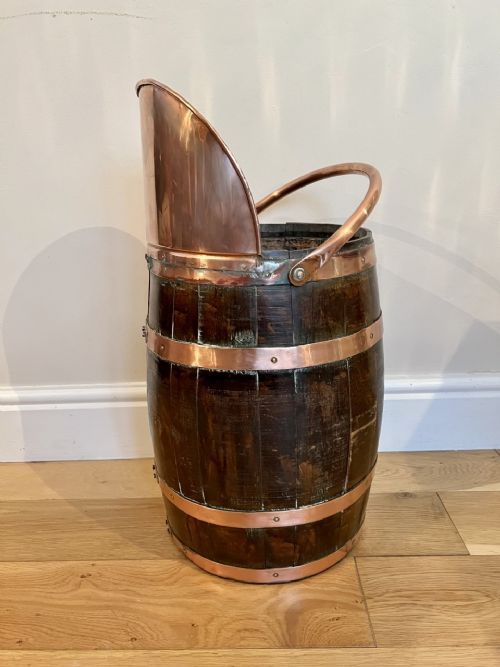


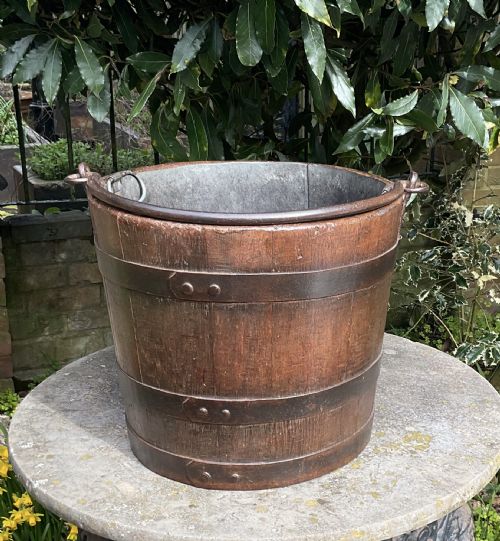


Oak Coal Scuttle
An oak coal scuttle brings solid timber and metal hardware to the fireside, combining practical fuel storage with period craftsmanship.
What They Are
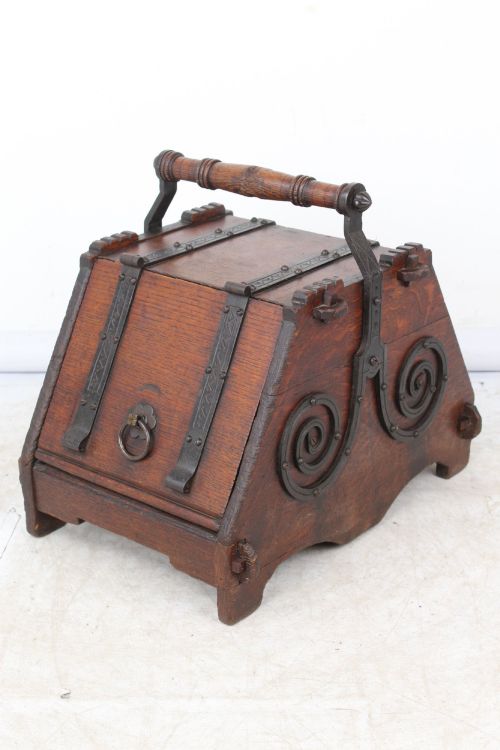
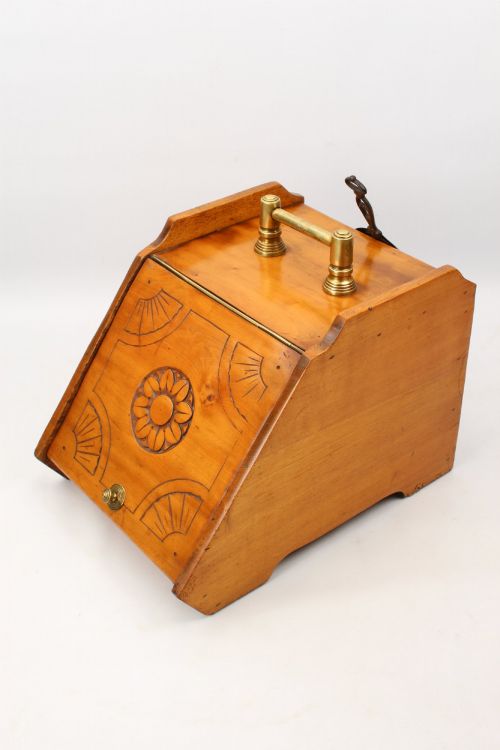
An oak coal scuttle is a fireside accessory designed to store and transport solid fuel, appearing in various forms from simple buckets to elaborate boxes and purdoniums. These pieces emerge primarily from the Victorian and Edwardian eras, spanning periods such as 1850, 1870, 1880, and 1900.
The inventory includes specialised shapes like the coal hod, coal keeper, log bin, and tea caddy modelled on the form. Styles range from strict Victorian Gothic Revival and Art Nouveau to Edwardian and Art Deco interpretations.
Buyers encounter solid timber bodies frequently paired with hinged lids, drop handles, and specialised compartments. Many examples function equally well as contemporary log bins for wood-burning stoves.
How They Were Made
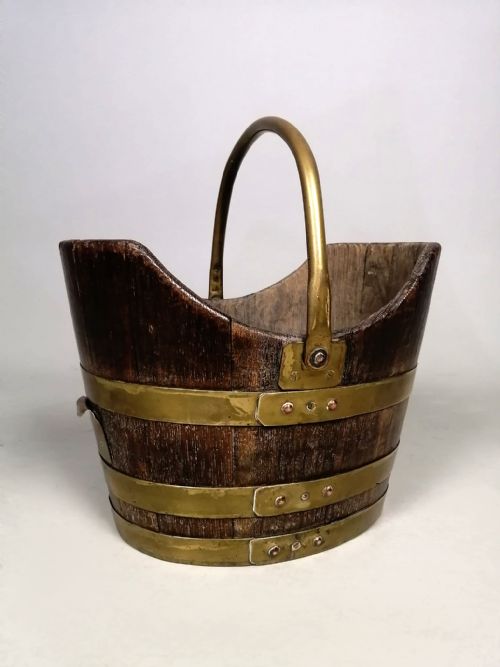
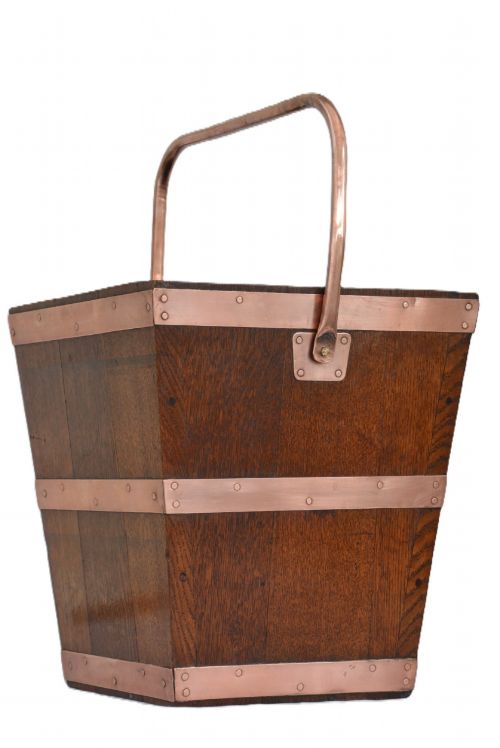
Maker construction relies heavily on solid oak and pollard oak, sometimes built using coopered staves similar to barrel-making. Timber bodies are reinforced with structural metalwork including brass, copper, wrought iron, and standard iron.
Metal components appear as decorative banding, corner braces, drop handles, and liners. Carved ornamentation marks specific Arts and Crafts and Art Nouveau iterations, while Gothic Revival pieces utilise architectural mouldings.
Retail Price Guide 2026
Typical UK retail prices for oak coal scuttle, calculated from the Sellingantiques database of over a million retail prices indexed since 2003. This retail price guide relies exclusively on Sellingantiques data; no external sources or auction records are used, so the figures do not describe the wider market.
One exceptional Victorian piece reimagines the form entirely as a small tea caddy shaped like a coal scuttle.
What Varies in Quality
Quality rests in the weight of the timber and the substance of the metal mounts. Heavy gauge brass and thick copper banding indicate superior construction compared to lighter sheet metal.
The presence of original liners, shovels, and working hinges distinguishes finer examples. Finer pieces also display sophisticated joinery, such as coopered staves or deliberate decorative carving.
Christopher Dresser
The Oak Coal Scuttle Glossary
- Purdonium
- A box-style coal scuttle featuring a hinged front flap that drops forward to reveal a metal liner. This form gained popularity during the late nineteenth century for keeping fuel contained.
- Coal Hod
- A traditional bucket-shaped carrier designed for transporting fuel from a cellar or outdoor store to the hearth. These pieces usually feature a fixed top handle and an angled pouring lip.
- Coopered
- A method of construction where vertical wooden staves are joined side by side and bound with metal hoops. This technique originates from barrel-making and provides robust cylindrical strength.
- Pollard Oak
- Timber taken from trees that have been pollarded, producing a gnarled grain pattern with dense clusters of knots. Cabinet makers prized this figured wood for decorative veneering.
- Gothic Revival
- An architectural and decorative style drawing on medieval forms, featuring pointed arches, heavy mouldings, and robust ironwork. This aesthetic heavily influences Victorian fireside metalwork.
Frequently Asked Questions
What is an oak coal scuttle?
An oak coal scuttle is a traditional fireside container built to hold coal or solid fuel near a fireplace. These items combine wooden construction with metal hardware for daily domestic use.
Craftsmen produced them in various configurations, including buckets, boxes, and purdoniums, during the Victorian and Edwardian periods.
How do I use a coal scuttle today?
Modern homes utilise these pieces primarily as decorative fireside storage or as log bins beside wood-burning stoves. They keep fuel tidy while adding period character to a hearth.
Many owners remove original metal liners for cleaning or use them independently to hold kindling and ash tools.
What is a purdonium?
A purdonium is a specific type of coal box featuring a sloping front door that drops open to grant access to an internal metal scoop or liner. This design keeps coal dust contained out of sight.
Victorian and Edwardian makers frequently decorated these boxes with brass handles and hinges.
How do I tell Victorian from Edwardian pieces?
Victorian examples often lean towards heavier Gothic Revival styling with dark oak, wrought iron, and stark architectural lines. Edwardian pieces frequently display softer Art Nouveau curves and lighter copper mounts.
Construction details and registered design stamps also help narrow down the manufacturing decade.