

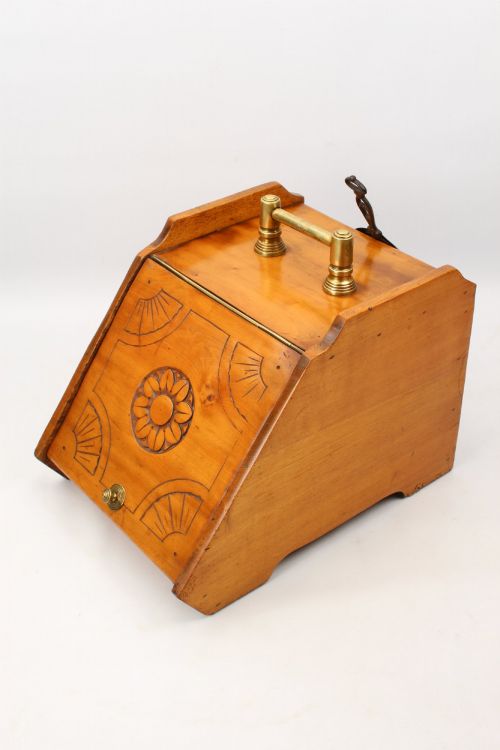


Oak Coal Box
An oak coal box is a sturdy fireside container designed to store fuel close to the hearth.
Oak Coal Box
An oak coal box provides a practical and handsome hearthside storage solution, spanning multiple periods from the eighteenth century through to the Edwardian era. You will most frequently encounter Victorian and Edwardian iterations on this page, often fitted with internal metal liners and matched shovels.
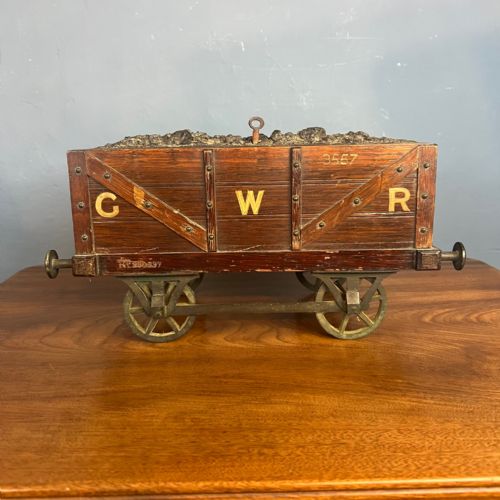
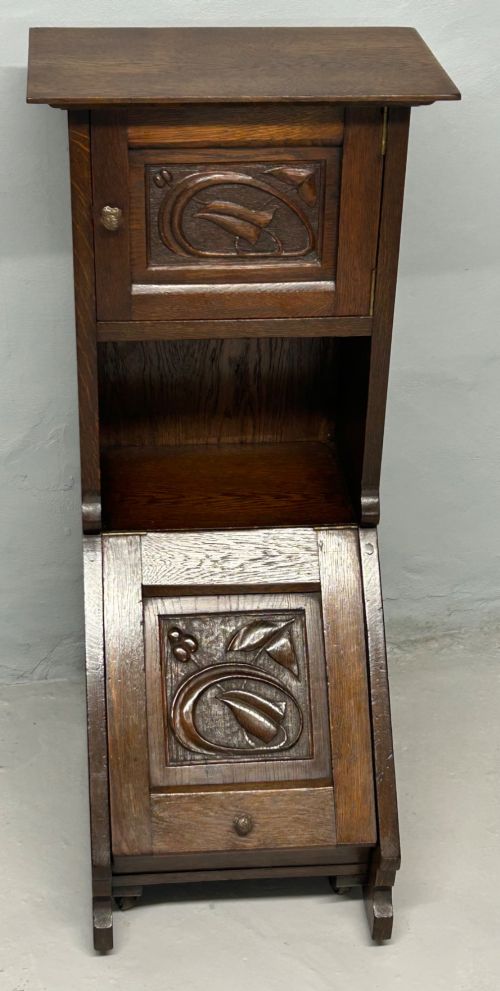
Beyond standard lidded containers, the selection includes drop-front purdoniums, log bunkers, and novelty forms shaped like railway coal wagons. These pieces range from plain rustic country examples to heavily carved Gothic Revival and Arts and Crafts designs featuring copper panels or brass mounts.
Materials and Construction
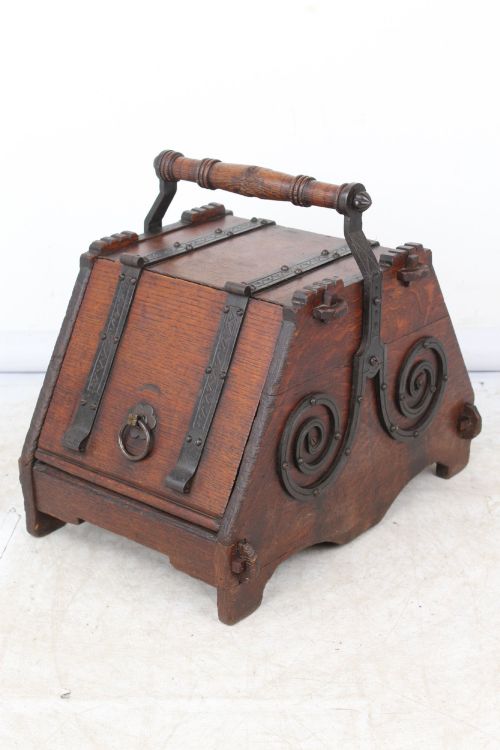
Joiners built these fireside containers primarily using solid oak, occasionally selecting burr or pollard oak for decorative grain patterns. Metal components played an essential structural and decorative role, with brass handles, hinges, bands, and cast iron fittings providing durability for heavy daily use.
Makers incorporated auxiliary metals such as copper and silver plate into panels and mountings, particularly during the Arts and Crafts and Art Nouveau periods. Galvanised or zinc liners protected the timber from moisture and coal dust inside the box.
Oak Coal Box Retail Price Guide 2026
Typical asking prices for oak coal box among the pieces listed under this phrase on Sellingantiques today, from the lower quarter to the upper quarter. They describe what is for sale here now, not the wider market.
Listings demonstrate that oak coal boxes range from austere eighteenth-century country bunkers to elaborate Edwardian Art Nouveau purdoniums.
Assessing Quality and Craftsmanship
Quality rests heavily on the crispness of the carving, the weight of the brass or copper mounts, and the integrity of the original timber. Superior examples feature dovetail joints, substantial metalwork, and retained interior accessories like metal liners and matching shovels.
Plain utilitarian boxes sit at the accessible end of the scale, while items bearing attribution to notable makers or exhibiting intricate Gothic or Art Nouveau decoration command greater attention. The presence of specialised mechanics, such as smooth drop-front purdonium chutes, further distinguishes finer production.
Christopher Dresser·Heals of London·Shapland and Petter·Deane and Co
The Oak Coal Box Glossary
- Purdonium
- A coal box featuring a sloping front door that drops forward to reveal the internal fuel compartment. This Edwardian and Victorian form usually contains a metal liner and a dedicated shovel.
- Scuttle
- A traditional fireside vessel for carrying and storing coal, often equipped with a swing handle. They appear in both metal and wood constructions.
- Green Man
- A sculptural motif depicting a human face entwined with foliage, frequently carved onto Victorian Gothic revival oak panels. It symbolizes rebirth and springtime.
- Chip Carving
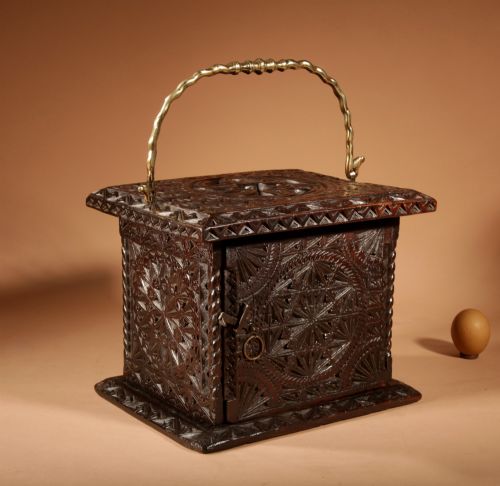
- A primitive wood-carving technique utilising knives or chisels to remove small chips from a flat surface in geometric patterns. It appears on rustic country pieces and folk art.
- Humidor
- A specialised moisture-controlled storage box, occasionally fashioned in the whimsical form of a railway coal wagon for smokers.
Oak Coal Box: Frequently Asked Questions
What is a purdonium?
A purdonium is a specialised fireside coal box featuring a pull-down front door and an internal metal scuttle or liner. This design allowed clean access to fuel while containing dust within the wooden housing.
They became immensely popular during the late Victorian and Edwardian periods, often supplied with a matching shovel stored in a side rack.
How were these boxes used?
These boxes sat beside domestic hearths to keep coal or logs close at hand without littering the carpet. The metal liners inside prevented damp fuel from rotting the outer oak structure.
Servants filled them from larger cellar stocks so the household had immediate access to fuel throughout the day.
Are liners original?
Many surviving pieces retain their original galvanized or zinc metal liners, which protected the timber base from constant moisture and abrasion. Finding a box with its matching liner and shovel adds significantly to its completeness.
Replacements are common due to corrosion from damp coal over decades of active service.
How do I date an oak coal box?
Dating relies on stylistic clues, hardware construction, and timber treatment rather than strict hallmarks. Plain country pieces often date to the eighteenth or early nineteenth century, while carved purdoniums typically point to the Victorian and Edwardian eras.
Arts and Crafts variants display distinct copper strapwork and hand-beaten panels characteristic of the turn of the twentieth century.