


Oak Cane Holder
An oak cane holder brings character to a hallway, keeping walking sticks, umbrellas and staffs organised with traditional country house practicality.
Oak Cane Holder
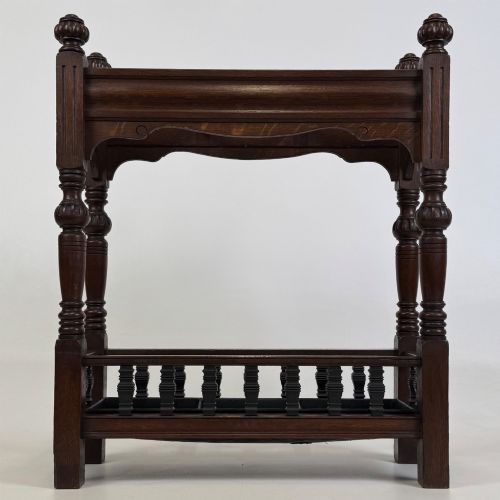
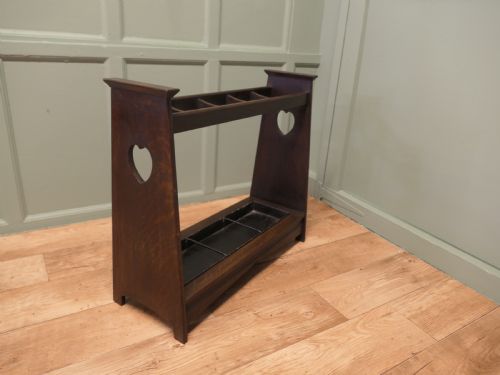
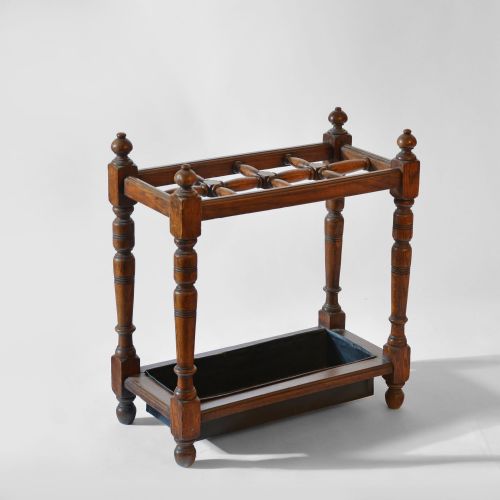
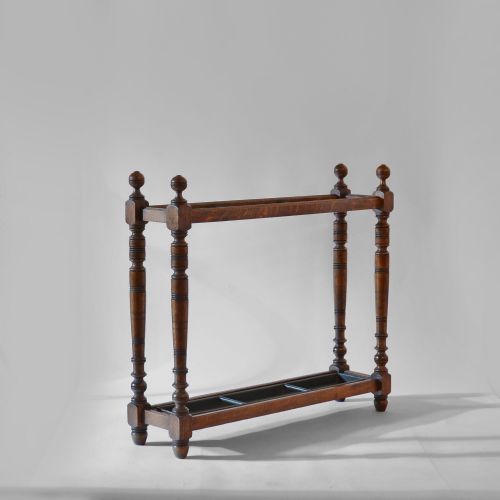
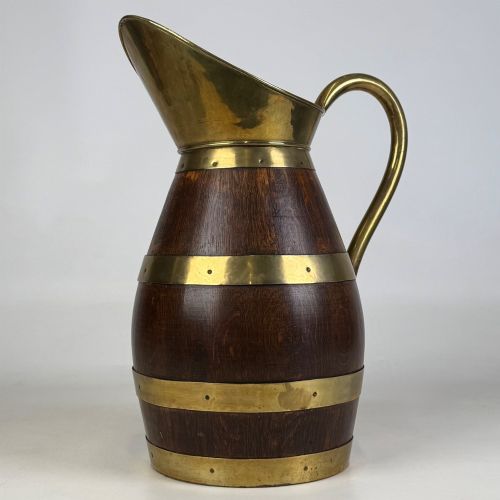
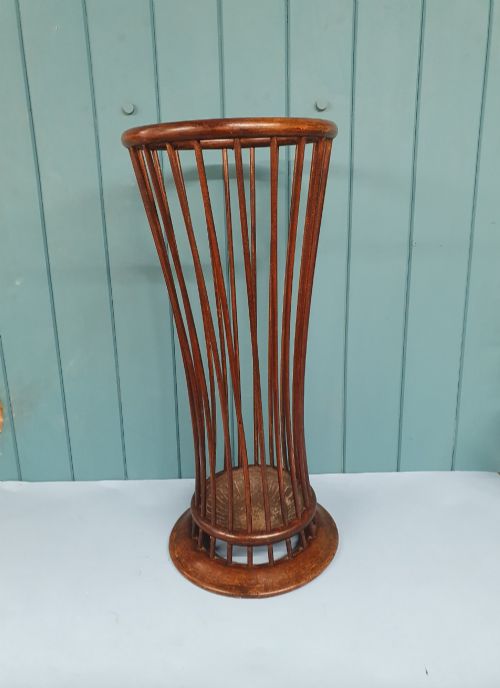
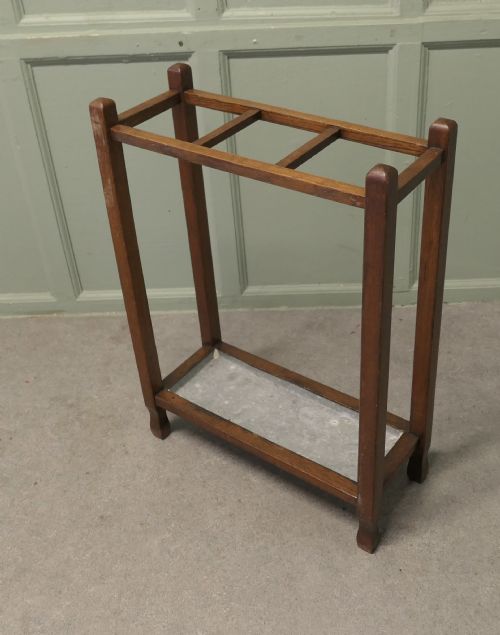
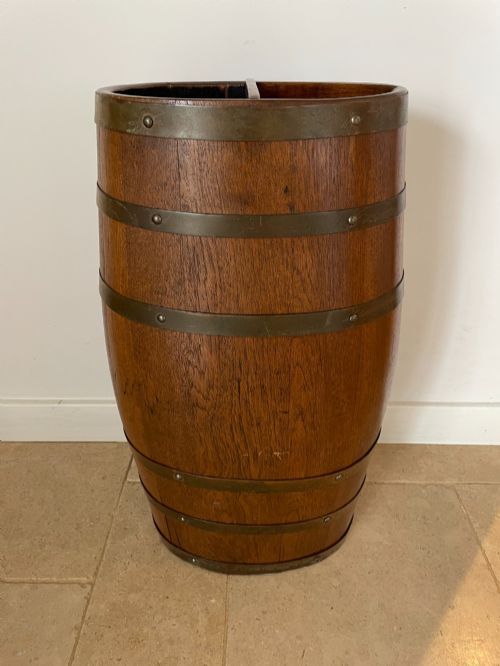
When buyers search for an oak cane holder, they encounter functional hall furniture designed to corral walking sticks, umbrellas and riding crops. These pieces typically take the form of umbrella stands, stick stands or barrel-shaped receptacles intended for entrance halls and reception areas.
The selections on this page span the nineteenth century, the Victorian and Edwardian eras, up to the early twentieth century. Common stylistic expressions include Arts and Crafts, Gothic Revival, Aesthetic Movement and Jacobean Revival forms, alongside rustic English country house pieces.
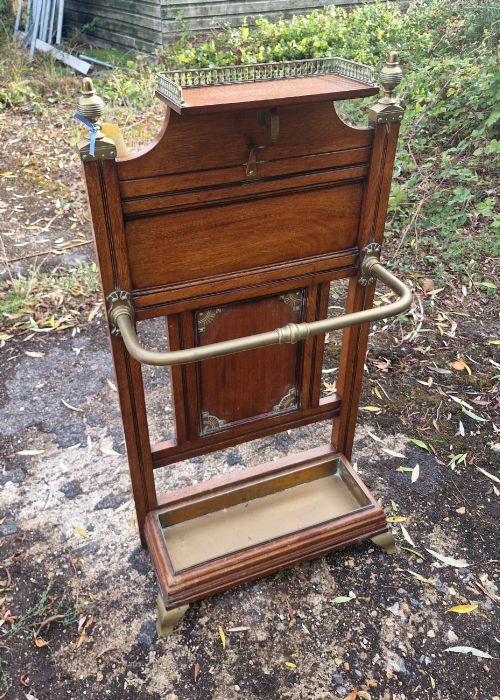
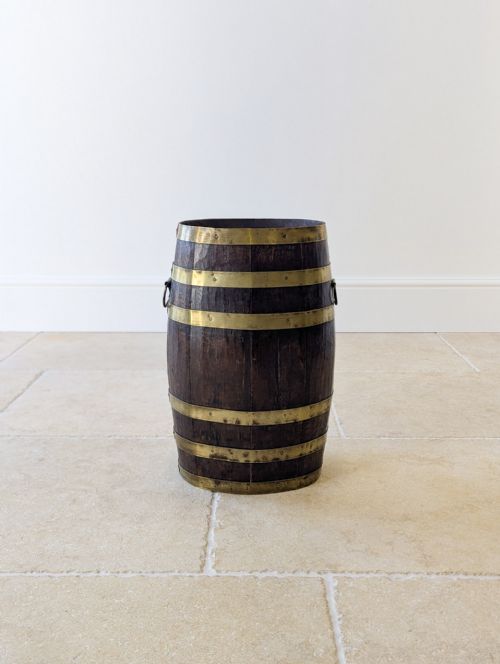
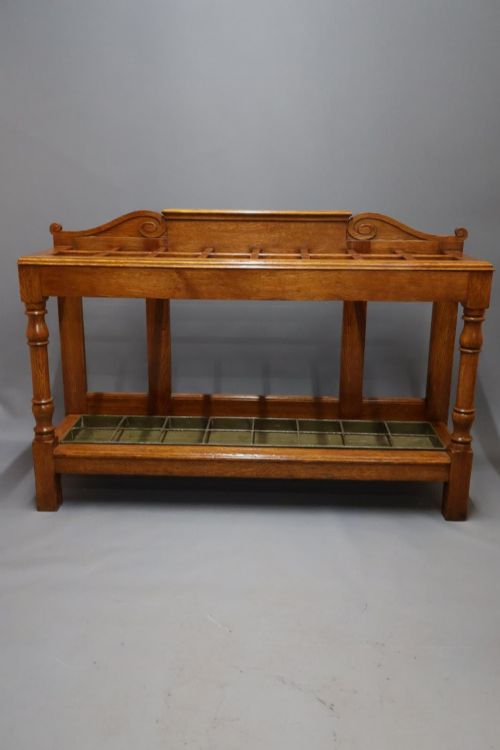
Buyers are most likely to meet sturdy coopered barrels with metal bands, upright display racks with carved detailing, or demi-lune hall stands. These objects combine practical utility with the warm, figured grain of solid oak.
Materials and construction methods
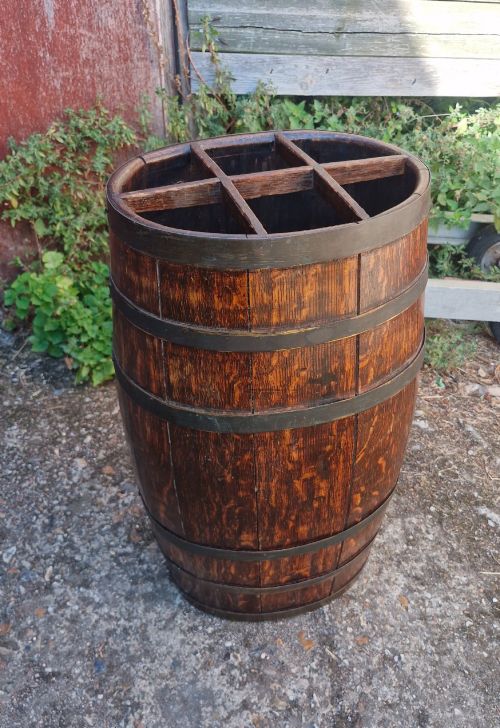
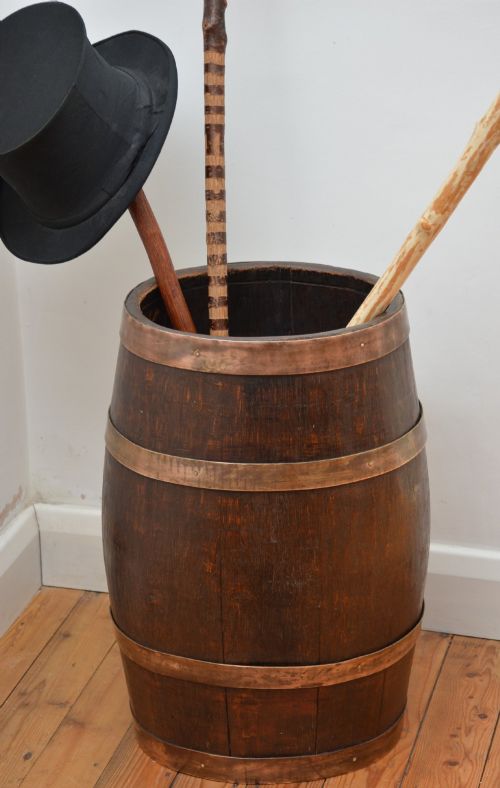
Makers utilised solid oak as the primary timber, often selecting golden or dark tones to suit interior settings. Coopered examples rely on vertical stave construction bound together by metal hoops.
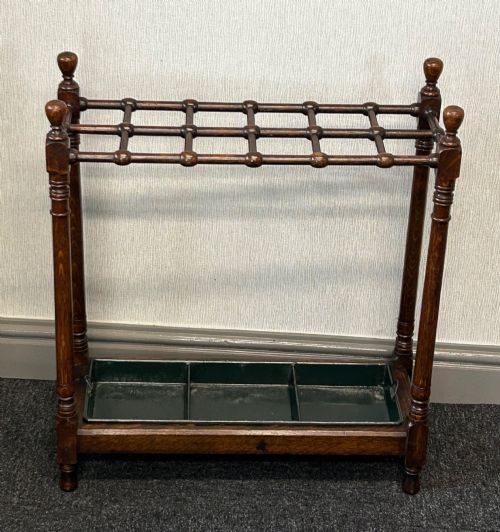
Metal fittings in brass, iron, copper and zinc provide structural reinforcement and form protective drip trays at the base. Some designs incorporate cane or bergere woven panels alongside turned barley twist supports and carved detailing.
Forms include oval barrels, demi-lune hall racks, and tall umbrella stands with built-in divided loops.
Distinctions in quality
The distinction between standard utility items and superior examples lies in the integrity of the cooperage and the richness of the timber. Finely figured oak grain, substantial brass binding and retention of original metal drip trays elevate a piece.
Design ambition separates simple vernacular items from sophisticated commissions associated with known retail aesthetics, such as Arts and Crafts workshops or London department store styling. Clean joinery and balanced proportions distinguish finer hall stands from basic workshop output.
Liberty Design·Heals of London
The Oak Cane Holder Glossary
- Coopered
- Constructed from curved wooden staves bound together with metal hoops, much like a traditional barrel. This technique ensures durability for holding heavy walking equipment.
- Demi-lune
- Half-moon or semicircular in plan, allowing the stand to sit flush against a hallway wall. This shape saves valuable floor space in narrow reception areas.
- Bergere
- A type of woven cane panelling utilised for decorative inserts on certain stands. It adds textural contrast to the solid oak framework.
- Drip tray
- A removable metal basin placed at the base of the stand to catch moisture from wet umbrellas. Original trays contribute to the historical integrity of the piece.
- Barley twist
- A turning technique that resembles a spiral rope, frequently found on the upright supports of Edwardian and Victorian hall stands.
Oak Cane Holder: Frequently Asked Questions
Where should I place an oak cane holder?
These holders suit entrance halls, boot rooms and reception spaces where outdoor gear is gathered.
Position them near an entrance door to manage wet umbrellas and walking sticks effectively.
How do I care for antique oak?
Maintain the timber by applying a traditional beeswax polish occasionally to nourish the grain and protect the surface.
Avoid placing damp items directly onto unprotected wood if the original metal drip tray is missing.
What is a coopered umbrella stand?
A coopered stand uses vertical wooden staves assembled with metal bands, mirroring traditional barrel-making methods.
This robust construction method handles the daily weight and moisture of heavy walking sticks.
How can I tell an Edwardian stand from a Victorian one?
Victorian examples frequently display heavier proportions, Gothic Revival influences or dark finishes, alongside robust coopered barrels.
Edwardian pieces often embrace lighter golden oak, Arts and Crafts simplicity or slender barley twist uprights.