
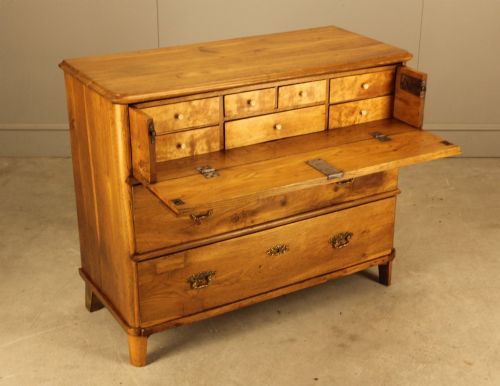
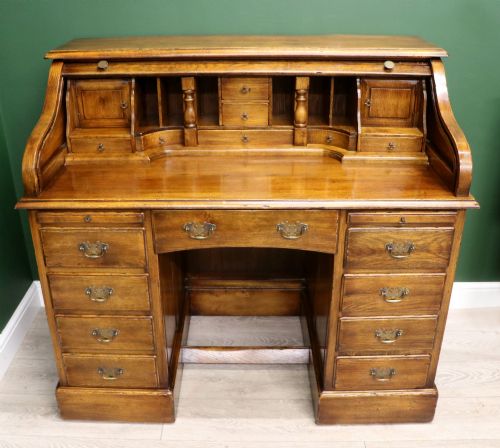


Oak Bureau Fitted Interior
An oak bureau fitted interior is a working writing cabinet built to keep papers and ledgers secure behind a drop-front or roll-top lid.
Oak Bureau Fitted Interior
When you search for an oak bureau fitted interior, you are looking at writing desks and bookcases designed for domestic administration and correspondence. These pieces range from compact seventeenth-century table models to grand eighteenth-century George III bookcase combinations and heavy Edwardian roll-top desks.
The version you are most likely to meet on this page is the Edwardian roll-top desk or the Georgian fall-front writing cabinet in solid or veneered oak. They offer compartmentalised interiors with pigeonholes and small drawers hidden behind the main writing flap.
The selection moves across several distinct eras, incorporating William and Mary, Georgian, Victorian, and Edwardian periods alongside Jacobean revival interpretations. Each era brings its own proportion and interior arrangement, from simple wooden slots to complex banks of secret compartments.
Materials and construction
Makers relied primarily on solid oak and oak veneers, supported by secondary structural timbers and oak-lined drawers. The wood was selected for durability and finished to highlight the natural grain.
Hardware details such as solid brass handles, hinges, and escutcheons were fitted to secure the fall-front lids and drawers. Writing surfaces frequently incorporate inserts of green baize, leather, or plain polished timber.
Interior compartments required precise joinery, utilising small drawers, pigeonholes, and moving components built into the carcass behind the main fall-front or roll-top mechanism.
Listings span from the 17th century to the 1930s, featuring oak, brass, leather, and green baize materials across Georgian and Edwardian styles.
Assessing quality and construction
The calibre of an oak bureau fitted interior depends on the complexity and execution of the internal compartments. Master craftsmen invested significant labour in secret drawers, sliding wells, and neatly dovetailed internal boxes.
Timber selection and handling also define the hierarchy of pieces, distinguishing between simple utility desks and heavily cross-banded or carved examples. The choice between solid oak construction and oak veneer reflects the period of manufacture and workshop standards.
Maples of London and Paris
The Oak Bureau Fitted Interior Glossary
- Bureau
- A writing desk featuring a sloping fall-front lid that opens to reveal a fitted interior of small drawers and pigeonholes. It serves as both a writing surface and a storage cabinet for papers.
- Fitted interior
- The arrangement of pigeonholes, small drawers, and central compartments concealed behind the main writing flap of a bureau. It was designed to keep stationery and correspondence organised.
- Fall-front
- A hinged writing flap that drops down to a horizontal position to provide a flat surface for writing. When closed, it conceals the fitted interior and secures the contents.
- Roll-top
- A flexible tambour shutter made of narrow slats of wood that slides in curved tracks to open and close a desk top. It covers the writing surface and interior compartments in one smooth motion.
- Cross-banding
- A decorative border of veneer laid around the edges of a drawer front or writing flap with the wood grain running perpendicular to the surrounding surface. It adds visual contrast to the oak body.
Oak Bureau Fitted Interior: Frequently Asked Questions
What is an oak bureau fitted interior?
An oak bureau fitted interior is a desk designed with a sloping lid or roll-top that opens to reveal a collection of small drawers and pigeonholes. These compartments were built to organise letters, documents, and writing materials.
They appear in forms ranging from compact table-top models to tall George III bookcase combinations and heavy Edwardian office desks.
How do I date an oak bureau?
Dating relies on examining the construction methods, hardware, timber choice, and overall style of the cabinet. Eighteenth-century pieces often feature hand-cut dovetails and solid oak linings, while Edwardian examples may utilise mechanical roll-top shutters and oak veneers.
Period characteristics like barley twist supports or ogee feet also help place the piece within its specific historical era.
How were fitted interiors used?
The internal drawers and pigeonholes stored writing paper, account books, inkwells, and personal correspondence. The central recess often concealed a well or secret compartments for valuables.
When the fall-front or roll-top was closed and locked, all private papers remained secure inside.
Where should I place a bureau?
These pieces function well in studies, living rooms, or hallways where their depth can accommodate the drop-front lid. Ensure there is sufficient clearance in front of the desk for a chair when the writing flap is open.
Keep them away from direct heat sources to protect the oak timber and any leather or baize writing surfaces.