

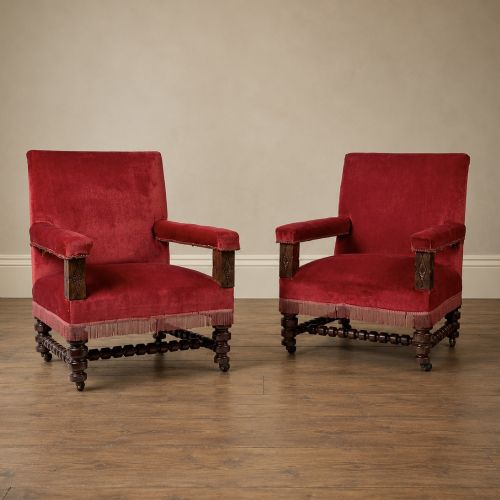


Oak Bobbin Armchair
An oak bobbin armchair brings sturdy seventeenth-century vernacular form into nineteenth-century revival interiors with rhythmic turned wooden spindles.
Oak Bobbin Armchair
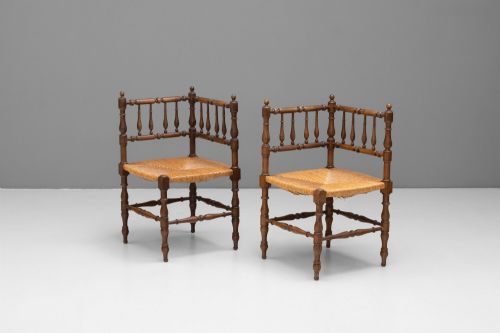
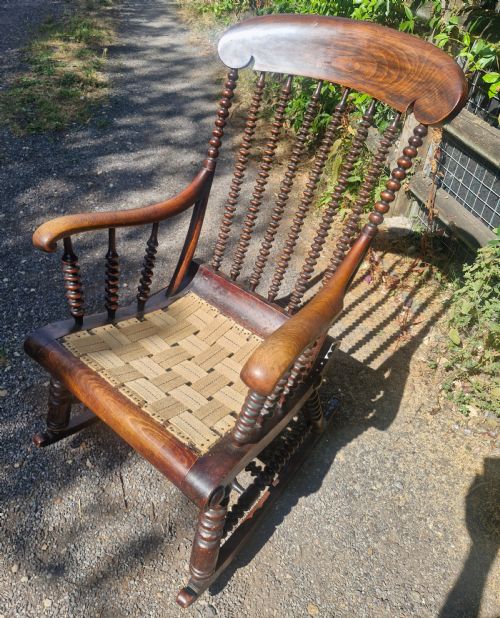
When you search for an oak bobbin armchair, you encounter seating distinguished by turned spool or bobbin framing, spanning periods from the seventeenth century through the Victorian era and into the early twentieth century. These pieces appear primarily as open armchairs, rocking chairs, and corner chairs, reflecting revivals such as Jacobean, Gothic, and Old Saxon styles.
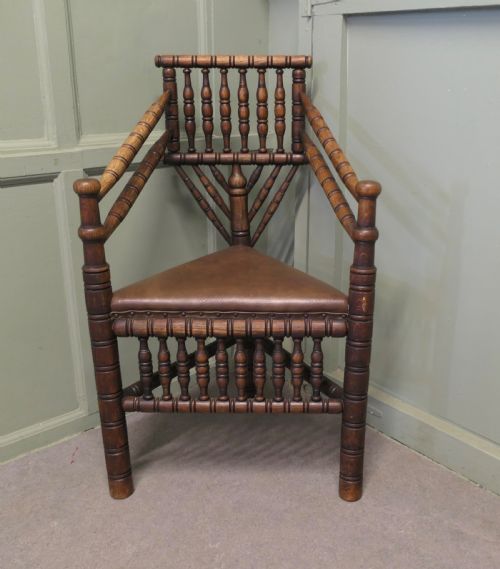
The examples most commonly found on this page date from the nineteenth century, including Victorian interpretations and revival pieces alongside older vernacular traditions. Makers utilised solid timber frames combined with seats of cane, rush, leather, or velvet, creating robust seating suited for libraries, firesides, and studies.
What varies in quality
The definition and depth of the wood turning dictate the visual strength of the piece, with crisply executed spool work marking out superior examples. Timber selection also matters, as dense grain and well-matched oak components provide greater structural integrity.
Original seating materials, whether woven rush, cane, or period upholstery, elevate a piece above later replacements. The balance of proportions between the heavy bobbin framework and the open arms determines the overall presence of the chair.
Several armchairs incorporate metamorphic library steps, allowing a reader to climb up the furniture after sitting down.
The Oak Bobbin Armchair Glossary
- Bobbin turning
- A form of wood turning that produces a series of rounded, spool-like shapes along the length of a spindle. This repetitive decorative pattern defines the structural framework of the chair.
- Turners chair
- An early form of chair constructed entirely from turned wooden members and spindles. These pieces often feature triangular or square seats supported by heavy turned legs.
- Wainscot chair
- A heavy wooden armchair dating from the seventeenth century, constructed with panelled backs and solid wooden seats. They represent an early precursor to later vernacular seating forms.
- Bergere
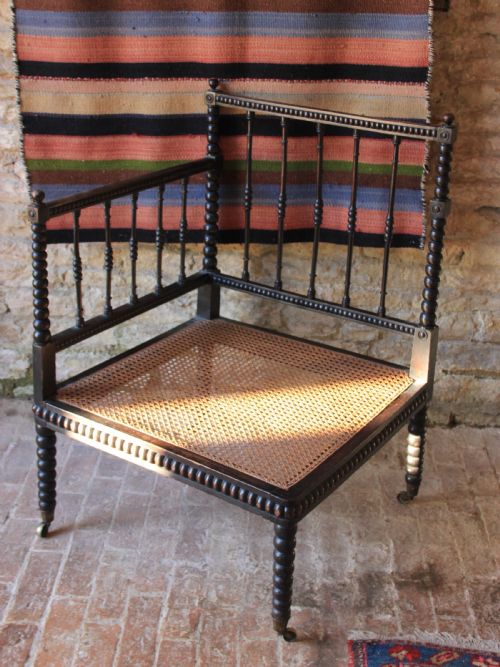
- An enclosed or open upholstered armchair with a wooden frame, frequently featuring cane panelling to the sides or back. The style appears in later revival seating.
- Old Saxon chair
- A nineteenth-century revival term applied to heavy turned oak armchairs modelled on medieval or seventeenth-century prototypes. These pieces often feature low elbow seats and substantial spool framing.
Oak Bobbin Armchair: Frequently Asked Questions
What is an oak bobbin armchair?
An oak bobbin armchair is a wooden seat defined by turned spool or bobbin ornamentation along its structural framing. These pieces draw on seventeenth-century vernacular traditions and nineteenth-century revival styles.
They appear in various formats including rocking chairs, corner chairs, and library armchairs. The combination of turned woodwork and sturdy timber gives them a distinctive sculptural silhouette.
How do I date an oak bobbin armchair?
Dating relies on examining the timber species, construction methods, and turning style alongside any associated revival period. Nineteenth-century Victorian interpretations often utilise machine-assisted turning and softer secondary woods alongside oak.
Earlier examples from the seventeenth century display hand-riven timber, pegged joinery, and wear patterns consistent with centuries of use. Comparing the turning profile to documented vernacular pieces helps clarify the timeline.
Where should I place a bobbin armchair?
These armchairs suit studies, libraries, and living spaces where their architectural turned framing can be appreciated from all angles. Their sturdy construction makes them practical for regular seating when paired with appropriate cushions.
Placing them away from direct heat sources protects the timber frame and any original cane or rush seating. They anchor a room effectively when combined with plain walls or traditional textiles.
What seat materials are used?
Seats on these armchairs typically consist of woven rush, woven cane, or upholstered pads finished in velvet, leather, or fabric. Woven surfaces provide a traditional texture that complements the turned wooden spindles.
Upholstered versions often feature red velvet or leather secured with brass tacks. The choice of seat material frequently reflects the specific revival period of the chair.