



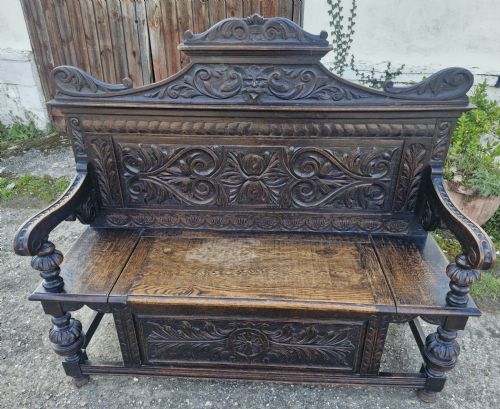


Oak Blanket Box Seat
An oak blanket box seat is a sturdy timber storage chest adapted for seating, bringing centuries of English craftsmanship directly into your hall or bay window.
Oak Blanket Box Seat
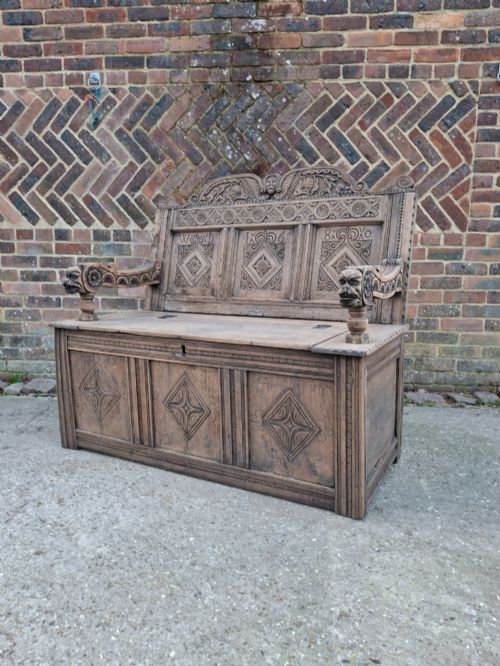
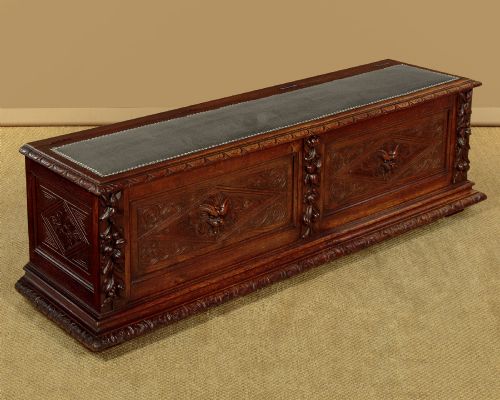
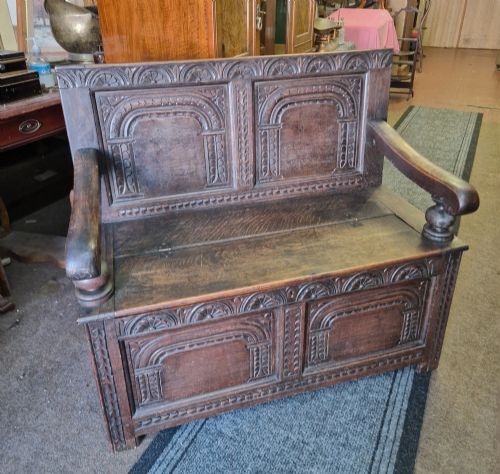
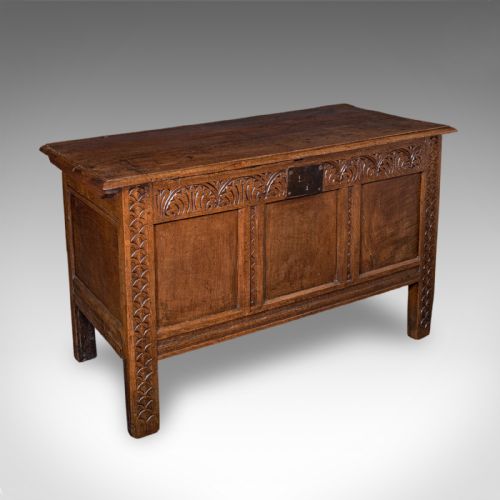
When you search for an oak blanket box seat, you encounter robust timber coffers and settles adapted to dual service as storage chests and seating. These pieces bridge domestic storage and hallway furniture, functioning equally as linen chests, window seats, and hall benches.
The versions most likely to meet you on this page span the 18th century through to the Edwardian period, encompassing styles from William III and Early Georgian to Victorian and Jacobean Revival. They combine the deep utility of a trunk with the practical comfort of a bench.
Originating primarily as English country and formal hall furniture, these items display the enduring grain of oak supplemented occasionally by walnut, alongside structural iron, brass, and leather details.
Materials and construction methods
Construction relies heavily on solid oak timbers, chosen for durability and dense grain, frequently shaped into panelled coffers and settles. Master carpenters utilised traditional joinery to build strong box frames capable of supporting weight as a seat.
Oak Blanket Box Seat Retail Price Guide 2026
Typical asking prices for oak blanket box seat among the pieces listed under this phrase on Sellingantiques today, from the lower quarter to the upper quarter. They describe what is for sale here now, not the wider market.
Listings feature oak material predominantly, alongside walnut, iron, and brass across 18th-century, Victorian, and Edwardian periods.
Factors of quality and execution
The distinction between standard examples and superior specimens rests upon the depth and crispness of the hand carving and the integrity of the original timber. Early 18th-century pieces demonstrating William III or Early Georgian characteristics typically exhibit finer proportions and more considered joinery than later revival iterations.
Hardware originality and timber patina heavily influence the character of each piece. Surviving brass and ironwork, combined with an undisturbed surface sheen on the oak, elevate the stature of a hall bench or coffer significantly.
The Oak Blanket Box Seat Glossary
- Coffer
- A large wooden chest traditionally used for storing valuables, linen, or garments. It forms the base structure for many box seats.
- Settle
- A wooden bench with a high back, solid arms, and a box seat base designed to block cold drafts in older English homes.
- Linen chest
- A deep storage box intended for household textiles, frequently converted or utilised as a window seat.
- Green Man
- A sculptural architectural ornament depicting a human face disgorged from foliage, appearing on carved oak furniture.
- William III style
- A period aesthetic from the late 17th century noted for strong architectural lines and rich dark oak surfaces.
Oak Blanket Box Seat: Frequently Asked Questions
How were oak blanket box seats originally used?
These pieces served multiple domestic functions in traditional English interiors. They provided secure storage for household linens and woollens while offering auxiliary seating in halls and bedchambers.
Positioned beneath bay windows or against hallway walls, they maximised space by combining a chest and a bench into a single item of furniture.
Can I use an antique coffer as a window seat?
Many historical coffers and linen chests were designed or subsequently adapted with suitable proportions for window seating. Their flat timber tops accommodate cushions easily without compromising the internal storage access.
Buyers frequently place them in bay windows or entryways where the depth of the chest matches the architectural alcove.
How do I identify a William III style box seat?
William III style pieces date around the late 17th and early 18th centuries, displaying robust proportions and dark oak panel construction. They often feature restrained geometric mouldings and authentic period brass or iron hardware.
Look for traditional pegged joinery and hand-cut panels that reflect the timber technology of the era.