
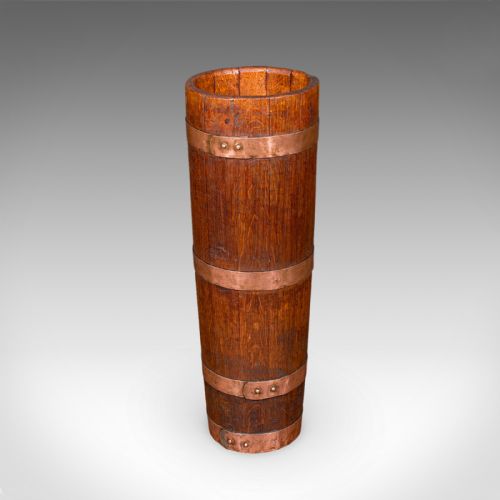
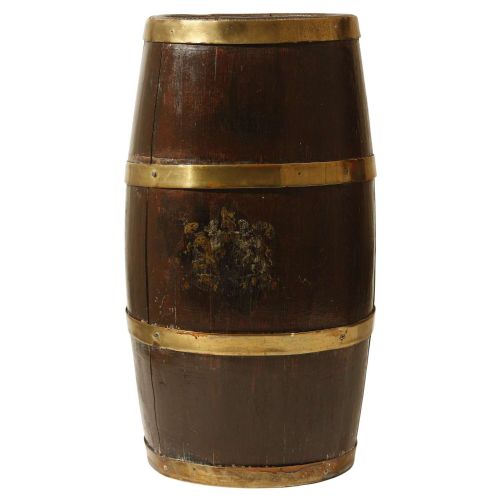


Oak Barrel Cane Holder
These oak barrel cane holders are sturdy vessels built for the hall, keeping sticks and umbrellas neatly contained.
Oak Barrel Cane Holder
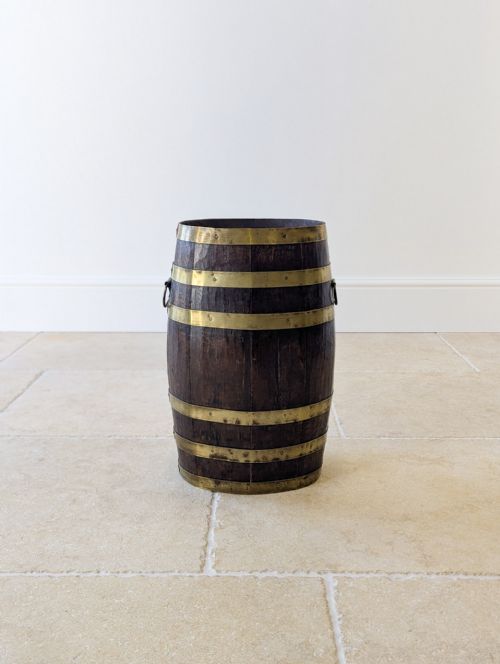
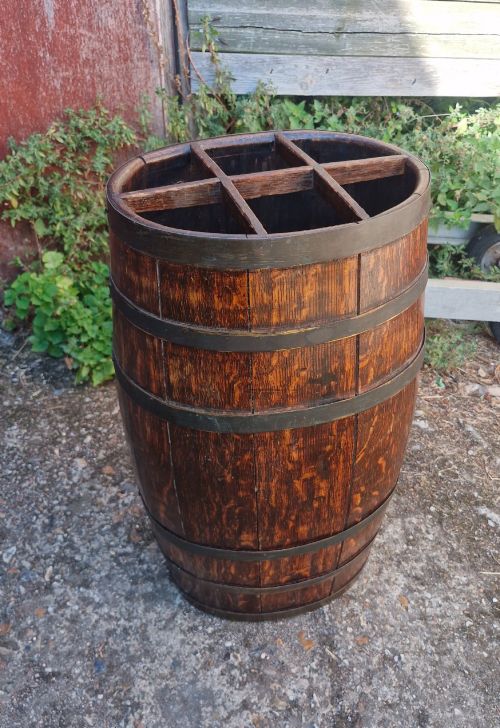
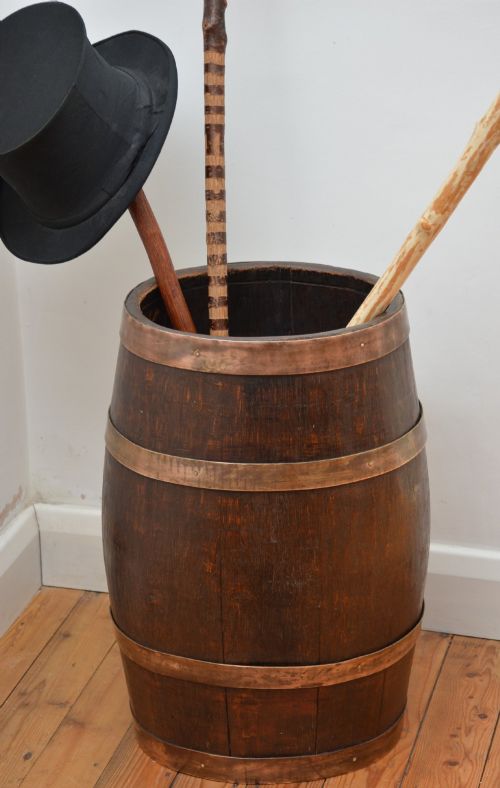
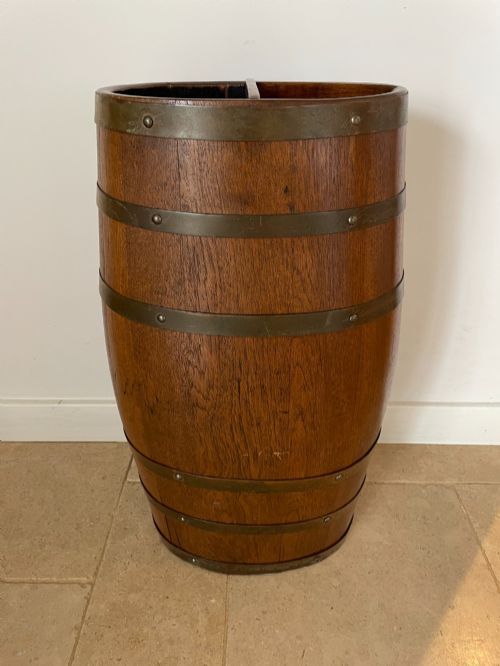
An oak barrel cane holder is a practical piece of hallway furniture designed to corral walking sticks, canes, and umbrellas. Most examples take the form of miniature coopered barrels or oval tubs intended to stand neatly against a wall or in a corner.
The pieces listed on this page span several eras, with Victorian and nineteenth-century examples appearing frequently alongside items from the early twentieth century. English country house and Edwardian styles also emerge among the selection.
Makers adapted traditional cooperage techniques to create cylindrical and oval forms suitable for domestic utility. These stands serve a clear purpose while adding rustic character to entranceways.
Construction and materials
The primary material is oak, shaped into vertical staves that form the body of the barrel. These staves are joined using traditional cooperage methods to create a watertight or robust hollow vessel.
Metal bands, frequently made of brass or copper, encircle the oak body to hold the staves tightly in place. Some versions incorporate iron bands, brass braces, or painted details to reinforce the structure.
Some barrels proudly sport an engraved coat of arms, as though your umbrella was knighted upon entry.
Assessing quality and character
The quality of an oak barrel cane holder rests on the precision of its cooperage and the richness of the timber grain. Tighter joins between the staves and more substantial metal banding indicate higher craftsmanship.
Purities of form distinguish standard utility items from grander country house examples. Oval shapes and engraved brass coats of arms elevate certain pieces above plain cylindrical barrels.
The Oak Barrel Cane Holder Glossary
- Coopered
- Constructed from curved wooden staves bound together with hoops, much like a traditional drinking cask or bucket. This technique provides inherent strength to cylindrical wooden objects.
- Staves
- The narrow strips of oak placed edge to edge to make the sides of a barrel. Each piece is tapered to ensure the assembled vessel curves correctly.
- Coopering
- The ancient craft of making wooden wooden containers that are bound together with hoops. Artisans who practiced this trade were known as coopers.
- Umbrella stand
- A hall furnishing specifically built to hold wet umbrellas and walking sticks upright. These items prevent moisture from reaching hallway floors.
Oak Barrel Cane Holder: Frequently Asked Questions
What is an oak barrel cane holder?
It is a coopered wooden vessel designed to hold walking sticks, canes, and umbrellas in an entrance hall.
These items utilise traditional barrel-making techniques on a smaller scale to create functional hallway storage.
How are these stands constructed?
Vertical oak staves are fitted together and secured using metal bands made of brass, copper, or iron.
This method mirrors traditional cask construction, ensuring the wooden body remains stable over decades of daily use.
Where should I place one?
They suit entrance halls, porches, or boot rooms where visitors drop off wet gear and walking aids.
The compact footprint allows them to tuck neatly into corners or beside doorways.
How do I date an antique stand?
Dating relies on the style of the metal banding, the joinery methods, and the type of oak used.
Victorian and nineteenth-century examples often feature heavy brass hoops and rich patination on the timber.