
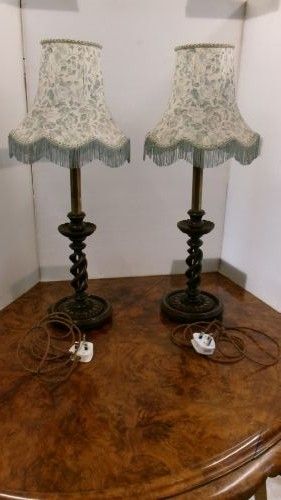


Oak Barley Twist Lamps
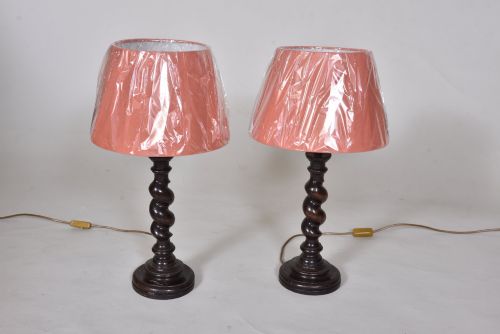
Oak barley twist lamps are sculptural wooden luminaires defined by spiralling turned shafts, offering sturdy charm for traditional interiors.
Oak Barley Twist Lamps
Oak barley twist lamps combine traditional turned woodwork with functional domestic lighting, appearing primarily as tall wooden table lamps complete with fabric shades. These pieces emerge from periods ranging through the Edwardian era, the Victorian epoch, and the 1920s and 1930s, reflecting enduring domestic utility.
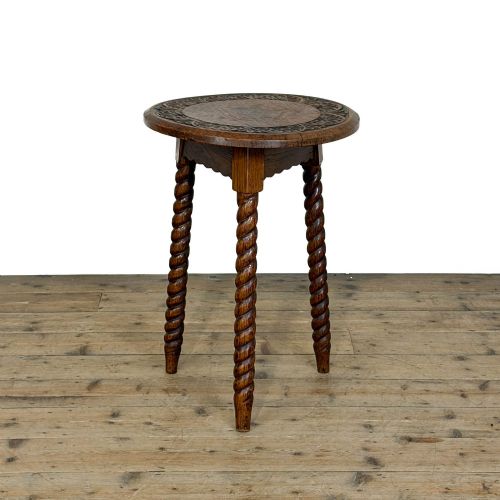
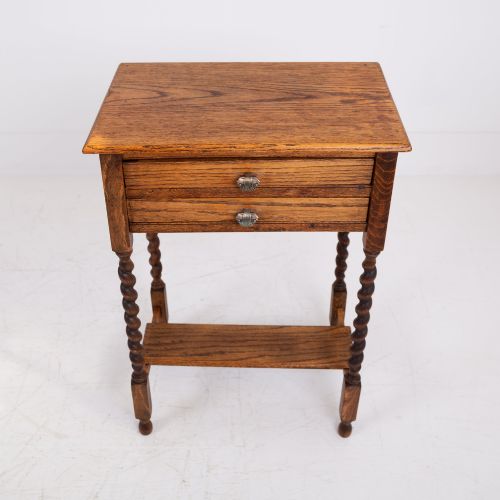
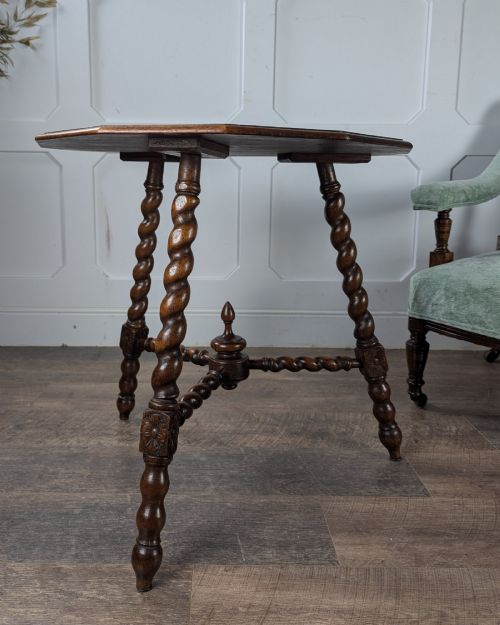
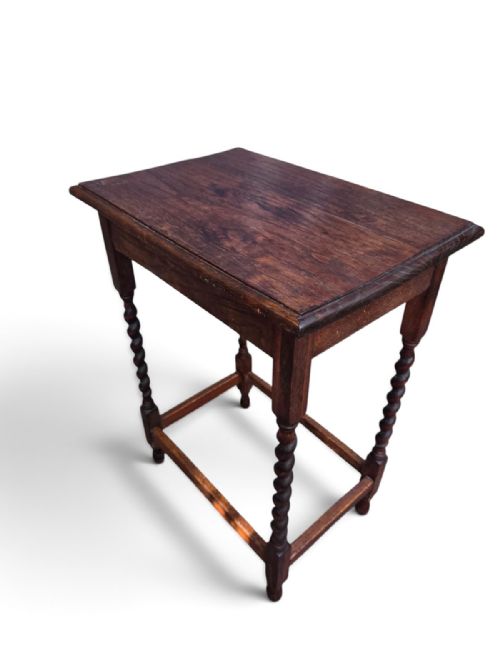
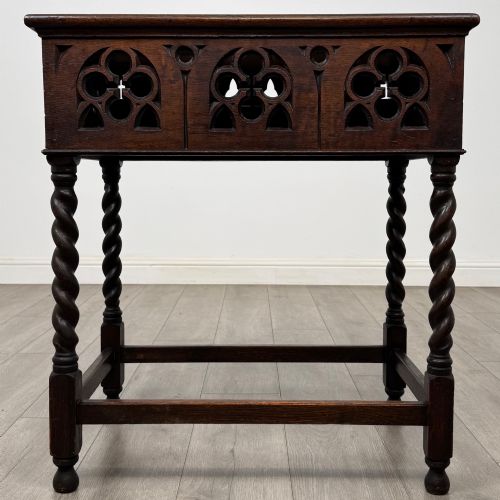
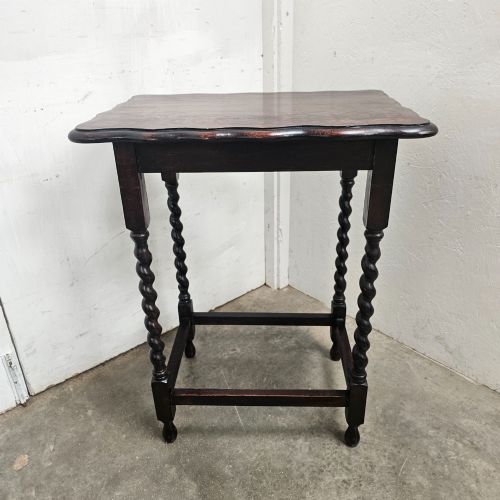
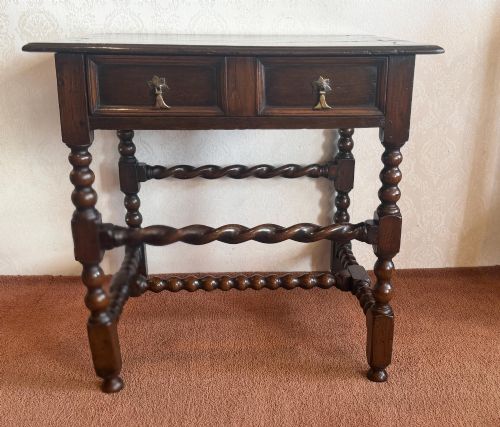
Buyers seeking oak barley twist lamps encounter turned shafts formed from solid oak or dark oak, occasionally paired with brass or metal components. The form aligns closely with side tables and occasional tables bearing similar spiralling legs, demonstrating how turnery united furniture and lighting design across these decades.
What varies in quality
The precision of the lathe work and the crispness of the spiralling angles dictate the visual success of the piece, separating straightforward utilitarian turnings from more refined examples. Timber quality also plays a role, with dense solid oak exhibiting superior grain definition compared to softer or more heavily masked woods.
Proportion and stability determine the standard of the assembled lamp, ensuring the upright shaft sits plumb and securely upon its base. The integration of period brass hardware and sympathetic fabric or fringe shades completes the construction.
Object forms link table lamps directly with side tables, occasional tables, cricket tables, and etageres.
The Oak Barley Twist Lamps Glossary
- Barley twist
- A spiralling turned wooden column resembling the shape of a barley sugar stick. This decorative motif appears frequently on table legs and lamp shafts during revival periods.
- Turnery
- The method of shaping wood on a lathe using cutting tools while the material rotates. This technique produced the symmetrical columns seen on these lamps and associated tables.
- Edwardian
- The historical period spanning the reign of King Edward VII from 1901 to 1910. Pieces from this era often exhibit lighter proportions while retaining traditional revival motifs.
- Jacobean Revival
- A nineteenth and early twentieth century architectural and decorative style imitating seventeenth century English design. It frequently incorporates dark oak, deep carving, and turned elements.
Oak Barley Twist Lamps: Frequently Asked Questions
What era are oak barley twist lamps from?
These lamps date predominantly from the Edwardian period, the Victorian epoch, and the 1920s and 1930s. Makers drew inspiration from earlier seventeenth century joinery styles, reviving the turned spiral motif for domestic lighting and occasional furniture.
Survival into the twentieth century ensured that turned timber remained a popular choice for table lamps and side tables alike. The diverse dates reflect enduring interest in traditional craftsmanship across multiple decades.
Are these lamps made of solid oak?
Many examples utilise solid oak or dark oak for the turned shaft and base, providing natural weight and stability. Timber selection varied according to the workshop and the specific decade of production.
Some pieces combine oak with metal components or brass fittings to secure the electrical wiring and lamp holders. The grain and finish of the wood typically dictate the visual character of each individual luminaire.
How do I style an oak barley twist lamp?
These lamps suit traditional interiors, pairing naturally with side tables, occasional tables, and antique sideboards. Their warm oak tones complement classic fabric shades and fringe details, adding vertical texture to a room.
Placing them on matching turned furniture creates a cohesive historical aesthetic. The dark wood finish integrates easily into both country house and period room settings.
How do I tell different periods apart?
Distinguishing periods relies on observing the proportions of the turnery, the choice of finish, and associated hardware. Edwardian and Victorian pieces often display deeper carving and darker oak stains, while 1920s and 1930s examples can show simpler silhouettes.
Comparing the lamp design to dated tables from the same eras helps confirm the timeline. Subtle shifts in brass fittings and shade styles also offer clues to the decade of manufacture.