

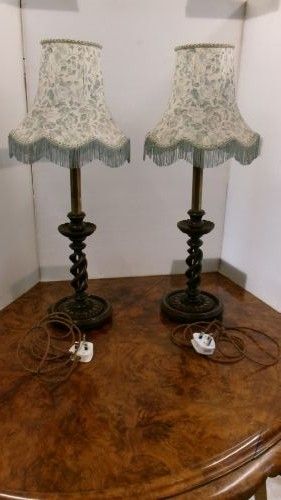


Paired Sideboard Lamps
Paired sideboard lamps bring symmetry and light to a room, offering matched illumination from periods spanning the nineteenth and early twentieth centuries.
Paired Sideboard Lamps
When you search for paired sideboard lamps, you are looking at matched pairs of table lamps and converted vessels designed to sit symmetrically on a sideboard, buffet or large console. The pieces on this page include nineteenth century Japanese vases, Edwardian mahogany standards, and tall column forms in brass, marble and crystal.
The most common versions you will meet here are tall columnar lamps and converted nineteenth century vases such as Satsuma, Kutani and Imari wares. These objects balance the proportions of a long piece of dining room furniture while providing functional layered lighting.
Originating largely from British, French and Japanese workshops, these pairs reflect the eclectic tastes of the Victorian, Edwardian and Meiji periods. They combine decorative presence with practical interior illumination.
How they were made
Makers constructed these lamps using durable structural materials like brass, bronze, mahogany, oak and marble to provide a solid foundation for tall designs. Columnar examples utilise turned timber or cast metal components secured with central threaded rods.
Vessel conversions incorporate ceramic bodies from Japanese kilns or cut glass and crystal sections mounted on metal bases. Many pieces incorporate fabric and silk shades to diffuse the light cast by the bulbs or candelabra branches.
Several pairs began life as Japanese export vases before spending a second career illuminating Victorian dining rooms.
What varies in quality
The distinction between standard examples and the finest pieces lies in the precision of the casting, the depth of the hand-painted ceramic decoration, and the weight of the materials. Heavier mounts in ormolu, bronze and solid marble indicate superior original manufacture.
Proportion and matching also determine the standing of a pair, as pieces turned by hand or fired in traditional kilns require careful pairing to ensure identical height and coloration. Superior examples retain crisp detail in their column capitals and metalwork.
The Paired Sideboard Lamps Glossary
- Ormolu
- Gilded bronze mounts used extensively in French lighting. This technique involves applying a mercury and gold amalgam to bronze before firing.
- Imari
- A traditional style of Japanese export porcelain characterised by underglaze blue and overglaze red, gold and black. These pieces were frequently converted into table lamps in later periods.
- Corinthian column
- An architectural order featuring ornate capitals decorated with acanthus leaves. This classical motif appears frequently on nineteenth and early twentieth century metal lamp standards.
- Candelabra
- A branched candlestick adapted to hold multiple light sources. Electric versions on this page provide substantial illumination for large reception rooms.
Paired Sideboard Lamps: Frequently Asked Questions
Where should I place paired sideboard lamps?
These lamps sit best on long pieces of furniture such as sideboards, buffets, or large side tables where symmetry matters. Placing them at either end creates balanced illumination and frames the wall space above.
They also function effectively on large mantelpieces or wide console tables in entrance halls, provided the depth of the surface supports the base dimensions.
How do I choose the right height?
Consider the scale of the furniture and the surrounding wall space when selecting tall standards or converted vases. Taller columns and candelabra require high ceilings and substantial rooms to avoid overwhelming the space.
Shorter ceramic vase lamps suit more intimate settings or narrower sideboards where excessive height would disrupt the sightlines of the room.
Are these lamps wired for modern use?
Most antique lamps encountered on the market have been rewired or adapted for contemporary electrical standards at some point in their history. Buyers should inspect the wiring and consult a qualified electrician to ensure safety compliance.
Conversions from vases and candelabra often integrate internal wiring that preserves the visual integrity of the original ceramic or metal body.
How do I care for antique lamp materials?
Dust metal, marble and glass components gently with a soft dry cloth to prevent the accumulation of grime on intricate surfaces like Corinthian capitals or cut crystal. Avoid harsh chemical cleaners that can strip patination from brass and bronze.
Ceramic bodies require careful handling during cleaning, particularly around delicate hand-painted Japanese glazes found on Satsuma and Kutani wares.