



Novelty Glass Decanter
A novelty glass decanter brings eccentric character to a drinks tray, combining fine glassware with whimsical zoomorphic and figural forms.
Novelty Glass Decanter
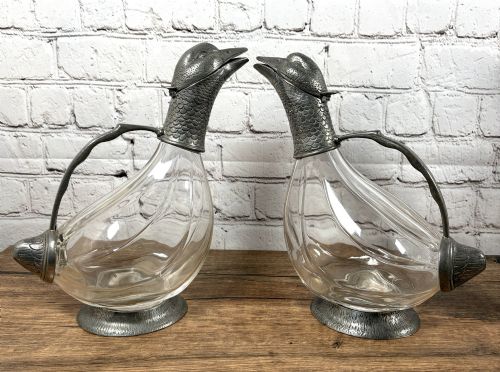
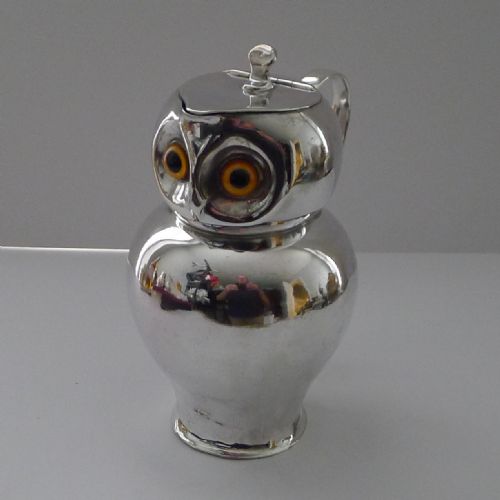
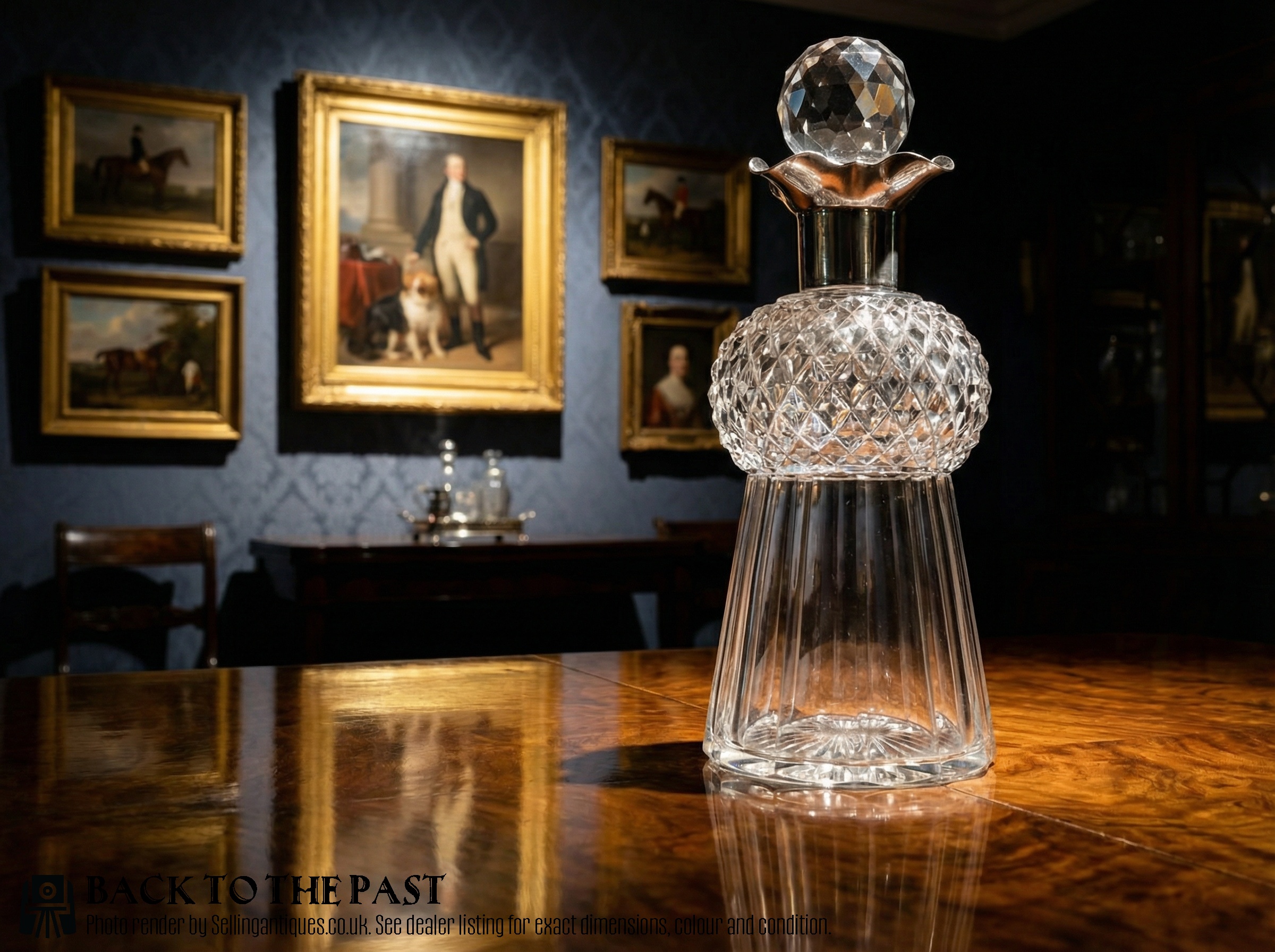
When you search for a novelty glass decanter, you encounter pieces fashioned into animal and object shapes that served drinks in Victorian, Edwardian, and later twentieth-century homes. These vessels take the form of owls, dogs, ducks, roosters, boars, barrels, and thistles, functioning simultaneously as functional tableware and humorous conversation pieces.
The pieces on this page span several distinct eras, with Victorian examples appearing alongside Edwardian, Art Deco, and Mid-Century Modern designs. While animal claret jugs and bird decanters dominate the earlier periods, later decades introduce cocktail shakers and pitchers shaped like roosters or boars.
How they were made
Glassmakers utilised techniques like moulding, cutting, and frosting to shape crystal and clear glass into barrels, birds, and botanical forms like the Scottish thistle. The glass body often required precise blowing to fit inside or beneath hinged metal mounts.
Silversmiths and metalworkers constructed mounts, heads, and hinged lids in silver plate and sterling silver, attaching them securely to the glass bodies of ducks, dogs, and monkeys. These metal elements often incorporated cast details like feathers, fur texture, and realistic beaks or snouts.
Novelty Glass Decanter Retail Price Guide 2026
Typical asking prices for novelty glass decanter among the pieces listed under this phrase on Sellingantiques today, from the lower quarter to the upper quarter. They describe what is for sale here now, not the wider market.
Several decanters take the form of animals peering out from the drinks tray, including owls with glass eyes and monkeys serving as claret jugs.
What varies in quality
The fineness of the cast metalwork separates standard examples from exceptional ones, particularly in the expression and detail given to animal heads like owls, monkeys, and ducks. Superior pieces exhibit crisp feather or fur rendering and secure, well-fitted hinged mechanisms.
The quality of the glass vessel itself dictates overall value, with deep hand-cutting, clear crystal transparency, and undamaged frosted surfaces marking out better production standards. The harmonious proportion between the glass body and the metal mount also indicates superior design.
Valenti
The Novelty Glass Decanter Glossary
- Claret jug
- A pouring vessel specifically designed for serving red wine, often featuring an ornate handle and hinged metal lid. In novelty forms, the glass body frequently takes the shape of an animal or bird.
- Silver Plate
- A base metal coated with a thin layer of silver, commonly utilised for the mounts, heads, and pouring spouts of Victorian novelty decanters and cruet sets.
- Frosted Crystal
- Glass treated to achieve a matte, opaque finish, frequently employed on barrels and animal bodies to create texture and contrast against polished metal mounts.
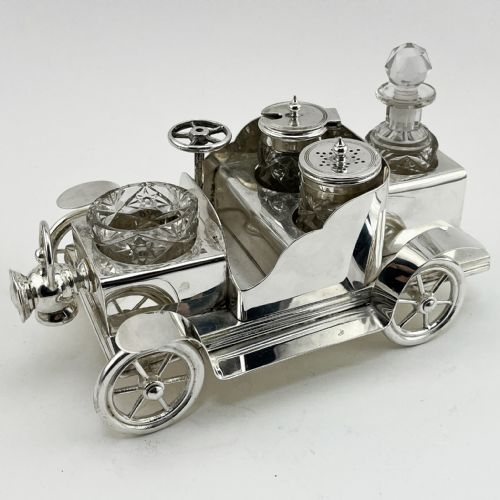
- Cruet Set
- A matched collection of small bottles or containers for condiments and liquids, sometimes fashioned into themed figural arrangements like vintage cars.
Novelty Glass Decanter: Frequently Asked Questions
What were novelty glass decanters used for?
These whimsical vessels served wine, spirits, and liqueurs at the dining table or during parlor gatherings, functioning as both functional drink dispensers and entertaining conversation pieces for guests.
Hosts used them to pour claret, whisky, and champagne at formal dinners, adding an element of surprise and theatricality to the serving of after-dinner drinks.
How do I identify a Victorian novelty decanter?
Victorian examples typically combine heavy cut glass or frosted crystal with detailed silver-plated mounts shaped as animals, birds, or bottles, often dating between the eighteen-eighties and eighteen-nineties.
Look for hallmarks on the silver mounts, traditional casting methods, and naturalistic zoomorphic forms such as owls, dogs, and ducks that characterise late nineteenth-century craftsmanship.
Are these decanters safe for holding drinks?
Many antique novelty decanters remain functional for serving beverages, provided the interior glass is clean and any silver-plated spouts are gently washed by hand rather than submerged.
Collectors should inspect the condition of the inner glass and the security of the metal mounts before using them to serve modern beverages at gatherings.