


Novelty Condiment Set
A novelty condiment set brings character to the dining table, taking whimsical animal and object forms in silver and glass.
Novelty Condiment Set
A novelty condiment set takes the form of animals, birds, vehicles, and everyday objects, serving salt, pepper, and mustard with playful charm. Buyers seek these pieces to add personality and conversation to a dining setting while collecting historical metalwork. The selection spans Victorian, Edwardian, and mid-century periods, capturing changing tastes in domestic silver and plate.
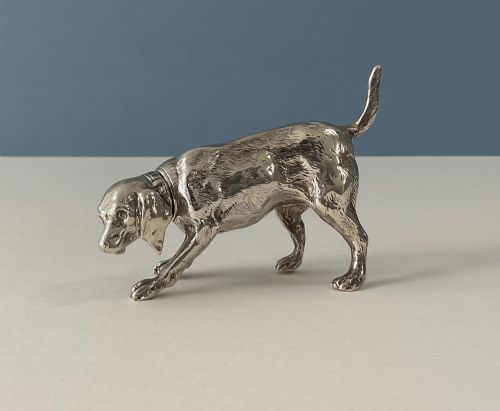
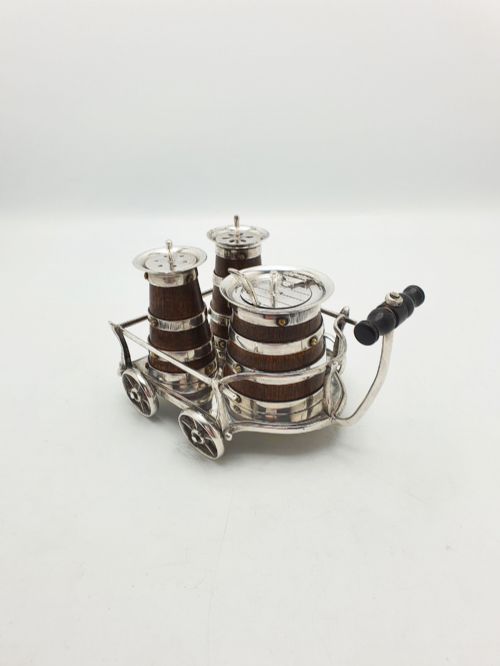
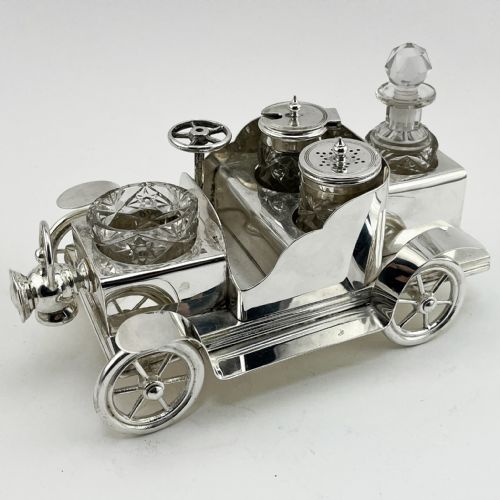
Bird and animal figures appear frequently among the listings, particularly owls, chicks, and dogs modelled as pepper pots and salt cellars. Vehicle forms such as cars and carriages also emerge, alongside oak barrel cruets and architectural items like butler trays. Most examples date from the nineteenth and early twentieth centuries, reflecting the Victorian and Edwardian enthusiasm for amusing tablewares.
Evaluating the Pieces
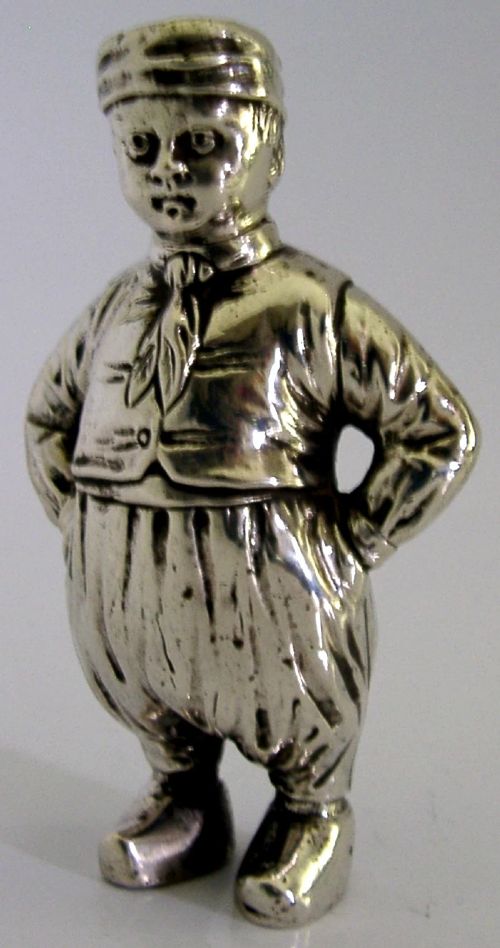
Quality rests upon the crispness of the modelling and the naturalism achieved in animal and figural forms. Superior pieces display finely detailed feathers, expressions, and textures that remain sharp rather than smoothed over by wear or heavy plating. Maker attribution also elevates certain examples, particularly those bearing the marks of established silversmiths.
The integration of functional elements into the sculptural design dictates success, ensuring that lids, glass liners, and stands fit harmoniously without disrupting the visual line. Intact original components, such as matching glass inserts and secure stoppers, distinguish superior survivals from matched or altered sets.
Listings feature Victorian and Edwardian periods alongside mid-century British and Continental examples, utilising sterling silver, silver plate, glass, and oak.
Sampson Mordan·Berthold Muller·Mappin & Webb
The Novelty Condiment Set Glossary
- Cruet set
- A matched collection of bottles, jars, or pots for holding condiments at the dining table, mounted in a shared frame or stand. These frames often take novelty shapes such as carts or trays.
- Pepperette
- A small container specifically designed for dispensing ground pepper, usually featuring a pierced dome or head. In novelty sets, the pepperette forms the body of an animal or object.
- Silver plate
- A layer of pure silver fused or electroplated onto a base metal foundation such as copper, nickel brass, or Britannia metal. This technique permitted the creation of larger novelty table items at a lower cost than solid silver.
- Cast silver
- Metal poured into a mould to form solid three-dimensional shapes, allowing intricate animal figures and structural details to be produced. This method gives weight and permanence to table ornaments.
Novelty Condiment Set: Frequently Asked Questions
How were these sets used?
Victorians and Edwardians placed these sets on dining tables and sideboards to serve seasonings during formal meals and family dinners. Guests would reach for bird-shaped pepper pots or car cruets when seasoning their food.
They served as both functional utensils and talking points for diners, reflecting the period's taste for playful domestic objects. Today, collectors often display them on cabinet shelves rather than using them for daily dining.
How do I date a novelty cruet?
Dating relies on hallmarks stamped on silver components, registry marks indicating patent dates, and the specific material styles of the period. Victorian pieces often feature heavy ornamentation or naturalistic animal forms, while Edwardian items lean toward lighter silver work.
Stylistic cues such as carriage designs or oak barrel mounts also point to nineteenth-century manufacturing trends. Comparing the construction methods with known period pieces helps narrow down the decade of production.
How do I care for silver novelty items?
Silver and silver-plated novelty sets require gentle cleaning with appropriate silver cloth or non-abrasive polish to preserve surface details and hallmarks. Avoid harsh dipping solutions that can strip antique patination or damage integrated wooden bases and glass liners.
Displaying pieces away from direct sunlight and damp environments protects both the metal and any organic materials like oak or walnut. Regular dusting keeps the chased details clear of accumulation.