


Norwich School Art
Norwich school art encompasses oil paintings and watercolours capturing the landscapes and portraits of East Anglia during the 18th and 19th centuries.
Norwich School Art
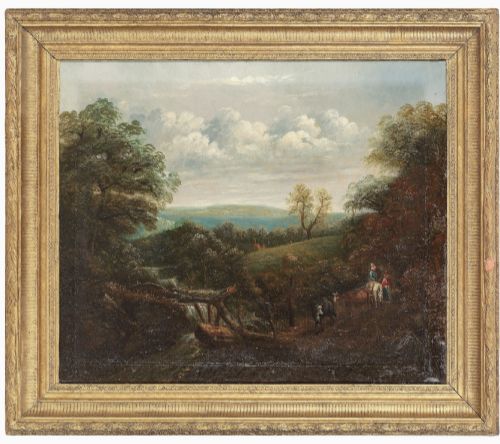
Norwich school art represents the first provincial art movement in Britain, focusing heavily on the local scenery of Norfolk. When you search for norwich school art, you encounter oil paintings on canvas and wood panel alongside delicate watercolours on paper. The works on this page frequently depict rural landscapes, windmills, rivers, and local architectural landmarks.
Most pieces date from the 19th century, stretching from the Victorian era back into the Georgian period. You find both finished gallery works and evocative drawings that record the topography and daily life of the region. Framed examples often retain their period gilt wood surrounds, completing the historic presentation.
How they were made
Artists utilised oil on canvas and prepared wood panel for their substantial landscape and portrait compositions. These mediums allowed for rich layering of pigment, capturing shifting light over flatlands and rivers.
Watercolour pigment on paper served to record rapid atmospheric observations en plein air. Painters combined fluid washes with fine penwork to delineate figures, cottages, and river craft.
One recorded canvas captures a busy timber staithe where local workers loaded heavy loads onto river craft.
What varies in quality
The distinction rests in the handling of light and the surety of the brushwork. Master practitioners convey the flat expanse of the Norfolk landscape with an economy of marks that suggests atmosphere rather than mere documentation.
Condition and originality dictate the standing of a piece. Works retaining their undisturbed paint surfaces and original gilt wood framing hold greater integrity than those with extensive later intervention.
Thomas Lound·Joseph Clover·John Joseph Cotman·Henry Bright·John Thistle·Joseph Paul
The Norwich School Art Glossary
- Wood Panel
- A rigid wooden support used by artists before canvas became universal. It provides a stable ground for detailed oil painting.
- Watercolour Pigment
- Finely ground colour mixed with a water-soluble binder. Applied to paper in transparent washes to create luminous effects.
- Gilt Wood
- Timber carved and coated with a thin layer of gold leaf. Period frames utilise this technique to complement the artwork.
- Staithe
- A local Norfolk term for a landing stage or wharf. These riverside loading areas frequently feature in regional landscapes.
Norwich School Art: Frequently Asked Questions
What subjects do these paintings show?
The works primarily record the scenery of Norfolk, including rivers, windmills, country paths, and local churches.
You also encounter portraits of prominent regional figures, such as local tradesmen and brewers.
How do I care for watercolour paintings?
Keep watercolours away from direct sunlight to prevent the pigments from fading over time.
Ensure they are framed behind glass with acid-free mounts to protect the paper from humidity.
Are these works painted on canvas or wood?
Artists of this circle utilised both traditional canvas and solid wood panels for their oil paintings.
Watercolours were executed exclusively on paper supports, often capturing rapid outdoor studies.
How do I date a Norwich School painting?
Dating relies on stylistic markers, costume details in portraits, and the recorded lifespan of the identified artist.
Period framing techniques and canvas stamps also provide reliable clues to the decade of creation.