





Northwest Persian Heriz
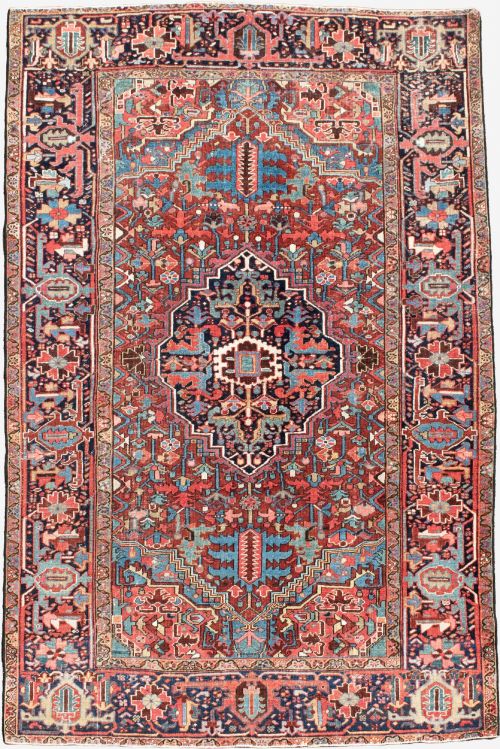
These northwest persian heriz floor coverings are durable village weavings built around bold geometric medallions.
Northwest Persian Heriz
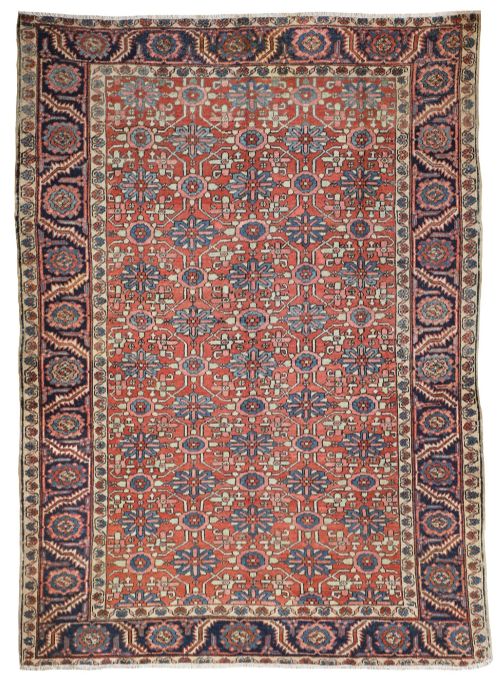
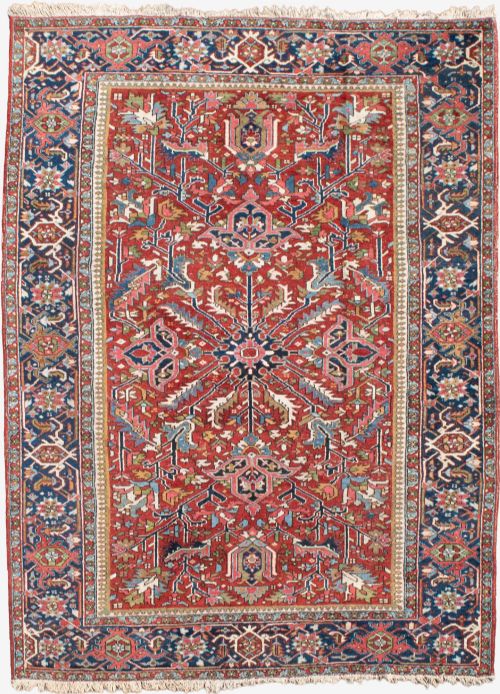
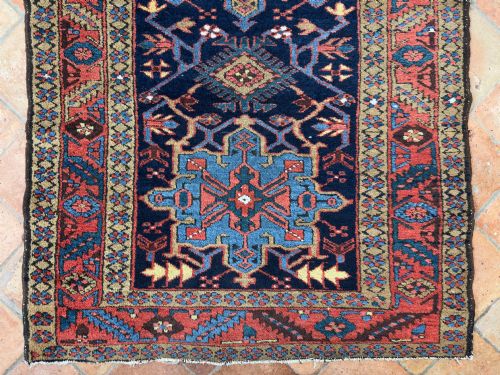
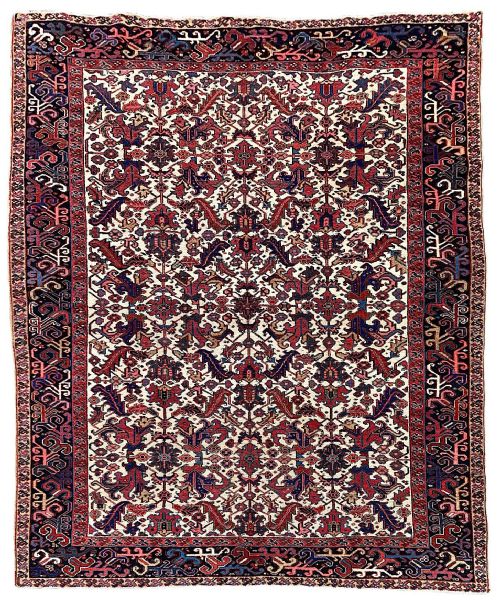
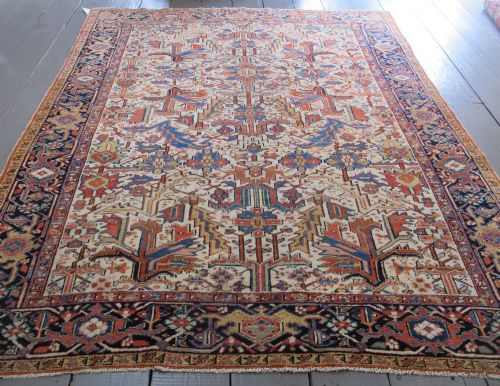
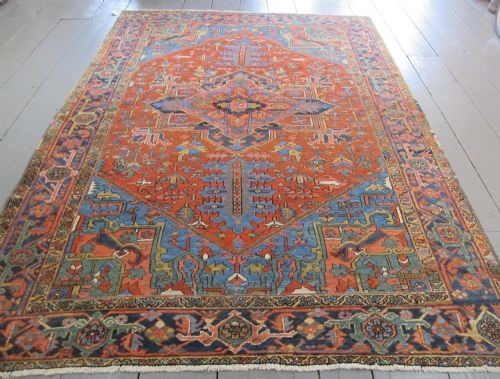
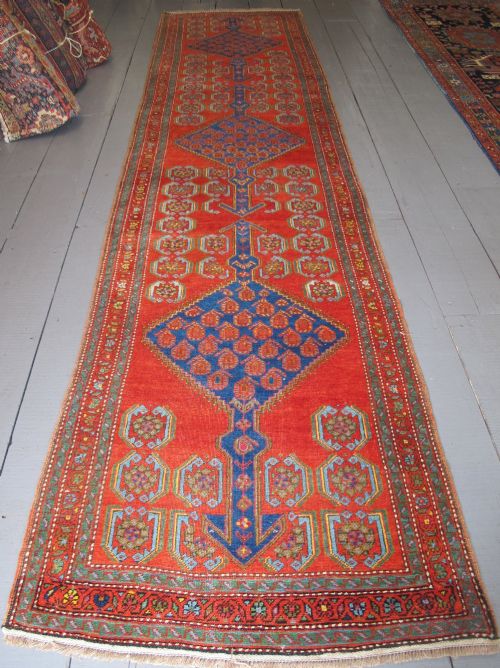
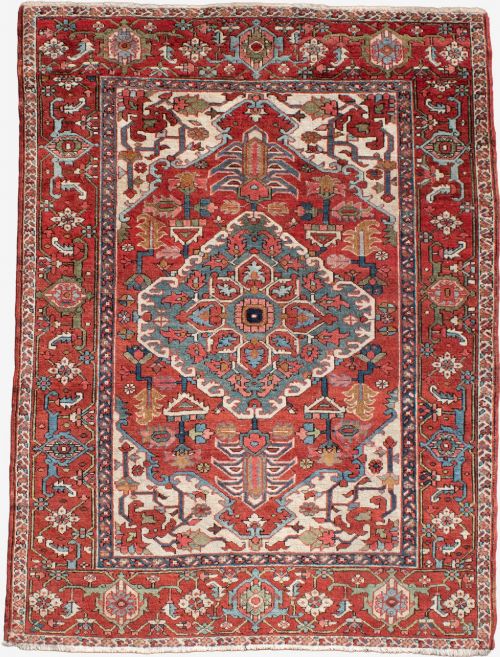
When you search for northwest persian heriz, you encounter heavy village and town floor coverings originating from the mountainous region of Azerbaijan in northwest Persia. The selections here span the later nineteenth century into the early decades of the twentieth century, including room-sized carpets alongside narrow runners and smaller formats.
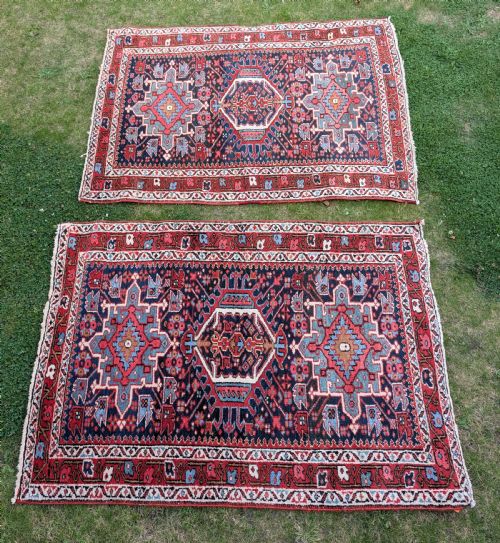
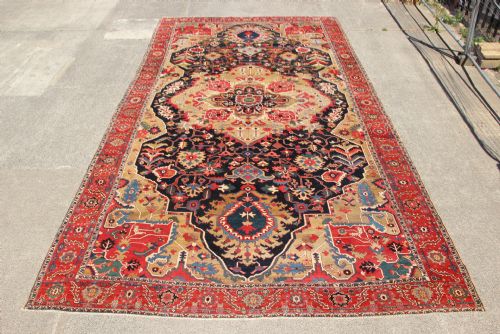
The most common formats on this page are large carpets and runners featuring pronounced rectilinear central medallions set against contrasting ground colours. Alongside classic Heriz production, related village types from the surrounding district such as Karaja, Serapi and Bakshaish appear frequently in the listings.
How They Were Made
Weavers constructed these pieces using durable wool piled onto sturdy cotton warps, often employing hand-spun wool for the pile yarn to achieve rich texture and depth of tone. This combination of sturdy materials created a heavy, resilient structure designed to withstand generations of floor use.
The distinctive geometric patterns rely on knotted pile techniques executed on upright vertical looms. Natural dyestuffs produced the characteristic palette of terracotta, ivory, and deep indigo seen across the district.
Listings span production dates from eighteen-fifty to nineteen-thirty, using wool and cotton materials exclusively.
What Varies in Quality
The distinction between standard examples and finer pieces lies in the precision of the rectilinear drawing and the complexity of the medallion geometry. Earlier nineteenth-century examples often display more expansive, open compositions with subtle shifts in vegetable dyes.
Knot density and the quality of the wool also set pieces apart, with tighter construction yielding sharper design contours. The handling of secondary borders and the clarity of the corner spandrels further define the level of craftsmanship in individual examples.
The Northwest Persian Heriz Glossary
- Heriz
- A style of village carpet from northwest Persia known for robust geometric designs and large central medallions. These durable room-size carpets usually feature sturdy cotton foundations.
- Serapi
- An older, often more spacious sub-style of Heriz weaving typically dated to the nineteenth century. These carpets display softer, more open colour palettes and large-scale geometric motifs.
- Karaja
- A village weaving type from the Heriz district often produced in smaller rug or runner formats. They frequently incorporate bold geometric panels or repeating medallion layouts.
- Bakshaish
- An early village carpet type from the broader Heriz region characterised by stylised tribal patterns and muted earthy tones. These pieces often pre-date standard turn-of-the-century Heriz production.
- Warp
- The vertical foundation threads running lengthwise through the carpet that carry the tension on the loom. In these pieces, cotton warps provide structural stability for the wool pile.
Northwest Persian Heriz: Frequently Asked Questions
How do I identify an authentic Heriz carpet?
Authentic pieces display distinct geometric medallion designs woven with wool pile on cotton foundations, originating from the northwest Persian district. Look for characteristic terracotta tones and sturdy village construction dating from the late nineteenth or early twentieth century.
Examining the back reveals the density of the knotting and the quality of the hand-spun wool. Traditional village production methods give each piece a slightly irregular, individual character.
Where were these carpets originally made?
These weavings originate from the town of Heriz and surrounding villages in the mountainous Azerbaijan region of northwest Persia. Local workshops utilised abundant regional wool supplies to produce hard-wearing floor coverings for both domestic use and export.
Surrounding settlements such as Karaja and Bakshaish contributed closely related styles that share similar technical structures and geometric design vocabularies.
How should I care for an antique carpet?
Protect antique wool floor coverings by placing them in low-traffic areas or using appropriate underlays to prevent slipping and excessive wear. Regular gentle vacuuming without a rotating brush roll helps remove embedded dust without damaging the pile.
Professional cleaning tailored for antique textiles ensures the natural wool oils and vegetable dyes remain preserved over time. Avoid exposing the fibres to direct, prolonged sunlight to prevent fading.
What is the difference between a Heriz and a Serapi?
Serapi carpets represent an earlier, typically finer nineteenth-century iteration of the classic Heriz style with more open, spacious compositions. They often feature muted colour palettes and lower knot densities that give the geometric motifs a larger scale.
Standard Heriz production from later periods tends to feature tighter, more formal medallion designs and more saturated primary colours. Both share the same regional origin and sturdy structural materials.