






Nomadic Woven Storage Bag
A nomadic woven storage bag brings the tactile geometry of tribal life straight to your walls or floors.
Nomadic Woven Storage Bag
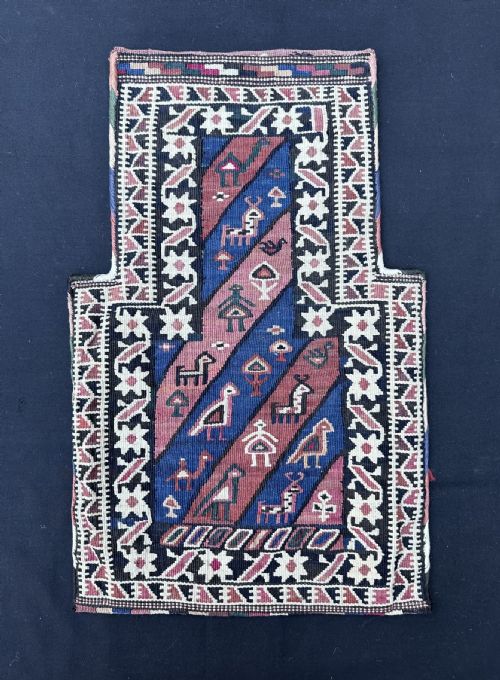
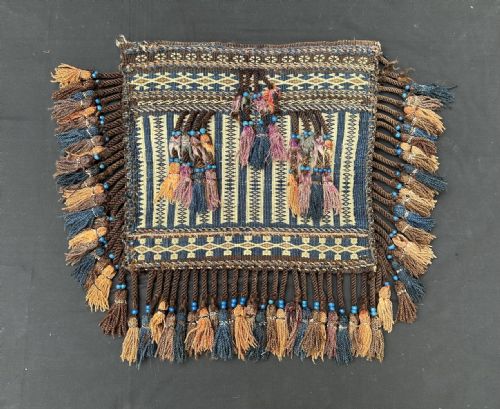
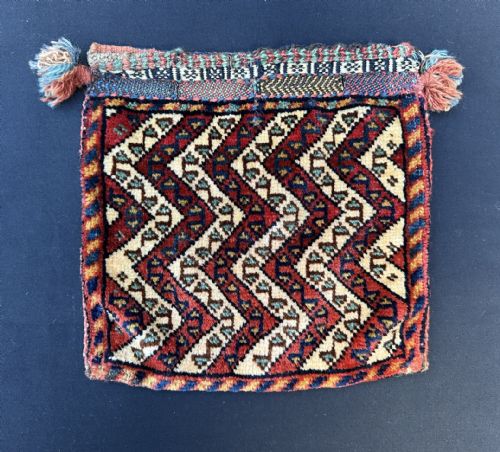
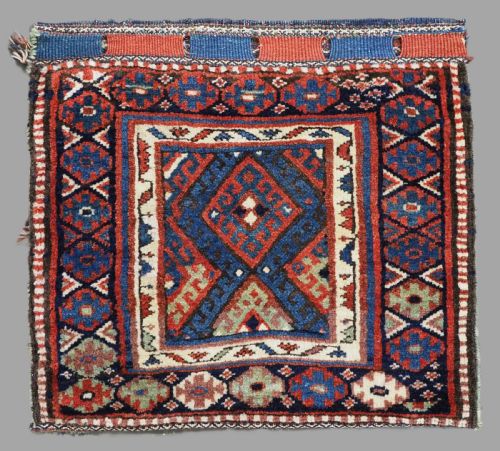
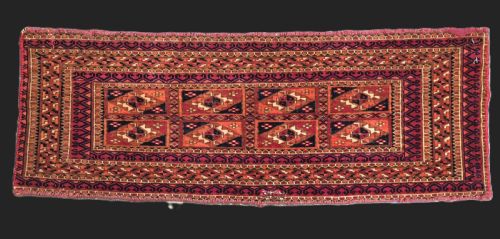
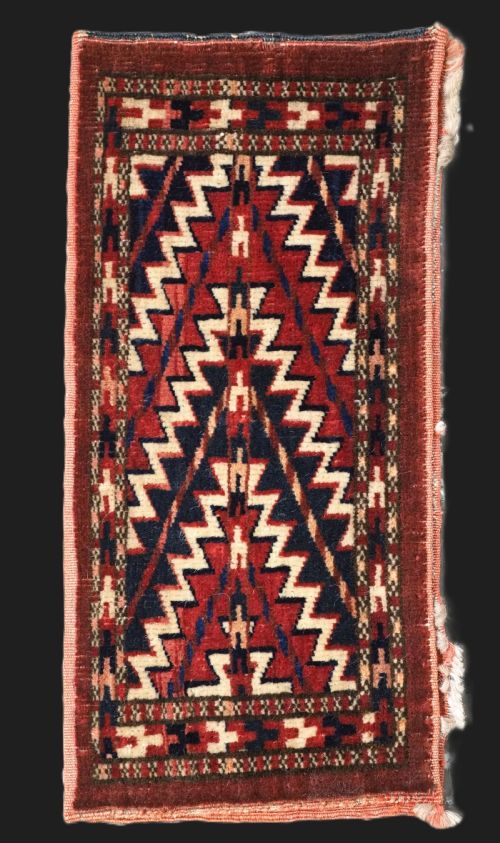
A nomadic woven storage bag represents the portable utility of tribal weavers across Central Asia and Persia. These utilitarian textiles include forms such as the torba, mafrash face, kap, balisht, and tacheh, originally utilised for household storage on the move.
Tribal groups like the Yomut, Tekke, Baluch, Bakhtiari-Lor, and Jaf Kurdish created these distinctive pieces. The surviving examples span from the nineteenth century into the early twentieth century, reflecting rich regional weaving traditions.
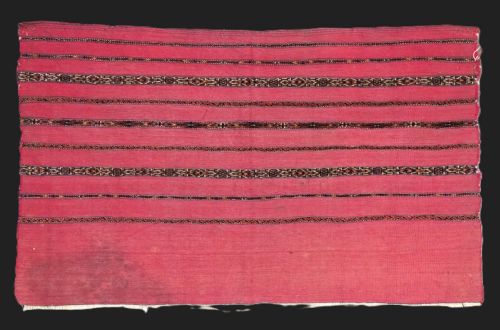
Most pieces seen here demonstrate the traditional flatweave or pile techniques native to nomadic life. They function today primarily as striking wall art or collectible tribal textiles rather than utilitarian containers.
Quality factors in tribal bags
The sophistication of the tribal design and the precision of the weave set finer pieces apart from simpler work. Well-executed gul motifs and balanced banded flatweave layouts indicate superior craftsmanship.
The vibrancy and depth of the natural dyes significantly influence the visual impact of a piece. Intact structures, including surviving plain weave backs and preserved edges, denote higher preservation standards.
Nomadic Woven Storage Bag Retail Price Guide 2026
Typical asking prices for nomadic woven storage bag among the pieces listed under this phrase on Sellingantiques today, from the lower quarter to the upper quarter. They describe what is for sale here now, not the wider market.
The documented styles include Turkmen Tribal, Tribal Baluch, Persian Tribal, Tekke Turkmen, and Kurdish Tribal.
The Nomadic Woven Storage Bag Glossary
- Torba
- A small tribal storage bag traditionally used in Turkmen households for domestic organisation. These pieces often feature prominent gul motifs.
- Mafrash
- A rectangular storage bag or trunk panel produced by nomadic groups for bedding or larger possessions. They frequently display banded flatweave designs.
- Kap
- A specific term for a nomadic Turkmen bag used for hanging against tent walls. These items combine utility with decorative tribal artistry.
- Gul
- A primary medallion pattern repeated across Turkmen and tribal carpets and bags. Each tribal group typically utilised distinct gul variations.
- Balisht
- A small tribal bag or pillow face produced by Afghan and Baluch weavers. They served practical storage functions within the nomadic tent.
Nomadic Woven Storage Bag: Frequently Asked Questions
How were these bags used?
Nomadic tribes utilised these woven bags to store grain, bedding, and household possessions inside tents or during seasonal migrations.
Their robust construction in hand-spun wool and goat hair ensured contents remained protected against dust and rough handling while on the move.
How do I hang a bag on the wall?
Mounting a textile requires careful support to distribute its weight evenly across the upper edge. Conservation-grade Velcro or a custom sleeve sewn to the plain weave back allows safe display without damaging the wool.
Avoid direct heavy nailing through the textile itself to preserve the structural integrity of the weave and natural dyes.
What is a flatweave construction?
Flatweaving involves interlacing warp and weft threads without creating a raised pile surface. This technique produces a thinner, flexible textile suited for folding and practical storage.
Many mafrash faces and storage panels rely on this method to display crisp geometric patterns.