


Nomadic Woven Chuval
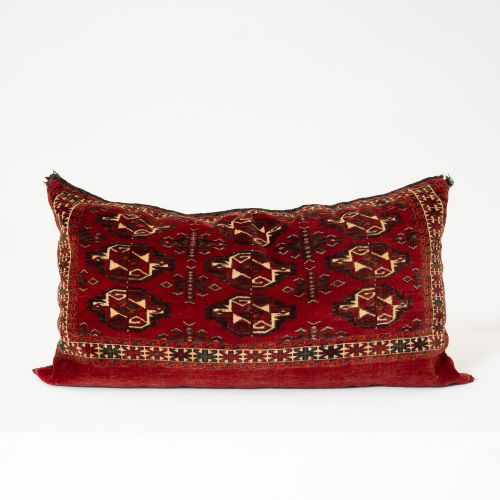
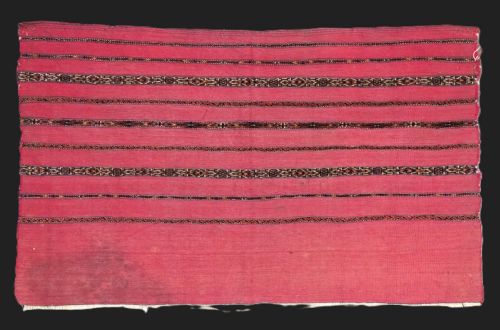
A nomadic woven chuval is a tribal storage bag from Central Asia designed to hold household goods inside a yurt.
Nomadic Woven Chuval
The selection on this page leans heavily toward nineteenth-century examples, with numerous pieces originating from the 1880s alongside items spanning from the mid-eighteenth century to the early twentieth century. Forms range from complete storage bags with hanging loops and backs to fragments and cushions.
Tribal weavers arranged these textiles with specific regional aesthetics, showing distinct affiliations such as Turkmen Tribal and Central Asian styles. Buyers encounter both complete storage bagfaces featuring repeated guls and modified items adapted into wall art or smaller decorative formats.
Materials and construction methods
Makers constructed each nomadic woven chuval predominantly from wool and hand-spun wool, often incorporating cotton elements for structural integrity and contrast. Artisans dyed these wool foundations using natural dyes, yielding deep regional palettes that define the character of nineteenth-century tribal weaving.
Weavers employed tight knotting techniques to achieve the dense pile required for heavy daily use inside tents and yurts. Many surviving examples also integrate flat woven details, plain weave backs, and attached hanging loops for practical suspension.
Listings feature pieces spanning from the mid-eighteenth century to the early twentieth century, constructed from wool, cotton, and natural dyes.
Assessing quality in tribal chuvals
The density and fineness of the weave distinguish high-level examples from standard utility pieces, with superior specimens exhibiting tightly packed knots and crisp structural definition. Artisans who achieved exceptional precision in executing complex gul motifs produced work that stands out visually.
Condition and completeness significantly alter the character of a piece, separating intact bags featuring original plain weave backs and hanging loops from isolated fragments. Surviving elements such as well-preserved elem designs or scarce gul variants add considerable distinctiveness to specific examples.
Tekke Turkmen·Yomut Tribes·Ersary Tribes·Salor Turkoman·Saryk Tekke Turkmen
The Nomadic Woven Chuval Glossary
- Chuval
- A large rectangular storage bag made by nomadic tribes in Central Asia for domestic use inside a tent. These pieces were traditionally utilised to store bedding and household belongings.
- Gul
- A repeating medallion or octagonal stamp pattern characteristic of Turkmen tribal weaving. Different tribes arranged these motifs in specific grid formations.
- Fragment
- A surviving portion of a larger historical textile rather than a complete object. Collectors often preserve these sections for their detailed workmanship.
- Flat weave
- A textile construction method produced without a piled surface, creating a smooth fabric. Artisans used this technique for the backs and hanging loops of storage bags.
Nomadic Woven Chuval: Frequently Asked Questions
How were these storage bags used?
Nomadic families utilised these bags to store clothing, bedding, and domestic supplies inside portable dwellings. Their sturdy construction allowed them to withstand the rigorous demands of pastoral life.
Many examples include original hanging loops designed for suspending the sacks against lattice tent walls. Modern owners frequently display them as wall art or place them on furniture.
How do you identify different tribal designs?
Tribal attribution relies primarily on the specific geometry of the repeating guls and the overall colour palette. Groups such as the Tekke, Yomut, and Ersary developed distinct visual vocabularies.
Examining the structural details, such as the elem panels and secondary borders, helps separate regional styles. Reference to historical weaving traditions clarifies these tribal distinctions.
Are these pieces complete or fragments?
Surviving examples appear in various states, ranging from intact bags with original plain weave backs to individual face panels. Some pieces survive only as fragmentary sections due to age and wear.
Complete examples often retain functional elements like hanging loops or finished backs. Fragments nevertheless offer clear insight into the fine knotting and natural dyes of the period.