

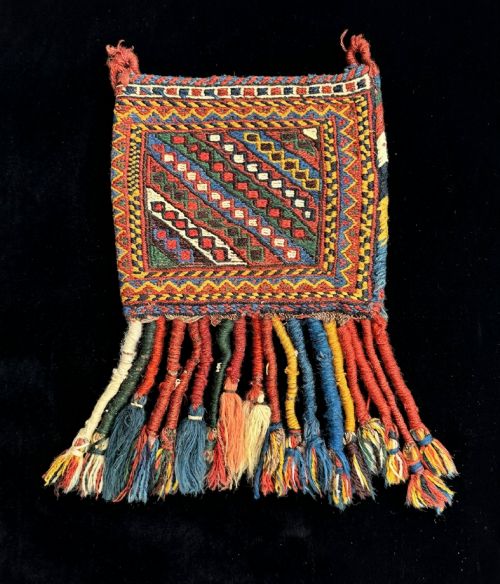


Nomadic Wool Saddlebag
A nomadic wool saddlebag brings the textured heritage of tribal weavers directly into a modern interior through enduring craft.
Nomadic Wool Saddlebag
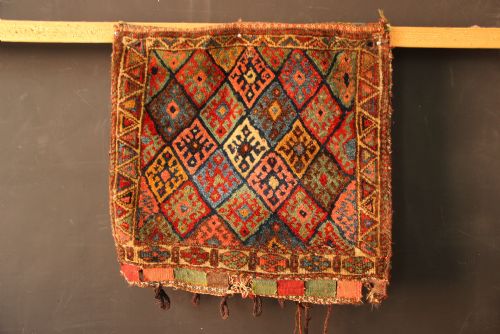
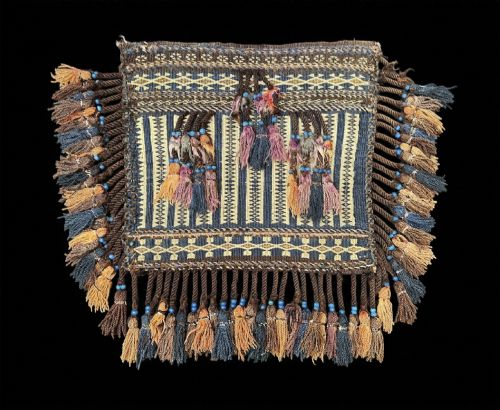
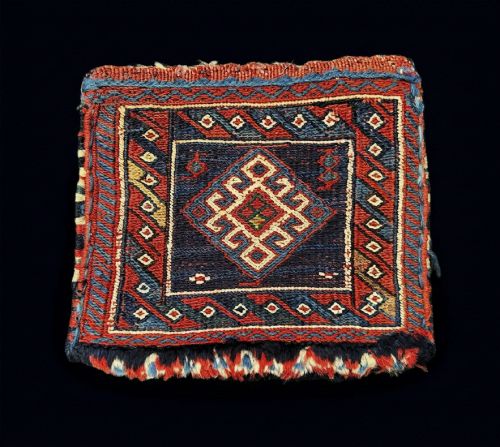
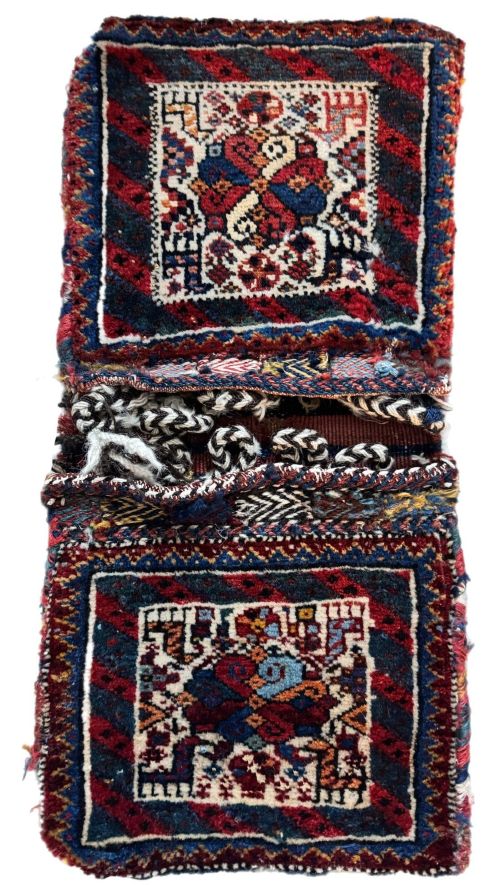
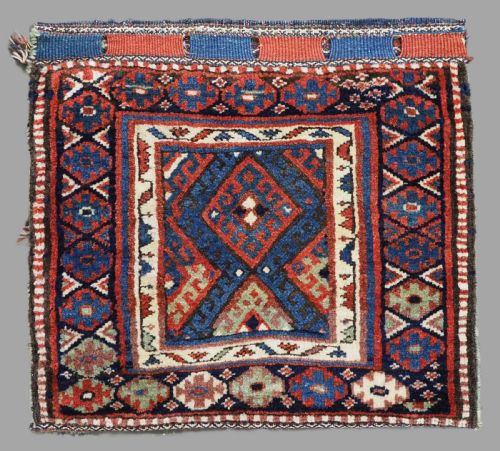
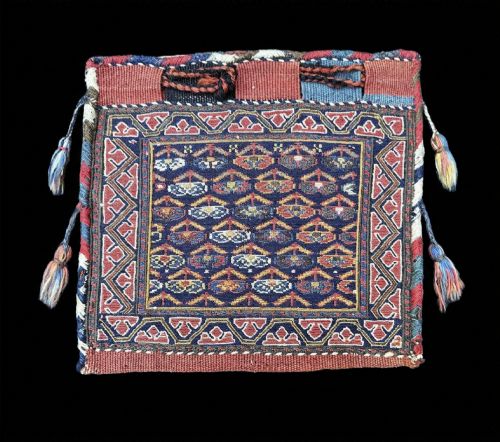
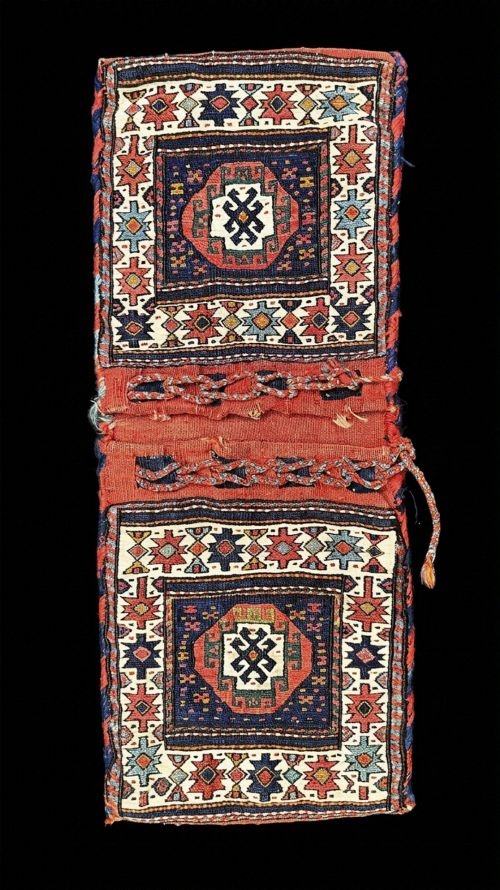
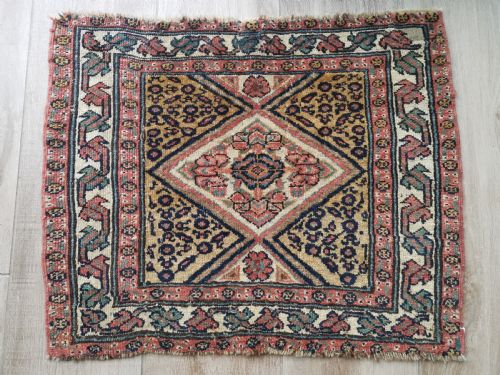
A nomadic wool saddlebag represents the portable storage woven by tribal groups across Persia, Azerbaijan, and Anatolia for animal transport. Buyers encountering this selection will discover complete double pouches, single faces, and half-khorjins originating from regions such as Fars, Kerman, and Luristan.
Materials and Construction
Weavers relied on hand-spun wool for its natural resilience and capacity to hold rich colours derived from organic dye sources. Cotton foundations frequently support the denser pile sections, whilst supplementary structures incorporate flat-woven plain weave backs and intricate sumac technique.
Nomadic artisans combined knotted pile with supplementary weft-wrapping to form geometric medallions, boteh motifs, and banded designs. Leather and metal components occasionally appear alongside the textile elements to reinforce the construction for practical use.
Nomadic Wool Saddlebag Retail Price Guide 2026
Typical asking prices for nomadic wool saddlebag among the pieces listed under this phrase on Sellingantiques today, from the lower quarter to the upper quarter. They describe what is for sale here now, not the wider market.
Nomadic weavers packed personal belongings so securely inside these bags that the side seams often bear the honest scars of camel transport.
Evaluating Craftsmanship
The distinction between standard and superior examples rests upon the density of the knotting, the handling of natural dyes, and the clarity of the tribal motifs. Finer pieces demonstrate exceptional wool quality that yields a luminous handle and precise geometric execution.
Survival of complete sets with original plain weave backs or side panels significantly elevates the historical integrity of the piece. The complexity of tribal attribution and the preservation of the original structure further define the standing of individual bags within the tradition.
Shahsavan Nomads·Qashqai Tribes·Afshar Nomads·Jaf Kurd·Bakhtiari Tribes
The Nomadic Wool Saddlebag Glossary
- Khorjin
- The traditional Persian term for a double saddlebag used by nomadic tribes for transport and storage. These textile items were slung across pack animals during migrations.
- Bagface
- The decorative front portion of a saddlebag that remained visible when loaded or folded. Many surviving examples exist detached from their original plain weave backs.
- Sumac
- A flat-weave technique where coloured weft threads wrap around the warp threads in a continuous sequence. This method creates a sturdy fabric with a ribbed surface texture.
- Boteh
- A stylised almond or paisley motif representing a floral spray or cypress tree. This ancient design appears frequently in tribal weaving across Persia.
- Plain weave
- A simple interlacing of warp and weft threads without a raised pile. This structure forms the durable backing and side panels of complete saddlebags.
Nomadic Wool Saddlebag: Frequently Asked Questions
What is a khorjin?
A khorjin is a traditional double-sided storage bag woven by nomadic tribes for carrying personal possessions on pack animals during seasonal migrations.
These functional textiles were constructed to withstand the rigours of travel before surviving as decorative examples of tribal weaving.
How were saddlebags used?
Nomadic communities utilised these sturdy bags to transport household goods, grains, and personal items across mountainous and desert terrain.
Paired pouches hung across the flanks of horses, donkeys, or camels, functioning as portable wardrobes and storage units.
Why do some pieces lack backs?
Many surviving examples are solitary bag faces because the plain weave backs suffered heavier wear and tear during active use.
Owners and collectors often mounted these decorative fronts independently once the structural joining seams gave way over time.
How do I identify tribal origins?
Specific geometric vocabulary, colour palettes, and structural traits link individual pieces to particular confederations like the Qashqai or Shahsavan.
Expert attribution relies on examining the specific weave density, wool characteristics, and traditional motifs native to distinct geographic regions.