

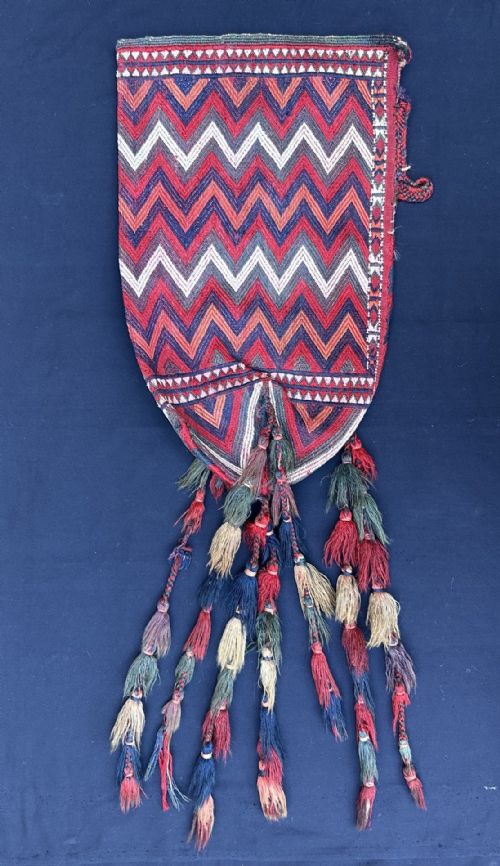
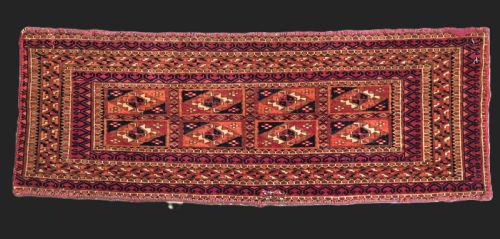


Nomadic Trapping Bag
When you search for a nomadic trapping bag, you enter the world of Central Asian and Persian tribal weaving.
Nomadic Trapping Bag
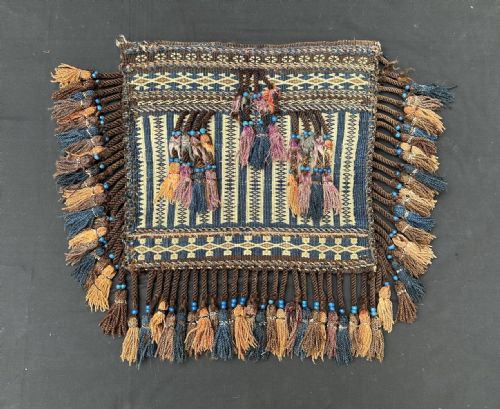
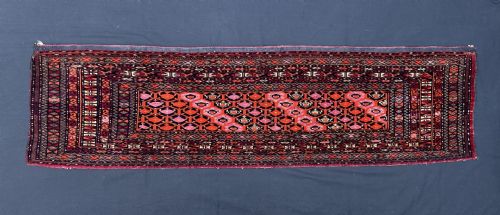
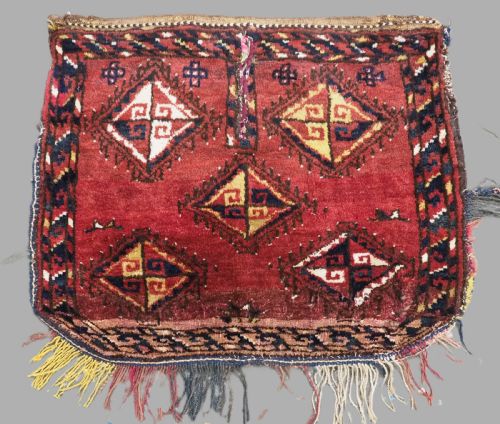
A nomadic trapping bag encompasses utilitarian woven pouches, torbas, chuvals, and storage pieces created by tribal groups across Central Asia and Persia. These objects functioned within pastoral communities as functional containers for household goods, dowry items, or animal trappings.
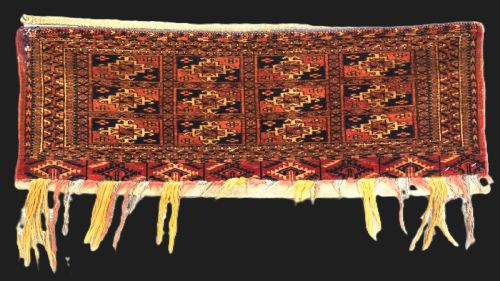
Most examples found here originate from nineteenth-century Turkmen, Baluch, Kordi, and Afshar tribes. Specific regional forms include tent-bands, saddle bags, and tent storage faces bearing tribal guls and geometric motifs.
The material record spans from the mid-nineteenth century through the early twentieth century, capturing a period before sedentary production methods displaced traditional nomadic weaving. Buyers encounter both complete pieces retaining original backs and individual piled or embroidered faces.
Materials and construction
Weavers relied primarily on hand-spun wool for the foundational warps, wefts, and dense pile. Natural dyes derived from plants and minerals provided the deep madder reds, browns, and ivories that characterise the palette.
Certain pieces incorporate silk highlights and glass beads to accentuate specific design elements within the field or borders. Cotton often appears in the foundation or supplementary structural weaving of later nineteenth-century items.
Nomadic Trapping Bag Retail Price Guide 2026
Typical asking prices for nomadic trapping bag among the pieces listed under this phrase on Sellingantiques today, from the lower quarter to the upper quarter. They describe what is for sale here now, not the wider market.
Listings span across the nineteenth and early twentieth centuries, featuring wool, natural dyes, silk highlights, and glass beads.
Distinctions in craftsmanship
Knot density and handling of the wool determine the structural integrity of the weave. Finer dowry pieces display meticulous execution in repetitive gul motifs and complex border systems.
The vibrancy and saturation of natural dye palettes separate standard utility items from masterwork tribal weavings. Clarity of drawing within primary medallions and secondary motifs dictates visual distinction.
The Nomadic Trapping Bag Glossary
- Torba
- A small Turkmen wall-hanging bag used for storage inside the yurt. These rectangular pouches often display primary tribal guls.
- Chuval
- A large tent storage bag utilised by nomadic tribes for bedding and household possessions. They typically feature multiple rows of major guls.
- Gul
- A primary medallion or repeating octagonal motif used in Turkmen tribal rug design. Each pattern traditionally identifies a specific tribe or clan.
- Mafrash
- A rectangular storage bag or travel chest face used in nomadic households. They form part of the essential dowry assembly for tribal brides.
- Asmalyk
- A pentagonal or wedding trapping piece mounted on the flanks of a bride's camel during tribal processionals. These decorative covers exhibit distinct symbolic geometry.
Nomadic Trapping Bag: Frequently Asked Questions
What is a nomadic trapping bag?
These woven pieces are functional storage containers, tent bags, and animal trappings made by tribal groups in Central Asia and Persia. They served practical daily functions within nomadic households.
Nomads utilised wool and natural dyes to create durable bags that also displayed tribal identity through distinct geometric patterns.
How were these bags used?
Tribal communities used these pouches to store bedding, clothing, and household goods inside traditional tents. Smaller versions hung against yurt walls for personal possessions.
Certain pieces functioned as dowry components or decorative trappings for animals during ceremonial processions and tribal migrations.
How do I identify the tribe?
Tribal attribution relies primarily on the specific guls, colour palette, and structural format of the weaving. Turkmen subgroups such as Tekke, Yomut, Ersari, and Saryk each employed distinct medallion designs.
Other groups like the Baluch, Kordi, and Afshar exhibit different wool qualities, secondary borders, and structural nuances characteristic of their specific geographic regions.
How do I care for antique textiles?
Protect antique woollen items from direct sunlight to prevent natural dye fading. Gentle vacuuming with a mesh screen protects fragile pile and structural foundations.
Avoid excessive moisture and consult a textile conservator for professional cleaning rather than attempting wet washing at home.