





Nomadic Tent Rug
When you search for a nomadic tent rug, you enter the tribal world of Central Asian weaving where portable architecture met daily utility.
Nomadic Tent Rug
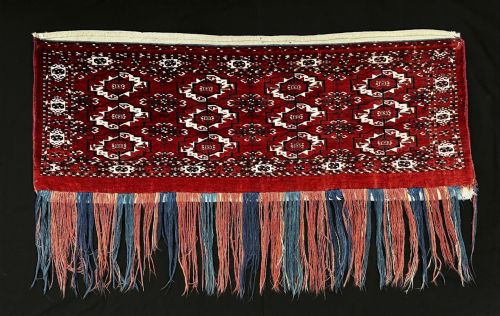
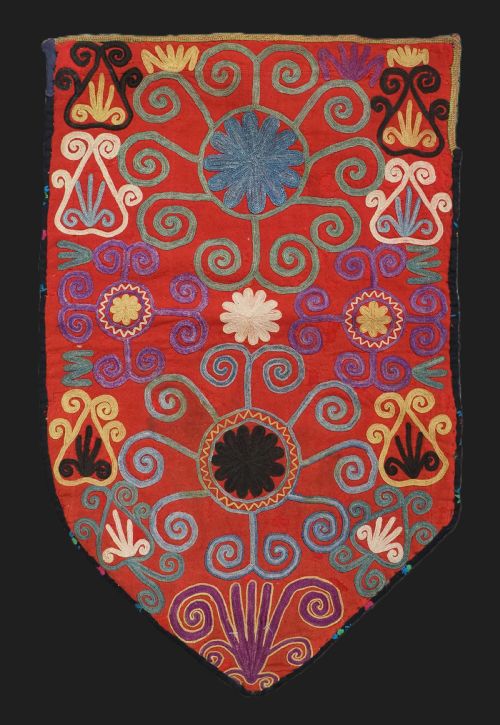
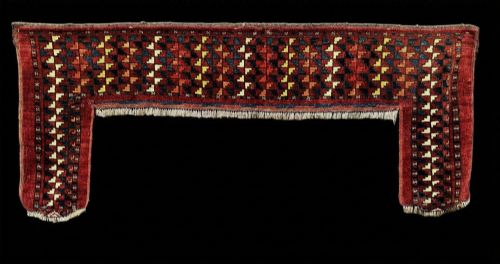
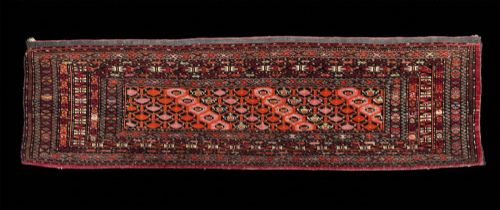
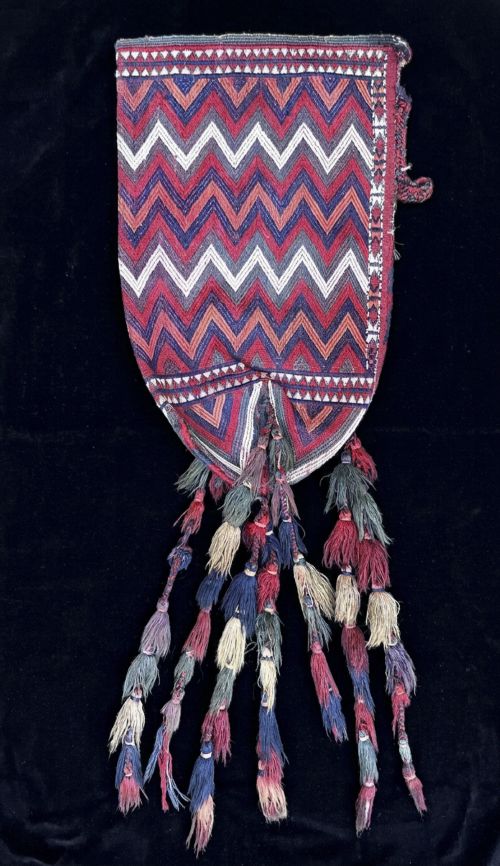
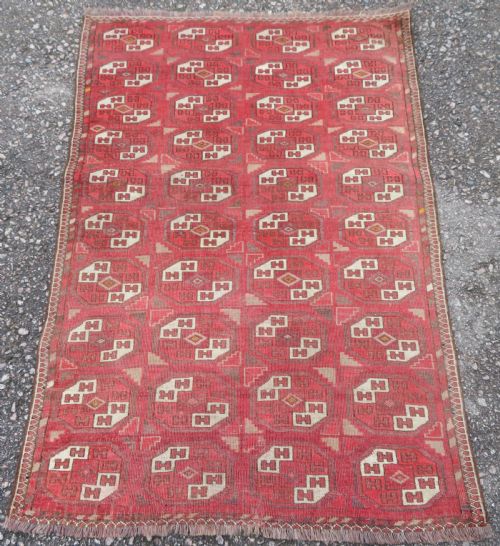
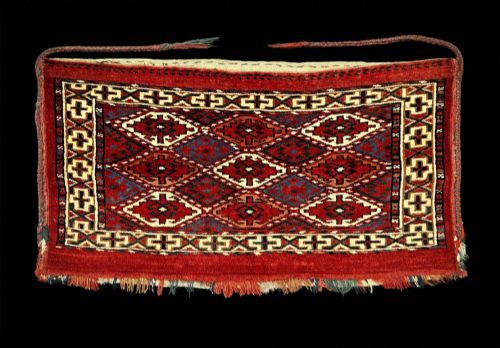
A nomadic tent rug embodies the portable furnishings of Central Asian tribes, including Turkmen groups like the Tekke, Yomut, Ersary, and Saryk, alongside Uzbek and Kyrgyz makers. Buyers searching for a nomadic tent rug frequently encounter specialised household trappings rather than standard floor carpets. These pieces include storage bags, tent door hangings, tent pole bags, and long bands designed for yurt architecture.
The material record spans from the mid-nineteenth century into the early twentieth century, reflecting nomadic life across oases and steppes. Forms range from small torba face fragments to large tent door rugs and complete storage sacks fitted with their original backs. Each item served a precise domestic or ceremonial function within the felt tent structure.
How They Were Made
Weavers relied on hand-spun wool and cotton foundations, often incorporating natural dyes to achieve deep reds, browns, and earthy tones. Artisans occasionally integrated silk highlights and glass beads to enhance specific motifs.
Construction techniques required dense knotting or flatweave structures capable of withstanding constant handling in nomadic environments. Tent bands and trappings demanded exceptional structural integrity, utilising durable wool to endure tension and weather.
Nomadic Tent Rug Retail Price Guide 2026
Typical asking prices for nomadic tent rug among the pieces listed under this phrase on Sellingantiques today, from the lower quarter to the upper quarter. They describe what is for sale here now, not the wider market.
Nomadic weavers occasionally stitched glass beads directly into tribal bag faces to ward off misfortune during steppe migrations.
What Varies in Quality
The caliber of a weaving rests on the density of the weave and the precision of tribal gul motifs, such as kepse, ertmen, or schemle designs. Finer knots and crisp execution distinguish superior domestic pieces from standard utility items.
Preservation of original structural elements, including complete backs, silk highlights, and intact side cords, elevates an example. The depth of natural dye saturation and the clarity of secondary ornamentation further separate ordinary production from masterwork tribal art.
The Nomadic Tent Rug Glossary
- Torba
- A small storage bag used inside a nomadic tent for household possessions. These face pieces or complete sacks display repeating tribal gul patterns.
- Chuval
- A large storage bag utilised for bedding and heavy goods within the yurt. They often feature multiple primary guls arranged across the face.
- Gul
- A primary medallion motif characteristic of Turkmen carpet design. Each tribal group utilised distinct geometric gul patterns to signify lineage and origin.
- Kapunuk
- A decorative tent door hanging placed around the interior frame of a yurt entrance. These architectural textiles welcomed visitors and denoted tribal identity.
- Okbash
- A small container designed to cover and protect tent poles during transit. They feature narrow profiles shaped to fit wooden structural members.
Nomadic Tent Rug: Frequently Asked Questions
What is a nomadic tent rug?
A nomadic tent rug refers to the functional textiles and storage furnishings created by tribal groups in Central Asia. These items were woven for daily domestic use inside portable felt dwellings.
Examples include storage bags, door surrounds, and structural bands rather than conventional floor carpets.
How were these rugs used?
Tribes utilised these textiles to organise possessions, decorate yurt interiors, and protect structural components. Bags held bedding, clothing, and household goods within the restricted space of a tent.
Door hangings and pole covers added visual warmth and prestige to the nomadic living environment.
How do I identify tribal designs?
Tribal attribution relies on specific primary motifs known as guls, alongside the colour palette and structural format. Groups such as the Tekke, Yomut, and Ersary employed distinct geometric arrangements.
Examining the weave density and wool preparation also assists in separating different tribal workshops.
How should I care for a textile?
Display these historic textiles away from direct sunlight to protect natural dyes from fading. Gentle vacuuming through a mesh screen helps remove dust without damaging fragile wool or silk fibres.
Avoid hanging heavy pieces by single points to prevent strain on ancient foundations.