


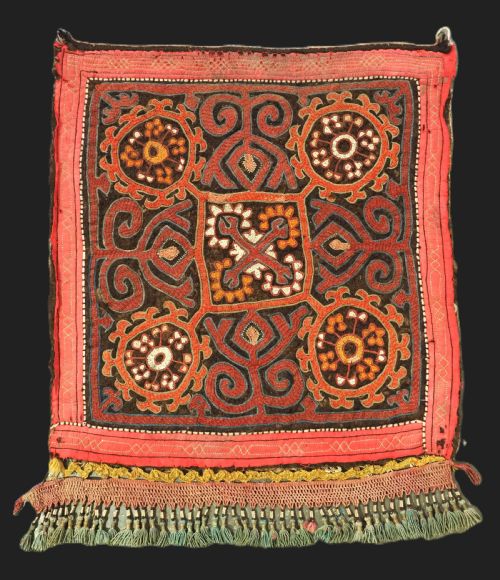


Nomadic Tassel Wall Hanging
A nomadic tassel wall hanging brings tactile warmth and tribal history into a room through textiles made by pastoral groups in Persia, Afghanistan, and Central Asia.
Nomadic Tassel Wall Hanging
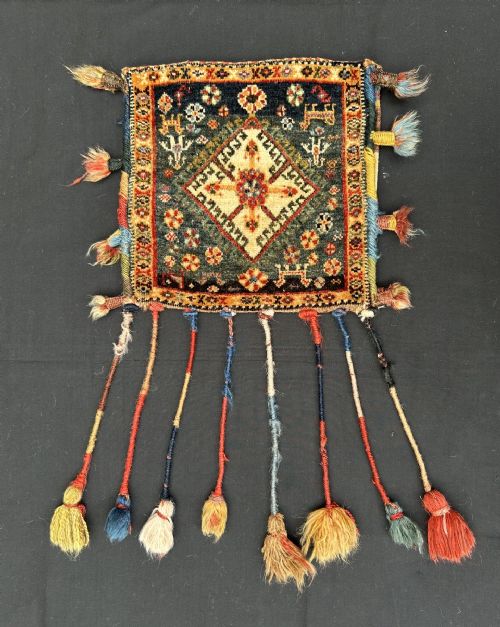
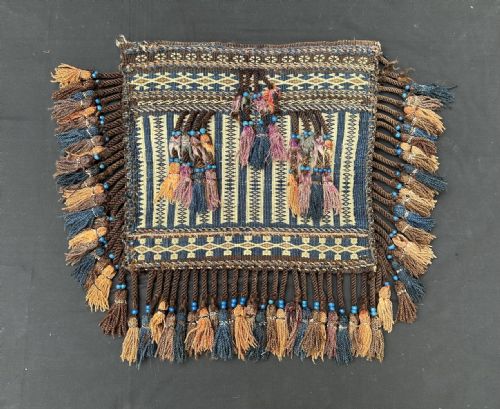
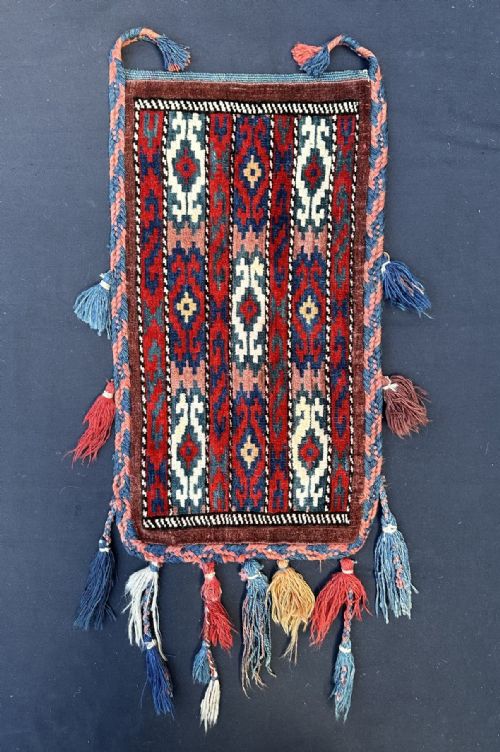
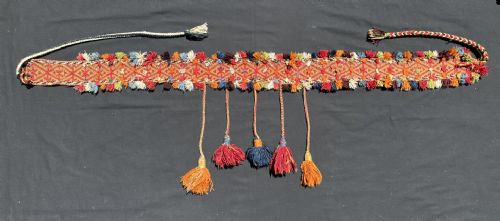
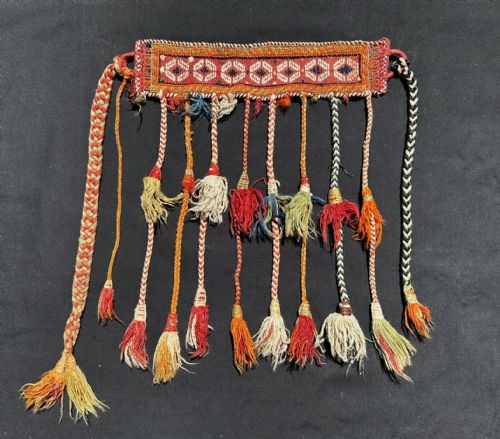
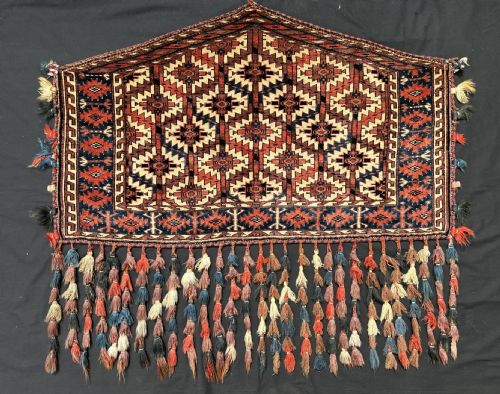
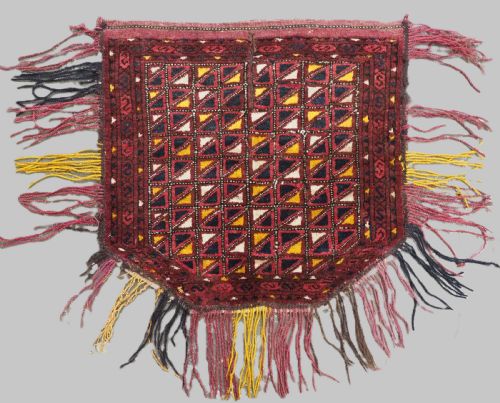
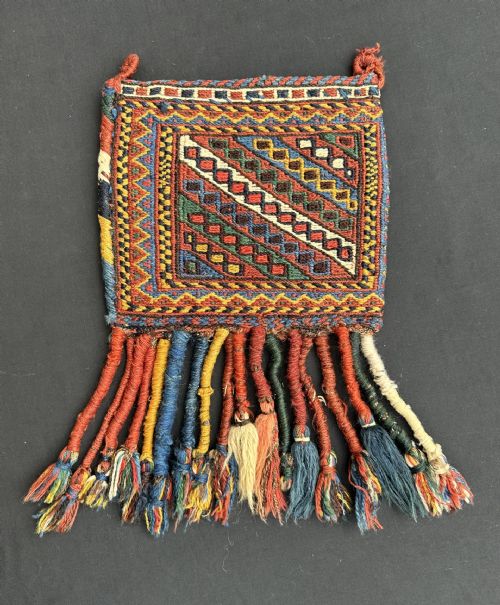
When searching for a nomadic tassel wall hanging, collectors encounter genuine tribal textiles, storage pouches, animal trappings, and horse decorations repurposed for display. These objects originate from nineteenth and early twentieth-century nomadic groups such as the Qashqai, Baluch, Yomut, and Lakai Uzbeks.
How they were made
Weavers constructed these textiles primarily from handspun wool and cotton foundations, employing traditional pile knotting, flatweaving, and felt-making techniques. Natural dyes provided the rich reds, blues, and earthy tones characteristic of nineteenth-century tribal work.
Makers embellished functional storage pouches and tent-hanging components with silk embroidery, leather attachments, and applied fringes. Glass beads and horsehair were often integrated directly into the tassels to finish the textile edges.
Several pieces preserve original horsehair tassels once intended to ward off the evil eye during desert migrations.
What varies in quality
Quality rests upon the integrity of the weave, the complexity of the tribal pattern, and the retention of original embellishments like tassels and fringe. Pieces featuring exceptionally fine wool and stable natural dye palettes command greater appreciation from collectors.
The preservation of original structural elements, such as backs, hanging loops, and complete beadwork, distinguishes standard utility pieces from superior examples. Condition is judged by the survival of these vulnerable hanging decorations over generations of use.
The Nomadic Tassel Wall Hanging Glossary
- Torba
- A small storage bag produced by Turkmen and Central Asian tribes, typically hung inside a felt tent. These utilitarian bags often display distinctive gul motifs and fringed borders.
- Asmalyk
- A large, pentagonal trapping produced by Yomut Turkmen weavers, historically placed on the flanks of a wedding camel. They frequently feature elaborate tassel work and geometric field designs.
- Namakdan
- A traditional salt bag woven by nomadic groups like the Baluch, featuring a narrow neck and expanding body. These functional pouches incorporate sturdy wool construction to hold rock salt.
- Kapunuk
- A decorative doorway hanging placed over the entrance of a nomadic tent. These architectural textiles display horizontal formats designed to frame a tent opening.
Nomadic Tassel Wall Hanging: Frequently Asked Questions
What is a nomadic tassel wall hanging?
These pieces are authentic tribal bags, trappings, and tent decorations repurposed from nineteenth-century pastoral life into decorative wall art. They combine woven wool structures with handmade decorative fringes and beadwork.
Originating from regions like Persia and Central Asia, each textile reflects the specific tribal identity and weaving traditions of its makers.
How were these textiles originally used?
Nomadic groups utilised these items for household storage, animal ornamentation, and tent decoration within portable dwellings. Bags held salt, spindles, or vanity items, while trappings adorned horses and camels during migrations and weddings.
Over time, collectors recognised their artistic merit and adapted them for interior display on walls.
How do I hang a textile securely?
Mounting requires careful weight distribution to protect old wool and cotton foundations from tearing. Using a custom fabric sleeve or discreet brass clips spreads the load evenly across the top edge.
Avoid direct piercing with nails or pins, which damages the historic textile structure.
How do I tell different tribal styles apart?
Tribal attribution relies on distinctive colour palettes, structural techniques, and specific motif vocabularies unique to each group. Yomut pieces often show bold gul patterns, while Qashqai works display intricate medallion layouts with saturated reds and blues.
Lakai embroideries utilise distinct silk stitching on dark wool grounds to signal their Central Asian origin.