





Nomadic Storage Bag Face
When you search for a nomadic storage bag face, you are looking at fragments and complete panels woven by tribal groups across Central Asia and Persia.
Nomadic Storage Bag Face
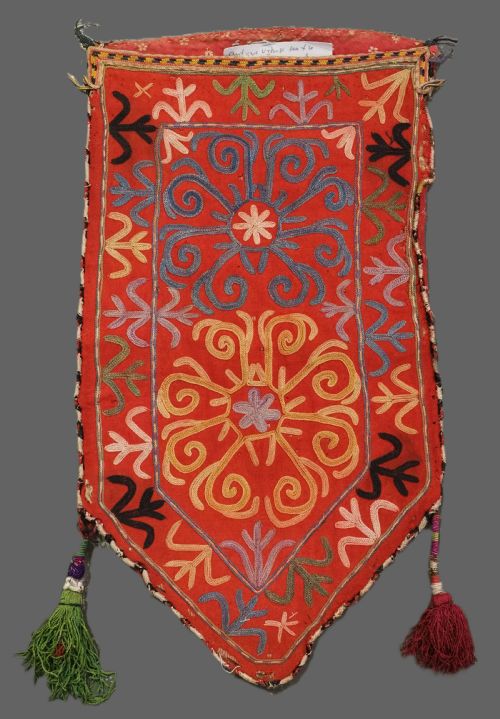
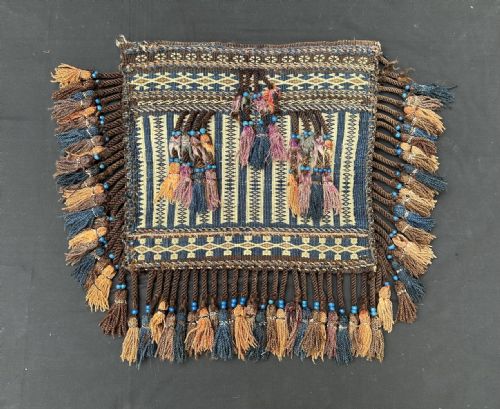
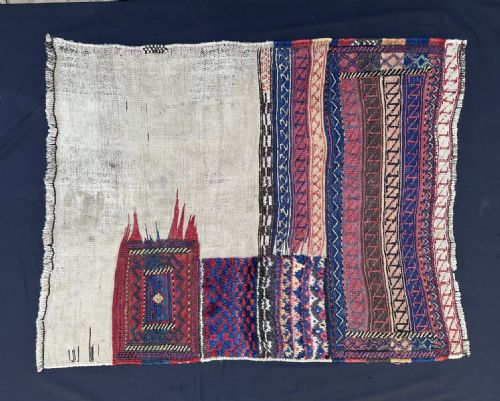
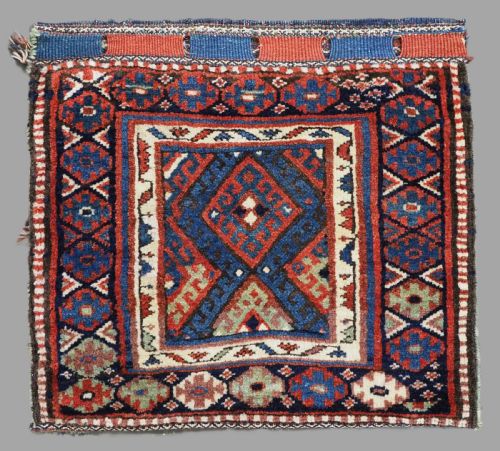
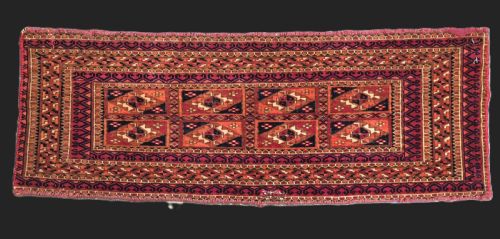
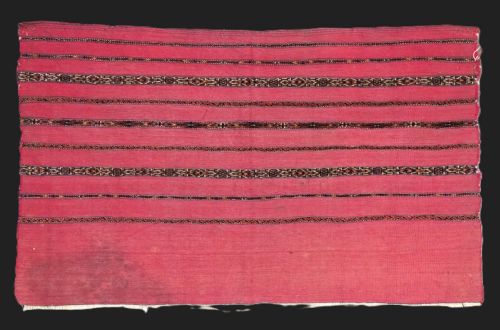
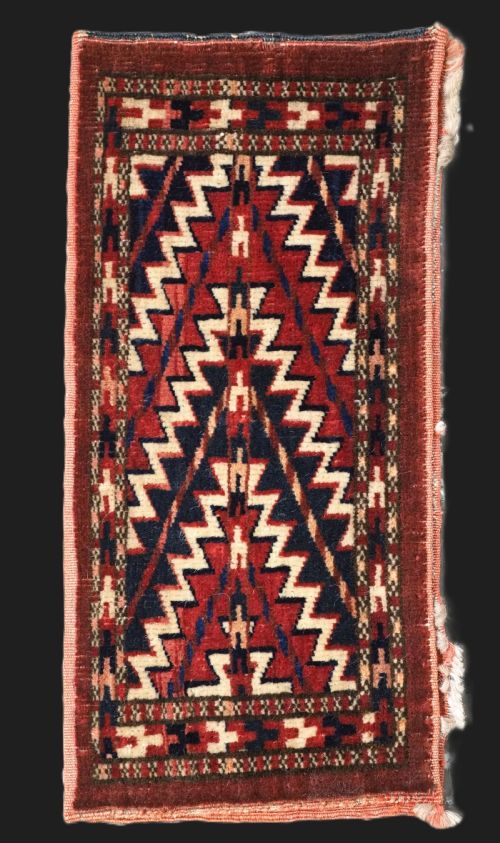
A nomadic storage bag face is the front portion of a utilitarian container used by tribal groups for domestic storage, transport, or bedding. These pieces originate from communities such as the Turkmen, Baluch, Kurdish, and Luri-Bakhtiari nomads across regions including Turkmenistan, Afghanistan, and Persia. Many items on this page appear as isolated bag faces, often separated from their original plain weave backs, though some retain their reverse panels or hanging loops.
The forms span various functional types including torba, chuval, mafrash, and tacheh, dating from the mid-nineteenth century through to the early twentieth century. Makers wove them on portable ground looms using traditional regional patterns, resulting in textiles that served practical purposes within tribal camps before entering the decorative market.
Collectors encounter these textiles preserved either as complete bags with functional backs or as individual decorative panels suited for wall display. Their survival charts the domestic textile traditions of pastoral and nomadic societies through geometric design and pile-woven structures.
Materials and construction methods
Weavers constructed these pieces primarily using hand-spun wool for the pile and foundation, often incorporating cotton for structural strength or white details. Natural dyes provided the characteristic palette found across these textiles, while select examples utilised silk highlights or glass beads for added texture.
Techniques varied from dense pile weaving in asymmetric or symmetric knots to flatweave structures such as plain weave and banded supplemental weft work. The resulting surfaces display tight knotting in finer examples or robust, utilitarian structures designed to withstand the rigours of nomadic life.
Some spindle bags served to store the wooden tools used in yarn production, returning the wool back to its source.
Distinctions in quality and execution
Quality in these textiles rests upon the density of the weave, the precision of the tribal guls or geometric motifs, and the clarity of the natural dye palette. Finer examples exhibit meticulous knot counts per square inch and a disciplined handling of traditional motifs such as the aina gul or kepse design.
Condition and completeness also define the standing of a piece, separating fragments from intact bag faces that retain original borders, hanging loops, or complementary plain weave backs.
The Nomadic Storage Bag Face Glossary
- Gul
- A primary octagonal medallion motif repeated across Turkmen and other Central Asian tribal weaving. These motifs often identify the specific tribe or clan responsible for the textile.
- Torba
- A small horizontal storage bag traditionally used inside a nomadic tent for holding domestic items. They frequently appear on the market as isolated bag faces.
- Chuval
- A large tent bag utilised for storing bedding or heavy garments during migration. They typically display multiple rows of guls.
- Mafrash
- A rectangular storage container or trapunto-style bag used in pairs for transport on pack animals. Their faces exhibit banded flatweave or pile designs.
- Tacheh
- A Persian grain or wheat sack woven by nomadic groups such as the Luri-Bakhtiari. These functional pieces often feature sturdy plain weave backs attached to patterned faces.
Nomadic Storage Bag Face: Frequently Asked Questions
How were these bags used originally?
Nomadic families utilised these woven containers inside tents to store clothing, bedding, grain, and household possessions. Their portable nature suited pastoral lifestyles where belongings required secure containment.
Larger bags travelled on pack animals, whilst smaller torbas hung against tent lattice walls for daily access.
How do I hang a bag face on the wall?
Many bag faces retain original hanging loops along the top edge, allowing direct suspension from a discreet rod or mount. Pieces without loops can be mounted using conservation-grade fabric sleeves or custom display frames.
Consulting a professional textile framer ensures the weight distributes evenly without stressing the historical wool foundation.
How can I tell different tribal designs apart?
Tribal attribution relies on specific structural motifs, colour combinations, and knotting characteristics unique to groups like the Yomut, Tekke, or Baluch. Turkmen groups frequently employ distinct guls, whilst Persian tribal weavers lean towards geometric field patterns and banded flatweaves.
Comparing structural details against established regional typologies helps clarify the origin of each piece.