


Nomadic Pillow Bag
These nomadic pillow bag examples bring rich tribal patterns and tactile textures into modern interiors through authentic nineteenth and early twentieth-century weaving traditions.
Nomadic Pillow Bag
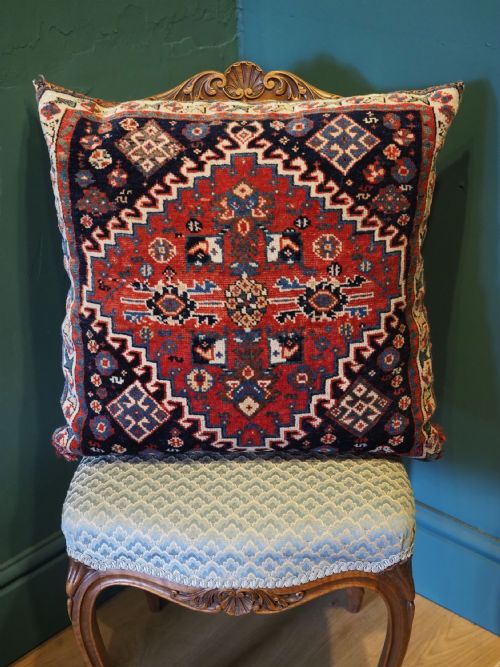
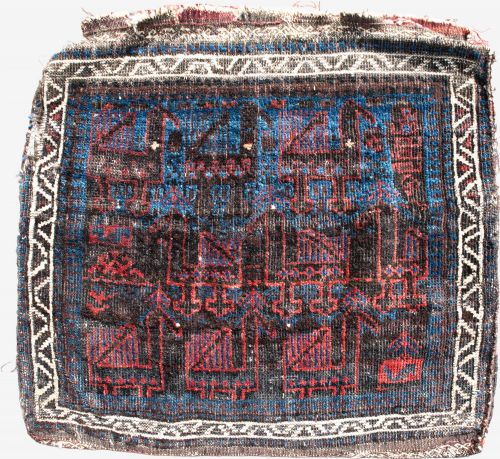
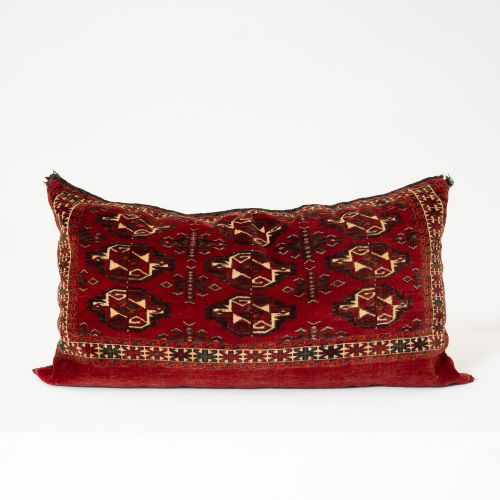
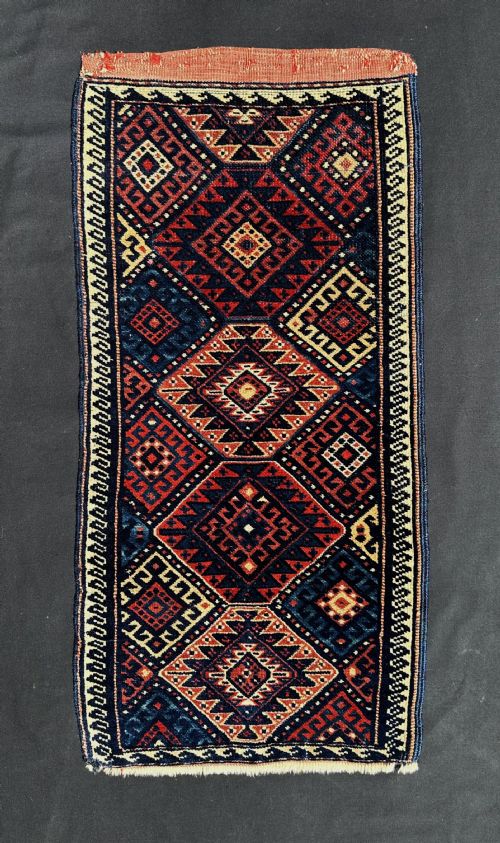
A nomadic pillow bag represents the portable domestic gear of tribal weavers across Persia, Central Asia, and the Caucasus, originally utilised for storage, bedding, and transport on animals. These textiles appear primarily as cushion faces, complete storage bags, torbas, chuvals, and paired saddlebags adapted for contemporary home display.
The selection centres on authentic pieces originating from groups such as the Baluch, Yomut, Tekke, Ersari, Qashqai, and Shahsevan. Buyers encounter both single bag faces mounted as cushions and complete pouches retaining their original flatweave backs and tassels.
Most items date from the late nineteenth century through the early decades of the twentieth century, reflecting the peak era of traditional nomadic production before industrial dyes and settled manufacturing altered village crafts.
Assessing Quality and Autenticity
Quality rests upon the fineness of the knotting or the tightness of the flatweave, alongside the clarity and complexity of the tribal design elements such as güls or Herati motifs. Pieces retaining their original plain weave backs, closing mechanisms, and wool tassels command greater interest among collectors.
The integrity of the natural dyes dictates visual depth, where subtle abrash and varied colour saturation indicate genuine traditional dyeing methods rather than synthetic uniformity. Condition matters, though careful historical repairs on functional utility items remain an accepted part of their textile history.
Listings span the nineteenth century to the early twentieth century, featuring wool, cotton, and natural dyes across tribal traditions.
The Nomadic Pillow Bag Glossary
- Torba
- A small storage bag produced by Turkmen and other nomadic groups, traditionally used inside tents for domestic organisation. These rectangular pouches often display distinct regional güls.
- Chuval
- A large storage bag made by Turkmen tribes, traditionally utilised for bedding and heavy household goods. They frequently feature multiple rows of primary tribal motifs.
- Balisht
- A traditional nomadic pillow or small sleeping bag face, designed for daily domestic comfort. These pieces are frequently converted into modern decorative cushions.
- Mafrash
- A rectangular storage container or bedding bag, often woven in flatweave or soumak technique by Shahsevan and Yomut groups. They form part of the portable furnishings of the nomad tent.
- Abrash
- Variation of colour within a single dye field caused by successive dye batches or changes in wool supplies. This tonal gradation is a hallmark of hand-dyed tribal textiles.
Nomadic Pillow Bag: Frequently Asked Questions
How were nomadic pillow bags originally used?
Nomadic groups utilised these textiles inside tents and on pack animals for storing grain, clothing, bedding, and personal possessions. They functioned as durable containers that moved with the tribe during seasonal migrations.
Over time, many of these utilitarian pouches were adapted into cushions or mounted for display, bringing functional tribal history into domestic spaces.
How do I care for an antique textile cushion?
Protect antique wool textiles from direct sunlight to prevent natural dye fading, and vacuum gently using low suction through a mesh screen. Avoid harsh chemical cleaners and professional washing unless handled by a specialist in historic carpets.
Rotate the cushion periodically to ensure even wear, and use a breathable padding insert that supports the structure without straining the historic foundation.
How can I tell different tribal designs apart?
Tribal attribution relies on specific structural details, colour palettes, and repeating geometric motifs unique to each weaving group. Turkmen pieces frequently display octagonal güls, while Baluch works often incorporate dark wools and prayer designs.
Persian tribal groups such as the Qashqai and Shahsevan utilise distinct medallion layouts, animal figures, and bright banded flatweave borders that reflect their specific regional origins.
What is the difference between a bag face and a complete bag?
A complete bag retains both the decorated front and the original plain weave back, sometimes including the original closing flaps and hanging tassels. These represent the piece in its original structural form.
A bag face is the decorative front section of the original pouch that has been separated and backed with modern fabric to serve as a decorative cushion.