
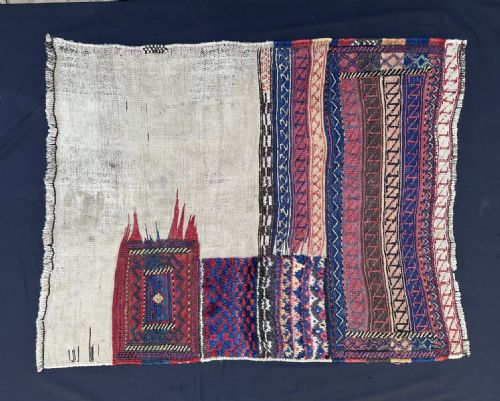
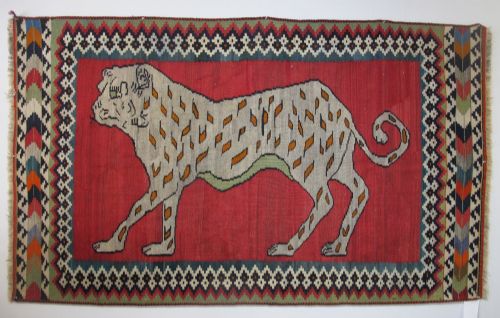
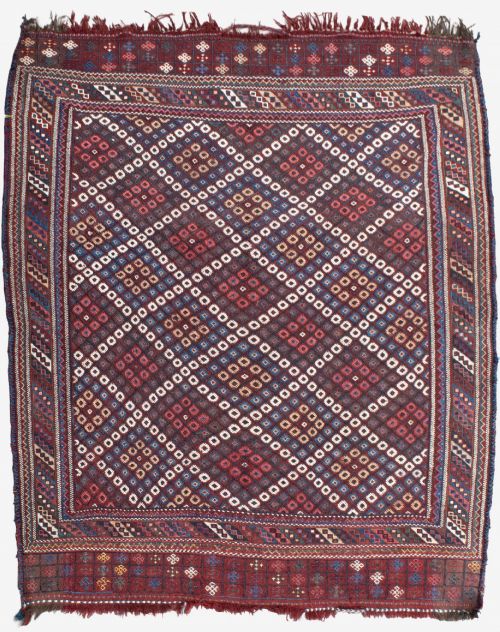


Nomadic Persian Kilim
When you handle a nomadic persian kilim, you hold textiles woven by tribal weavers for daily domestic life rather than court display.
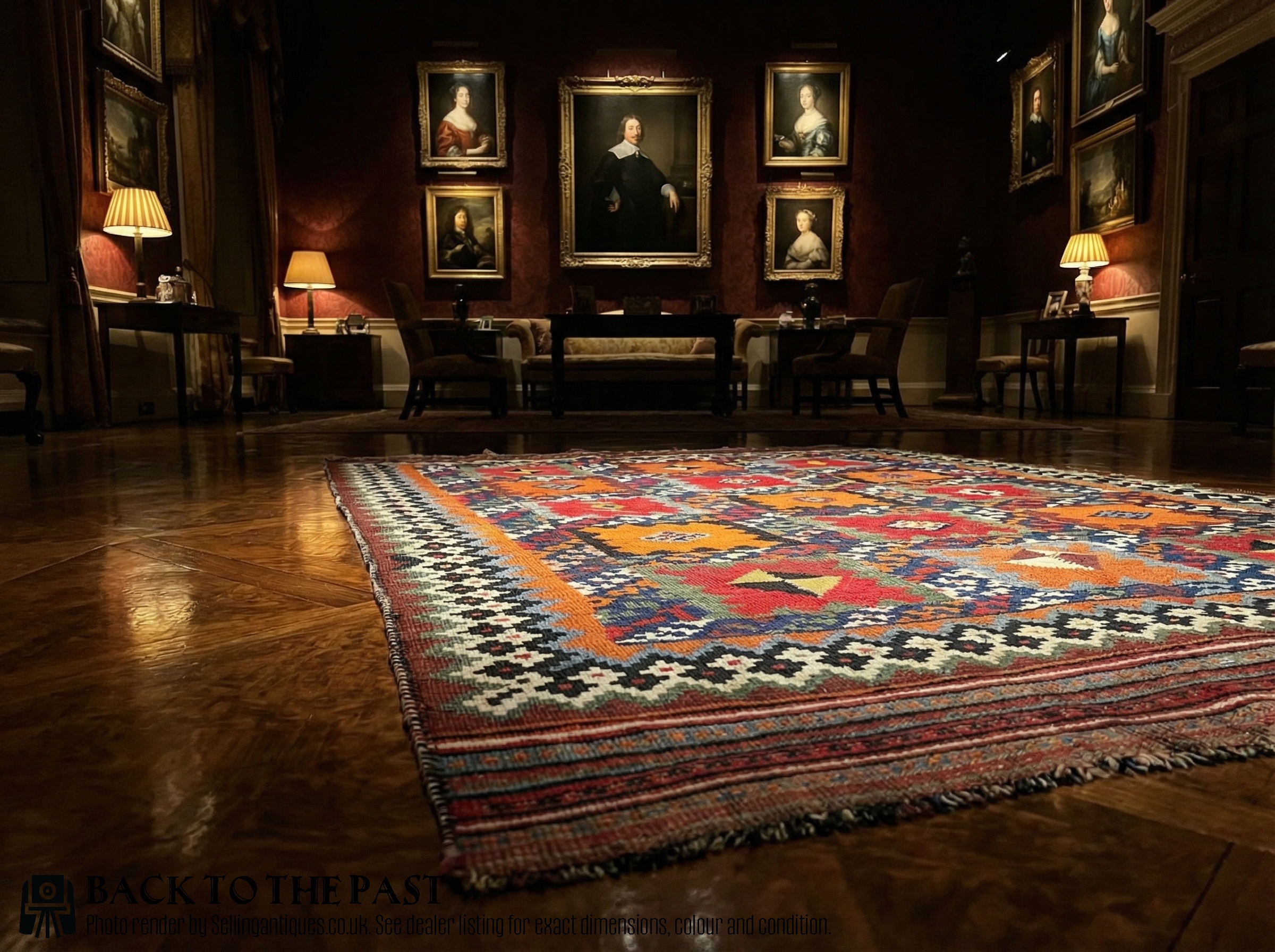
Nomadic Persian Kilim
A nomadic persian kilim encompasses flat-woven rugs, grain sacks, and dining cloths produced by tribal groups across various regions of Persia. The examples on this page span from the late nineteenth century into the early decades of the twentieth century, reflecting the utilitarian output of pastoral communities.
Buyers will encounter specific functional forms such as the bread sofreh, salt-bag, and tacheh alongside traditional kilims and cushions. These pieces originate from distinct tribal confederacies including the Qashqa'i, Afshar, and Luri-Bakhtiari.
The aesthetic of these flat-weaves relies on geometric motifs, banded designs, and tribal symbolism unique to each specific weaving group. Such textiles served practical roles in migration and settlement before entering the antiques market.
Materials and Construction
Weavers relied primarily on hand-spun wool and cotton, occasionally incorporating goat hair and leather for structural durability. Natural dyes provided the palette, yielding stable tones that soften predictably over decades of use.
Construction relies on slit-tapestry flat-weaving techniques where weft threads are beaten down tightly to conceal the warp. Edge finishes and supplementary weft work often include decorative elements like cowrie shells and braided bands.
Some salt-bags retain their original narrow necks designed specifically to keep mountain sheep from licking the precious salt inside.
Variations in Quality
The fineness of the weave and the tightness of the weft packing dictate the structural integrity of each flat-weave. Tightly compacted structures withstand domestic friction far better than loose constructions.
Consistency in natural dye saturation and the complexity of the tribal geometry distinguish standard utility pieces from exceptional weaving. Well-balanced proportions and intact original borders elevate the standing of a textile.
The Nomadic Persian Kilim Glossary
- Sofreh
- A spread or cloth used for dining or for resting dough during bread preparation. These flat-weaves often display minimalist field designs.
- Tacheh
- A traditional wheat-sack or storage bag woven by western tribes to transport grain during seasonal migrations. They feature robust flat-weave construction.
- Namakdan
- A specialised salt-bag created by nomadic groups with a narrow neck to secure rock salt. These items display dense banded weft decoration.
- Slit-tapestry
- A flat-weaving method where weft threads return at the edge of a colour block, leaving a small slit in the fabric. This technique defines the crisp geometric patterns seen in tribal work.
- Hand-spun wool
- Fleece processed by hand into yarn, resulting in irregular thickness and varied absorption of natural dye stuffs. This variance gives the textile surface its characteristic depth.
Nomadic Persian Kilim: Frequently Asked Questions
What is a sofreh used for?
A sofreh functioned primarily as a dining cloth placed on the ground for communal meals or as a surface for kneading and preparing bread. Nomadic families utilised these flat-weaves daily.
Over time, these textiles transitioned from utilitarian camp objects into decorative wall hangings and floor coverings for modern interiors.
How do I care for a flat-weave?
Flat-weaves require gentle vacuuming without a beater bar and occasional professional cleaning suited to antique wool textiles. Keeping them out of direct sunlight preserves the natural dyes.
Rotating the piece periodically ensures even wear across the surface from foot traffic or furniture placement.
How are tribal regions identified?
Tribal attribution relies on specific structural traits, wool quality, and characteristic geometric repertoires passed down within particular confederacies. Weavers from Fars province deploy different motifs than those from the Chahar Mahal valley.
Comparative analysis of border designs and colour palettes helps pinpoint the likely origin among groups such as the Afshar or Baluch.
Are these textiles purely decorative?
Every piece served an active role in pastoral existence, from grain storage to salt carriage, before collectors acquired them. Their current status as decorative items builds upon a foundation of practical utility.
Living with these textiles involves appreciating their history as portable architecture and domestic equipment for nomadic tribes.