


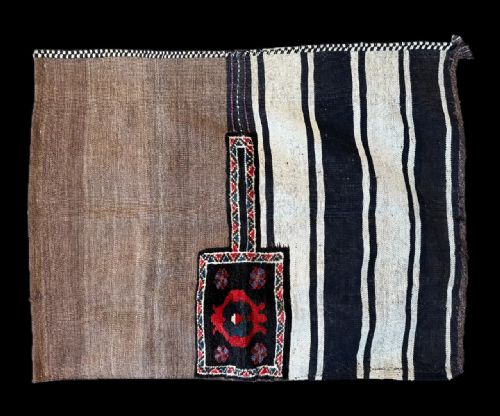
Nomadic Luri Rug
A nomadic luri rug brings the robust tribal weaving of western Persia into your home through geometric motifs and rich wool.
Nomadic Luri Rug
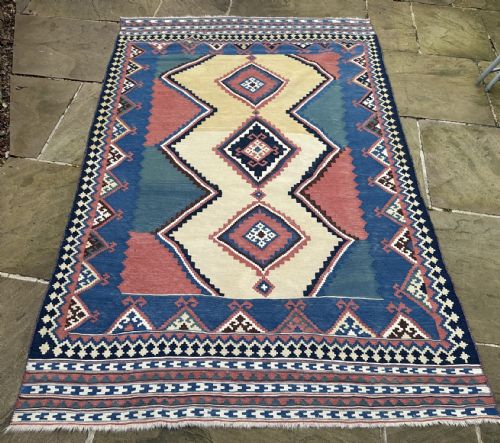
A nomadic luri rug originates from the tribal groups of Luristan and western Persia, encompassing utilitarian objects such as carpets, runners, kelims, and saddle bags. You will frequently encounter room-sized carpets, smaller area rugs, and woven bags produced by these pastoral communities.
The pieces span the nineteenth and early twentieth centuries, capturing a period when tribal weavers still utilised traditional motifs. Examples range from compact bag faces to larger formats featuring tree of life designs and repeat shield patterns.
These textiles reflect the domestic and migratory life of the Luri and Luri-Bakhtiari tribes. Their utilitarian origins mean many surviving pieces served practical functions like wheat-sacks or bread sofreh before entering the collector market.
Materials and construction
Weavers relied entirely on wool, often hand-spun, giving the pile a dense and resilient texture suited to nomadic life. This natural fibre accepts dyes deeply and wears to a soft patina over generations.
Makers utilised natural dyes to colour the fleece, yielding earthy tones that ground the bold geometric and floral compositions. The interaction of these traditional colourants produces the subtle abrash tonal shifts characteristic of tribal work.
The inventory includes functional nomadic items such as vanity bags and double-faced saddle bags alongside standard floor rugs.
Assessing the weave
Quality rests in the tightness of the knotting and the crispness of the tribal design execution. Finer examples display precise geometry and well-balanced borders that frame the central field effectively.
The handling of the wool and the purity of the natural dye palette separate standard utilitarian pieces from exceptional weaving. Strong structural integrity in the foundation threads ensures the textile remains stable under foot or on a wall.
The Nomadic Luri Rug Glossary
- Sofreh
- A woven spread used for kneading bread or serving meals. These utilitarian cloths often feature striking geometric fields.
- Tacheh
- A traditional wheat-sack woven by tribal groups for storage during migration. They double as decorative flatweaves or pile rugs today.
- Kelleh
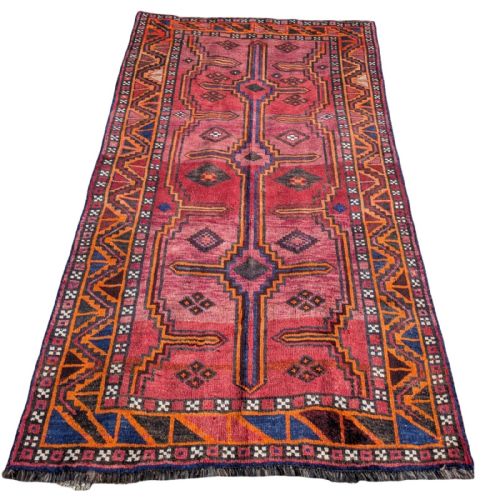
- A format designating a long, narrow rug proportioned for specific room layouts. It sits between a standard carpet and a runner.
- Abrash
- Variations in colour shade caused by changes in dye batches or wool lots. This natural unevenness confirms the use of traditional dyeing methods.
Nomadic Luri Rug: Frequently Asked Questions
How do I care for a nomadic luri rug?
Vacuum gently without a rotating brush to protect the hand-spun wool pile from unnecessary friction.
Keep the textile out of direct sunlight to preserve the natural dye colours over time.
Where were these rugs made?
These pieces were woven by nomadic and semi-nomadic tribes in Luristan and the Chahar Mahal region of western Persia.
Weavers worked within communities influenced by neighbouring groups such as the Qashqai and Bakhtiari.
Are these rugs suitable for high traffic?
The dense wool construction makes these textiles durable enough for moderate floor use in residential spaces.
Placing a proper underlay beneath the piece prevents slipping and reduces fibre wear from walking.
What motifs appear on these rugs?
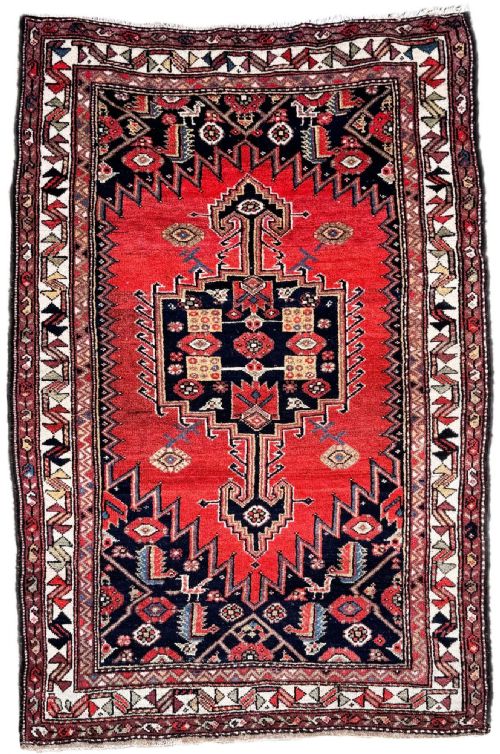
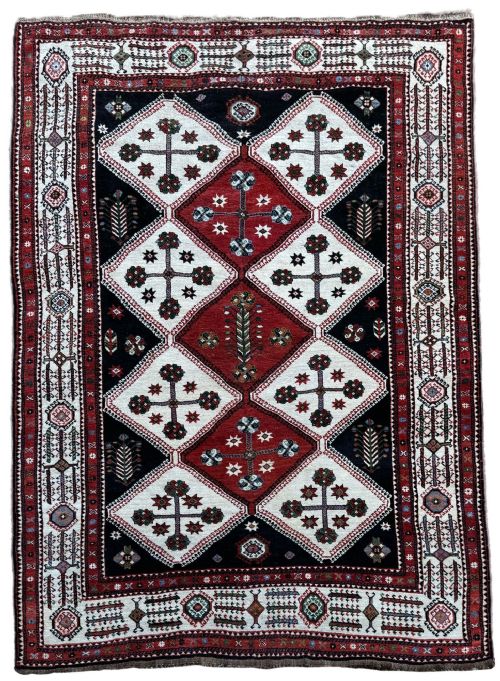
Common designs include geometric field patterns, repeat shields, and tree of life compositions.
Some examples also incorporate floral elements and stylised birds within the central medallion or border.