





Nomadic Khorjin Bag
A nomadic khorjin bag brings the tactile geometry of tribal tent life straight into a modern interior.
Nomadic Khorjin Bag
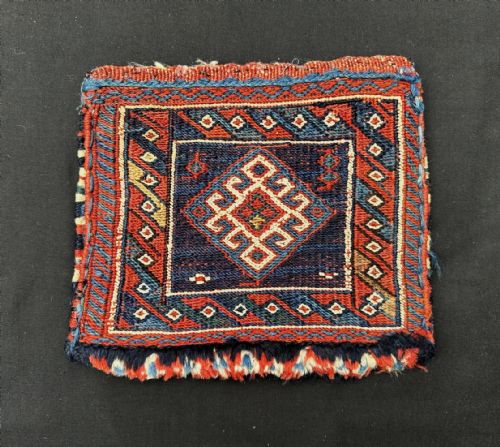
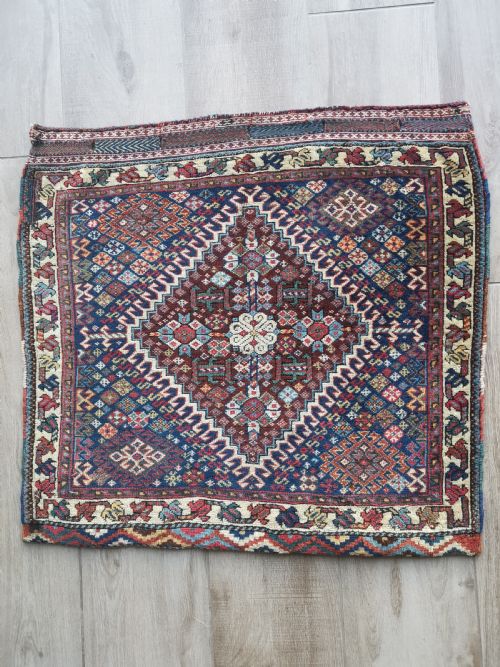
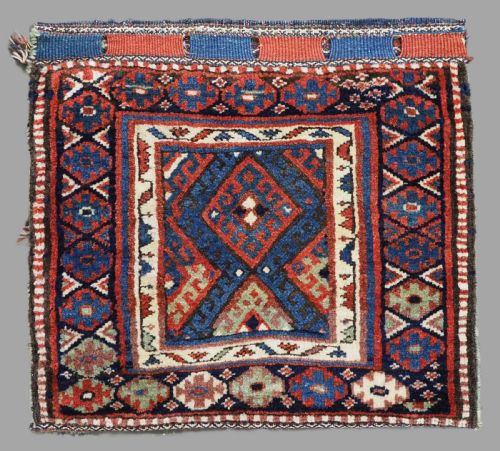
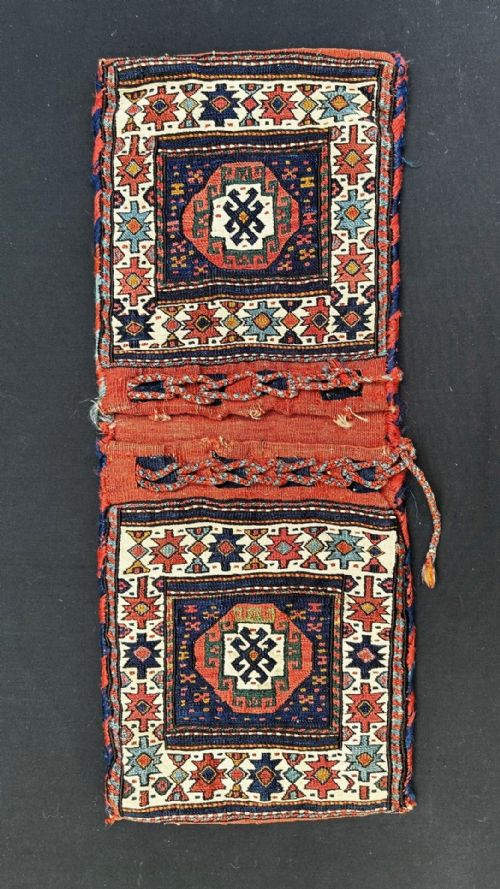
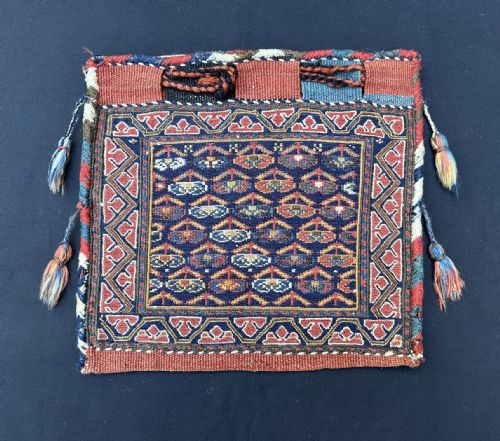
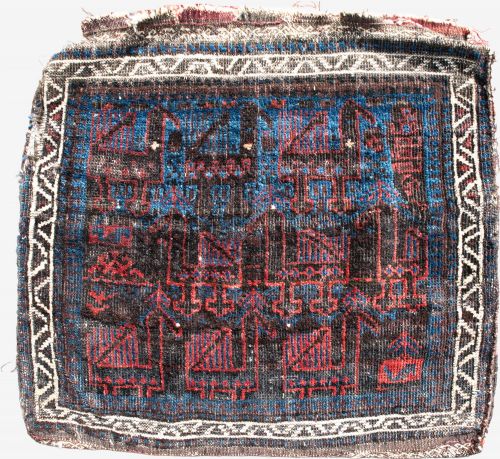
When you search for a nomadic khorjin bag, you encounter utilitarian cargo pouches and saddlebags woven by tribal groups across Persia, the Caucasus, and Afghanistan. Most survivors are single bag faces or halved sections, though complete double pouches with their plain weave backs occasionally appear.
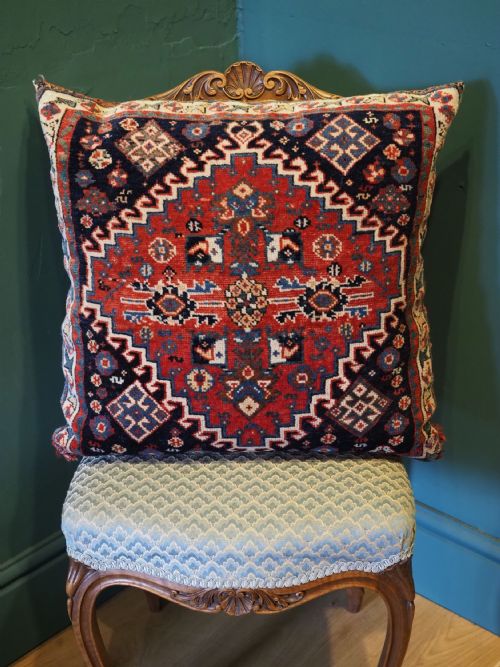
The pieces on this page span the mid-nineteenth century up to the early twentieth century, originating from confederations such as the Qashqai, Shahsavan, Baluch, and Kurdish tribes. They served practical nomadic functions for storage and transport before being adapted later as decorative cushions or wall hangings.
Materials and construction methods
Weavers relied principally on hand-spun wool for the pile and foundation, often supplemented by cotton for structural warps and goat hair for durable side cords. Natural dyes provide the underlying palette, creating rich earthy tones that mature gracefully over decades of exposure and handling.
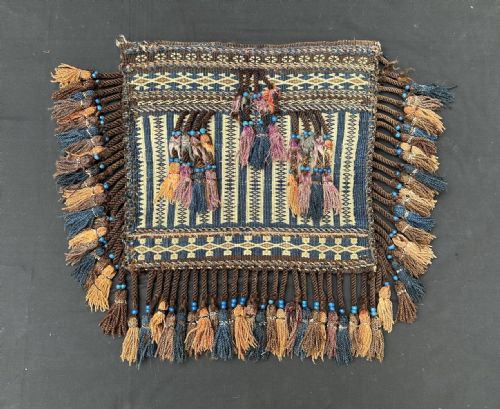
Structural techniques vary between symmetrical knotting on pile surfaces and flatwoven sumac or banded weft work on utilitarian backs. Artisans frequently embellished these functional items with supplementary materials like cowrie shells and glass beads.
Nomadic Khorjin Bag Retail Price Guide 2026
Typical asking prices for nomadic khorjin bag among the pieces listed under this phrase on Sellingantiques today, from the lower quarter to the upper quarter. They describe what is for sale here now, not the wider market.
Listings feature pieces utilising hand-spun wool, cotton foundations, natural dyes, glass beads, and cowrie shells.
Distinctions in weaving standard
Quality rests upon knot density and the precision of the geometric or pictorial drawing executed by the weaver. Finer pieces demonstrate tighter structural foundations and greater control over complex motifs like boteh patterns and central medallions.
The vibrancy and depth of the natural dye palette also dictate the upper tier of examples. Superior specimens retain intact original plain weave backs and complete borders that preserve the full integrity of the tribal design.
Qashqai Tribes·Shahsavan Nomads·Baluch Tribes·Jaf Kurd·Afshar Nomads
The Nomadic Khorjin Bag Glossary
- Khorjin
- A traditional double-sided saddlebag utilised by nomadic groups for carrying belongings during seasonal migrations. These items were essential components of household transport.
- Bag face
- The decorative front panel of a storage pouch that survived while the utilitarian back deteriorated or was deliberately separated. They are frequently mounted as small decorative rugs or cushions.
- Sumac
- A warp-wrapping flatweave technique that produces a textured surface resembling embroidery without utilising a cut pile. Shahsavan weavers employed this method extensively.
- Boteh
- A teardrop-shaped motif with a curved upper end representing a stylized floral spray or cypress tree. It appears frequently across Persian tribal weaving.
- Plain weave
- A simple alternating over-under interlacing of warp and weft threads without pile. This structure forms the flexible reverse sides and hanging loops of storage pouches.
Nomadic Khorjin Bag: Frequently Asked Questions
What were nomadic khorjin bags used for?
Nomadic families loaded these double pouches onto pack animals to transport grain, salt, bedding, and personal possessions during seasonal migrations between summer and winter pastures.
Inside the tent, they functioned as upright storage containers that kept essential household goods organised and protected from damp ground.
How do I care for a tribal bag face?
Protect antique wool textiles from direct, prolonged sunlight to prevent natural dyes from fading over time. Gentle vacuuming with a low suction attachment without a rotating brush helps remove embedded dust.
Professional textile conservators should handle any necessary washing or structural repairs to preserve the integrity of the hand-spun wool foundation.
Can I use these bags as floor cushions?
Complete bags with sturdy original backs or padded bag faces function well as decorative floor cushions or decorative pillows in low-traffic areas. The historical wool pile withstands normal gentle use when placed on soft surfaces.
Avoid positioning fragile flatweaves or pieces with delicate shell embellishments where they will experience heavy daily friction.