
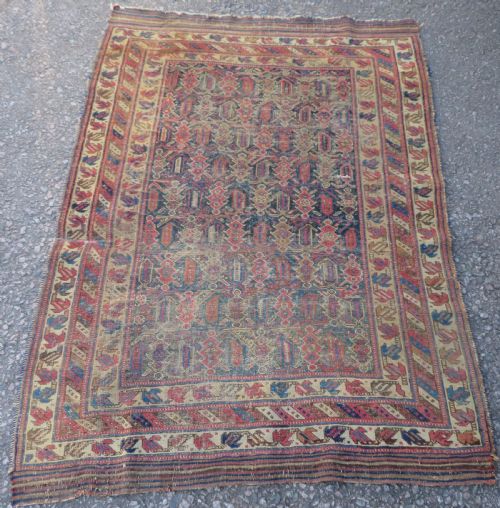
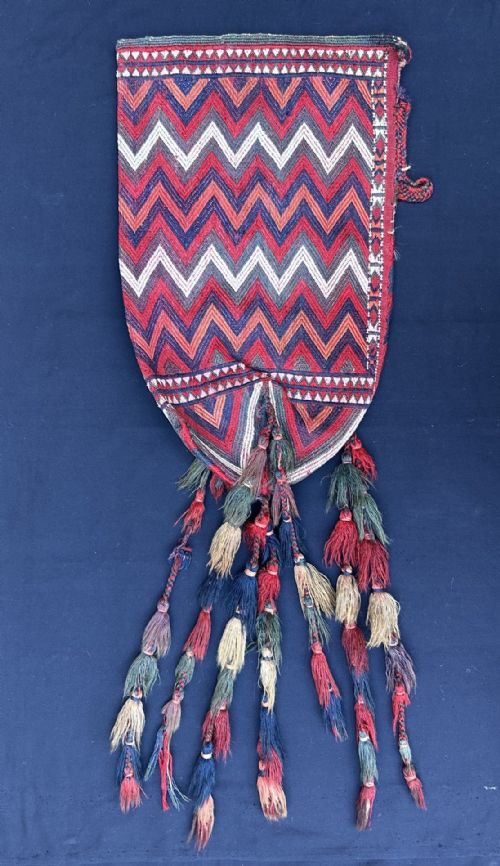
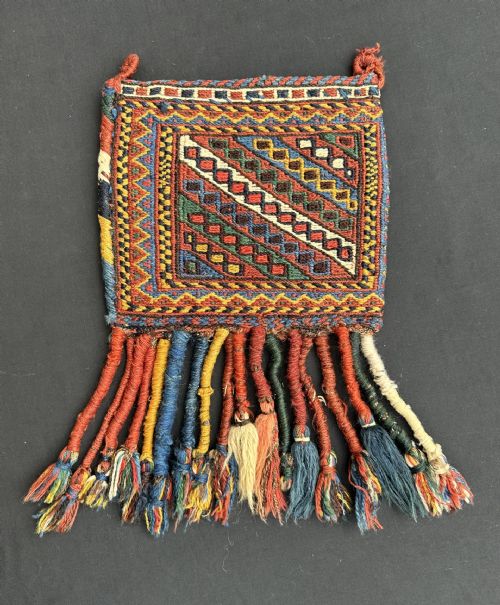


Nomadic Flat Weave
These nomadic flat weave textiles are woven by tribal makers for daily camp utility, offering graphic geometry and practical floor or wall coverings.
Nomadic Flat Weave
A nomadic flat weave brings together tribal rugs, runners, storage pouches, and saddle bags from nineteenth and early twentieth century producers across Persia, Anatolia, the Caucasus, and Central Asia.
Buyers encounter numerous regional variations on this page, ranging from Shahsevan sumac khorjin and Afshar sofreh bread cloths to Turkmen chuval faces and Uzbek kilims.
The assortment spans diverse tribal groups including Yomut, Tekke, Ersari, Saryk, Luri, Qashqai, and Baluch weavers working within established local traditions.
Materials and construction
Weavers utilised wool and cotton foundation materials combined with hand-spun wool and natural dyes to build these durable textiles.
Techniques include slit-tapestry weaving, soumak wrapping, and sumac construction, often executed in two parts or completed with original plain weave backs and tassels.
Listings span production dates from the mid-nineteenth century through the early twentieth century, focusing on wool textiles utilising natural dyes.
Evaluating quality in tribal weaves
Quality rests on the crispness of the graphic design, the depth and lightfastness of the natural dye palette, and the fineness of the hand-spun wool.
The degree of structural completeness, such as surviving backs, borders, and tassels, separates ordinary fragments from intact storage bags and cushions.
The Nomadic Flat Weave Glossary
- Kilim
- A flat-weave carpet or rug produced without a pile by tightly interweaving warp and weft strands. This technique creates a lightweight textile historically used for floor coverings, wall hangings, and horse covers.
- Sofreh
- A woven spread used specifically for kneading dough, resting bread, or serving communal meals. These flat weaves often display stark geometric symbols tied to tribal sustenance.
- Chuval
- A large storage bag made by Turkmen tribes for household bedding and possessions. They typically feature guls and banded designs across the primary face.
- Soumak
- A supplementary weft-wrapping technique that produces a textured, braided surface on the face of the textile. It adds considerable weight and durability compared to standard tapestry weaving.
- Mafrash
- A rectangular storage chest panel or complete box bag utilised during tribal migrations. These pieces frequently exhibit intricate Caucasian or Shahsevan brocaded patterns.
Nomadic Flat Weave: Frequently Asked Questions
How did nomads use flat weave bags?
Nomadic groups utilised bags like chuvals, mafrashes, and khorjins for packing household belongings, bedding, and provisions during seasonal migrations across steppes and mountains.
Suspended inside tents or loaded onto pack animals, these textiles kept essential items organised while serving as durable domestic furnishings.
Where were these tribal textiles made?
The pieces originate across a broad geographic expanse encompassing Persia, Anatolia, the Caucasus, and Central Asian regions inhabited by tribal confederations.
Specific workshops and nomadic camps in areas such as Moghan, Kerman, Luristan, and the Trans-Caspian steppes produced distinct regional patterns.
How do I care for an antique flat weave?
Protect antique flat weaves from direct sunlight to prevent natural dye fading, and place a suitable rug underlay beneath floor pieces to reduce friction.
Vacuum gently using suction attachments without rotating brushes, and consult a textile conservator for professional washing.
What is the difference between a kilim and a soumak?
A kilim is woven using a flat tapestry technique that leaves no loose threads on the reverse, resulting in a smooth surface on both sides.
Soumak incorporates wrapping threads around the warp to build a textured, ribbed face with trailing threads secured on the back.
How do I identify different tribal designs?
Identification relies on recognising specific structural formats, regional colour palettes, and characteristic motifs such as Turkmen guls or Caucasian geometric panels.
Comparing border bands and weaving techniques helps link pieces to groups like the Shahsevan, Yomut, or Afshar.