


Nomadic Baluch Rug
A nomadic baluch rug brings the tactile warmth of tribal weaving into a room, offering deep indigo tones and geometric motifs born on the borderlands.
Nomadic Baluch Rug
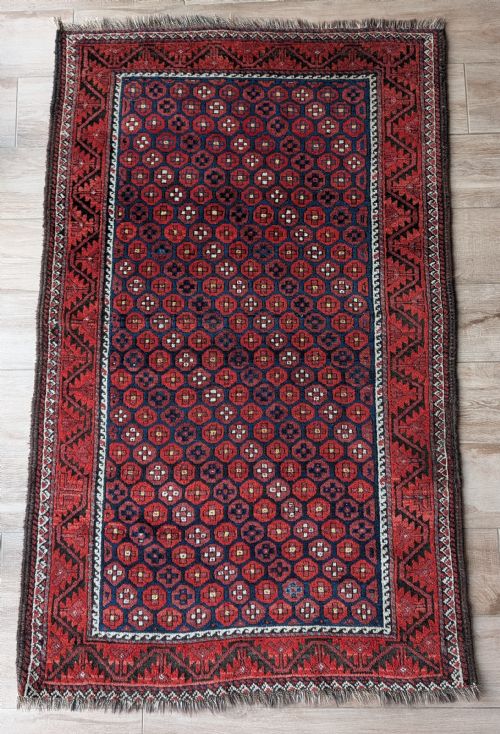
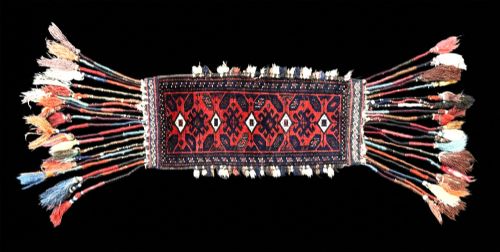
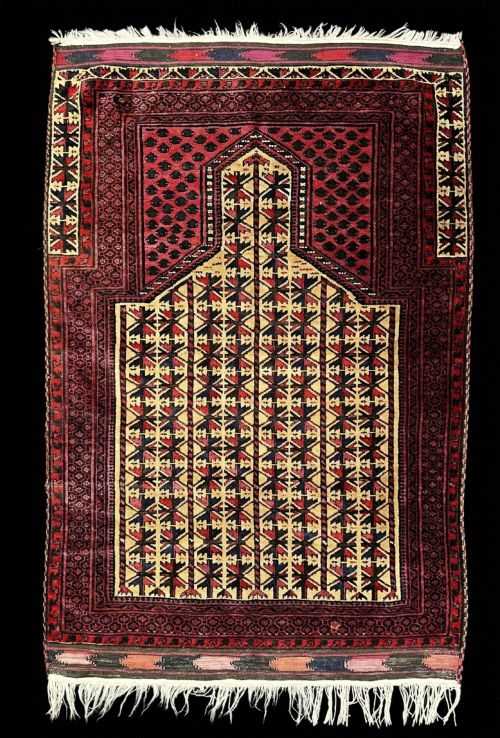
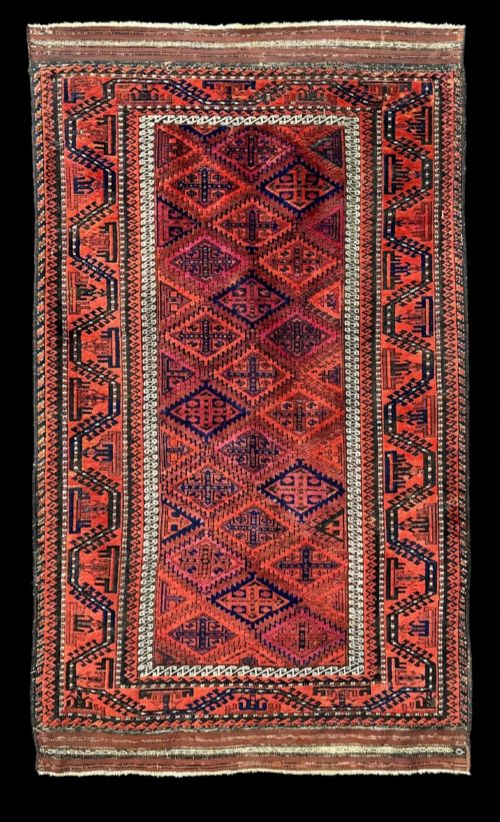
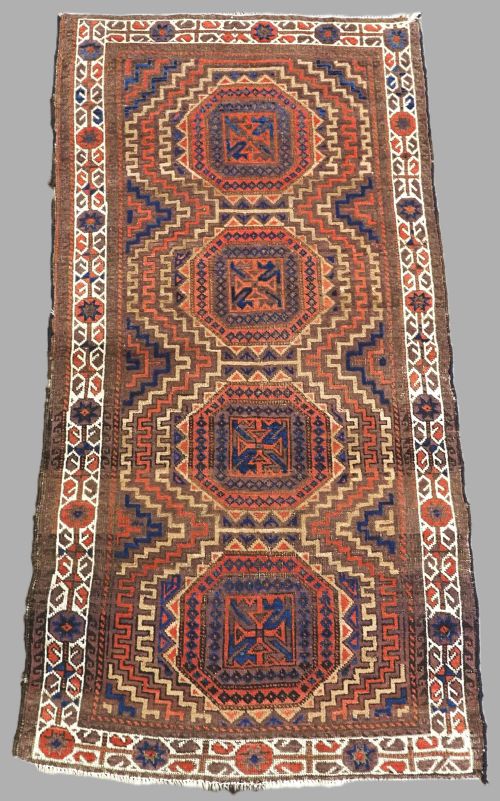
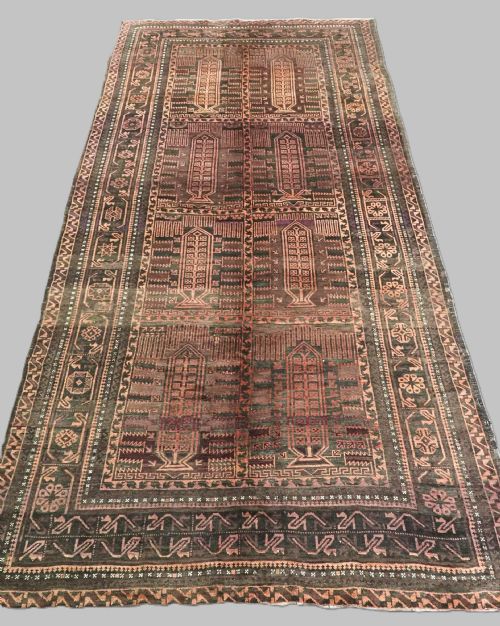
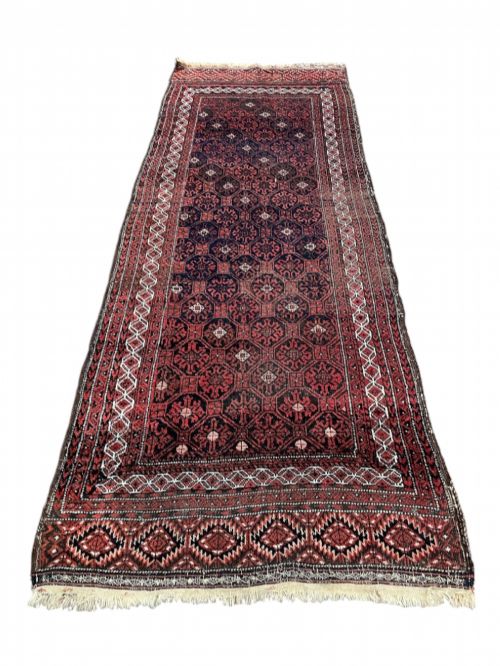
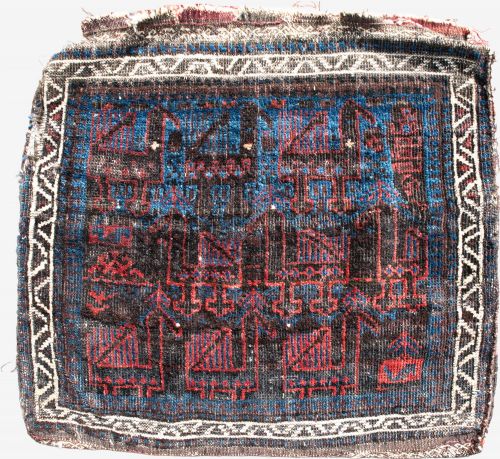
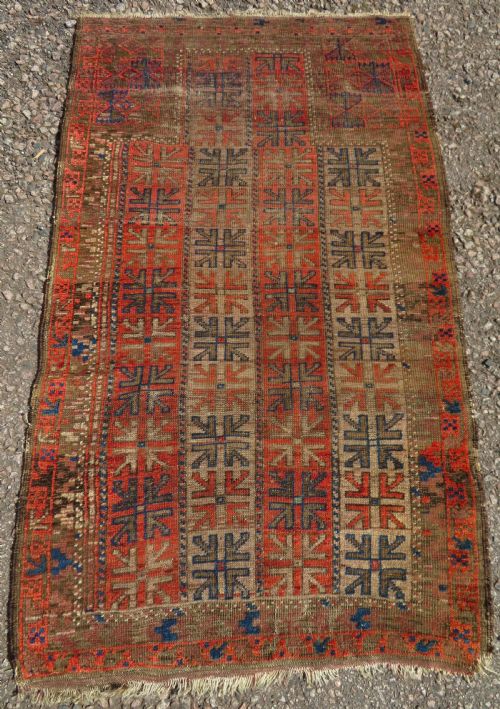
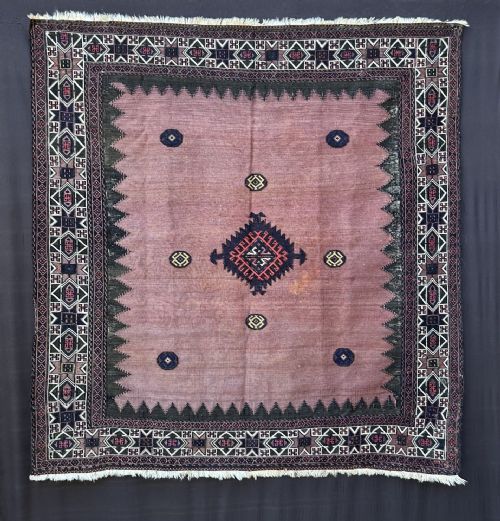
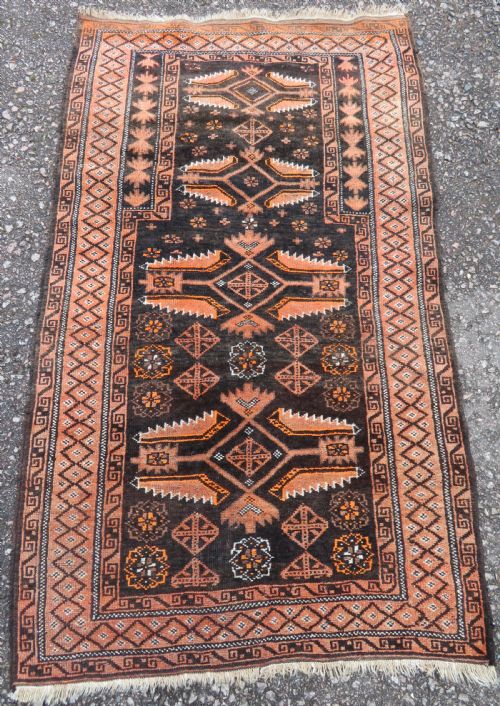
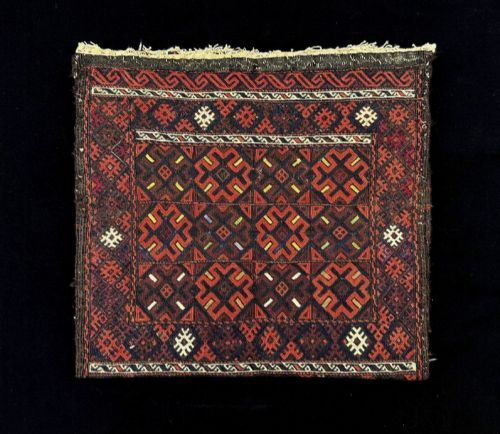
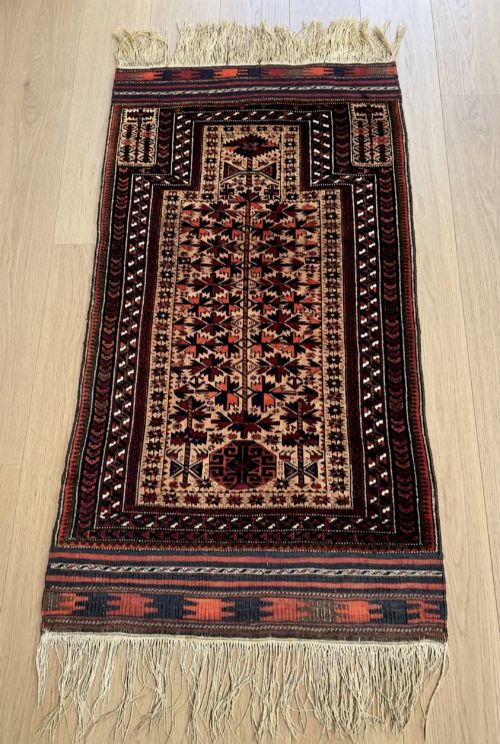
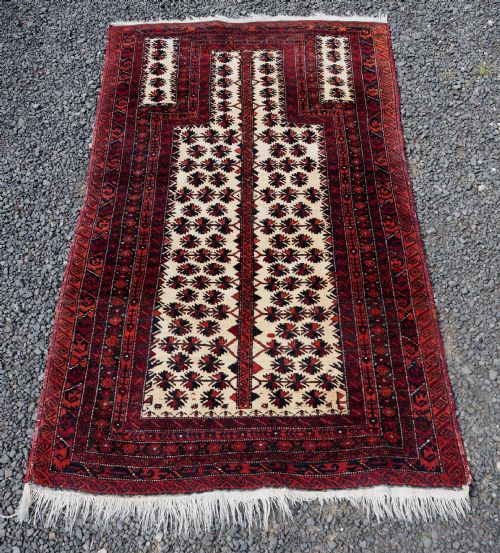
A nomadic baluch rug is a woven textile produced by tribal groups traversing the borderlands of Persia and Afghanistan. These pieces encompass varied formats, from prayer mats with double mihrabs to utility bags and runners.
The primary examples met on this page span the late nineteenth century into the early decades of the twentieth century. They reflect nomadic traditions through distinctive motifs such as guls, tree of life patterns, and latch hook medallions.
Makers ranged across specific tribal confederations, including the Salar Khani, Timuri, and Bahluli groups. Each community imparted subtle variations in format and design, anchoring the textiles in distinct regional heritages.
Materials and construction
Weavers relied principally on hand-spun wool and cotton foundations, often incorporating camel hair and goat hair for durability and textural contrast. Natural dyes produced the rich, deep palettes characteristic of these tribal works.
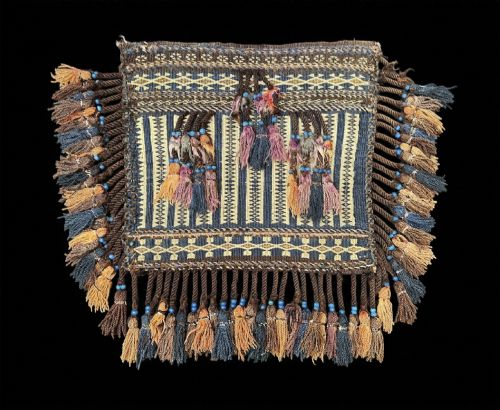
Structural techniques combined pile knotting with flatweave construction, particularly visible on storage bags and sofreh cloths. Artisans utilised supplementary materials such as glass beads for specific decorative details.
Nomadic Baluch Rug Retail Price Guide 2026
Typical asking prices for nomadic baluch rug among the pieces listed under this phrase on Sellingantiques today, from the lower quarter to the upper quarter. They describe what is for sale here now, not the wider market.
Several bags retain their original glass bead adornments, once intended to ward off the evil eye during desert travels.
Judging quality in tribal textiles
Quality rests in the handling of the wool, the clarity of the natural dyes, and the tightness of the knotting. Finer examples display meticulous attention to secondary details like original plain weave backs and banded weft work.
Proportion and design execution separate standard pieces from exceptional ones. A well-drawn pattern, such as a crisp Mina Khani or balanced prayer arch, reflects superior workshop discipline within a nomadic context.
Salar Khani Tribe·Yaqoub Khani Tribe·Bahluli Tribe
The Nomadic Baluch Rug Glossary
- Mihrab
- A niche design on a prayer rug that mimics the direction of Mecca. It often appears in single or double formats on tribal pieces.
- Sofreh
- A flatwoven cloth used for dining or food preparation among nomadic households. These textiles frequently exhibit geometric border arrangements.
- Gul
- An octagonal medallion motif repeated across tribal carpets. It serves as a primary structural and decorative element.
- Pushti
- A small mat or rug designed for sitting or kneeling. They share the same dense knotting found in larger formats.
- Balisht
- A traditional storage or grain bag woven by tribal groups. They often retain their original flatweave backs.
Nomadic Baluch Rug: Frequently Asked Questions
How do I identify a prayer rug?
Prayer rugs feature a distinctive arch or niche known as a mihrab at one or both ends. This design element directed the worshipper during daily devotions.
Such formats tend to be compact, allowing nomads to transport and roll them easily during travel across the borderlands.
What is a sofreh used for?
A sofreh functioned as a spreading cloth for communal dining or dough preparation on the ground. They are typically flatwoven without a pile.
These textiles showcase geometric layouts and practical weaves designed to withstand daily domestic utility.
How should I care for an old rug?
Protect the textile by placing a breathable underlay beneath it to prevent slipping and fibre abrasion. Vacuum gently without using a rotating brush roll.
Keep the piece out of direct sunlight to preserve the stability of the natural dyes over time.
Why do some pieces have bags attached?
Many nomadic items were woven as functional storage containers, such as salt bags or grain sacks. The faces were knotted while the backs remained plain weave.
These dual-purpose objects served practical domestic needs within temporary desert or mountain encampments.