


Nineteenth Century Wooden Chair
A nineteenth century wooden chair brings solid timber and enduring form into a room, spanning rustic Windsor seating and formal mahogany dining sets.
Nineteenth Century Wooden Chair
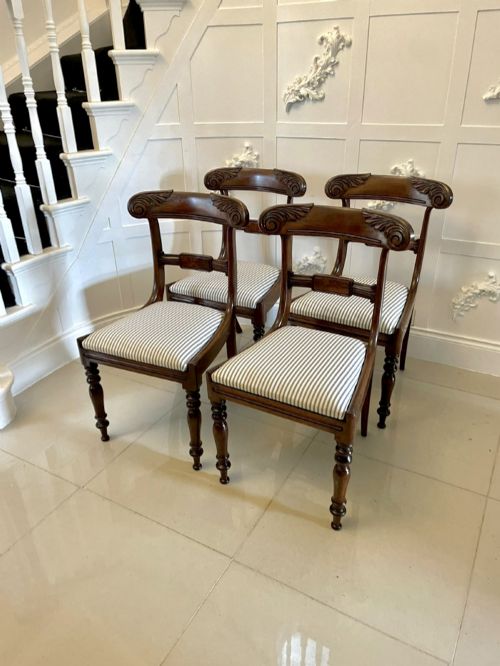
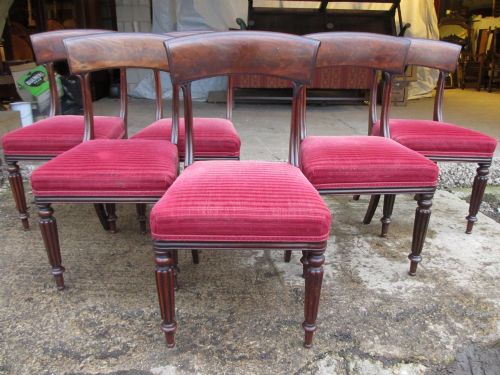
A nineteenth century wooden chair covers a broad spectrum of domestic and formal seating, from robust farmhouse Windsors to elegant Regency dining sets. Buyers searching this phrase encounter everything from simple elm and ash country armchairs to mahogany bar back and balloon back chairs designed for Victorian parlours.
The selection includes specialised forms such as hall chairs, rocking chairs, swivel desk chairs, and folding campaign pieces in woods like oak, walnut, and beech. Vernacular country pieces sit alongside refined urban furniture reflecting Regency, William IV, and Arts and Crafts styles.
Materials and Construction
Cabinetmakers and country bodgers utilised solid regional timbers, pairing dense hardwoods like mahogany, oak, and walnut for formal frames with resilient softer woods like elm, ash, beech, and fruitwood for Windsor spindles and bent parts.
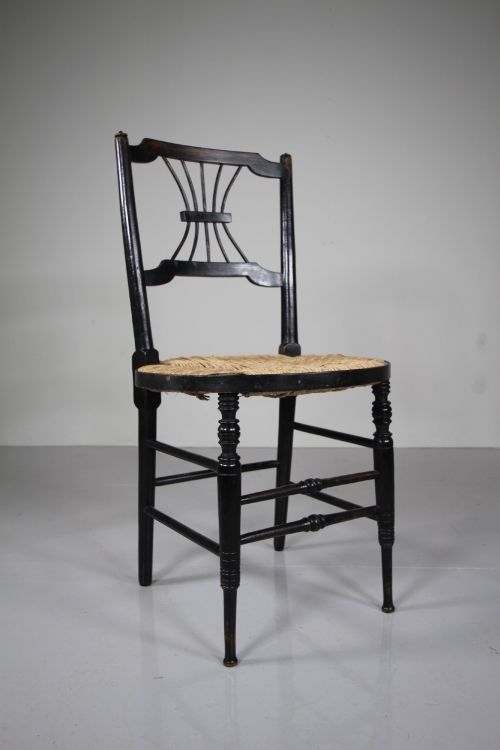
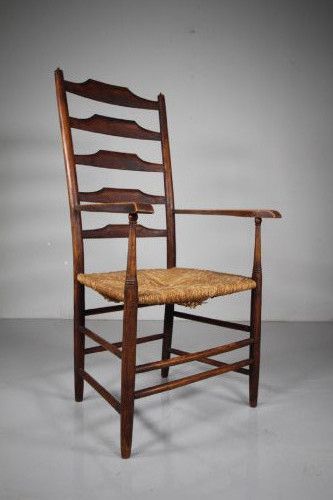
Construction methods rely on traditional joinery, including turned legs fitted into solid seats, mortise and tenon frames, and steam-bent components secured with wedges and dowels, often finished with brass inlay, carved details, or rush seating.
Listings span the nineteenth century, incorporating Regency, William IV, Victorian, and Arts and Crafts examples in mahogany, elm, ash, and oak.
Judging Quality
Quality rests on the selection of timber and the crispness of execution, whether in hand-carved mahogany splats, precise brass inlay, or the balanced proportions of a comb-back Windsor. Finer examples retain their original structural integrity without excessive timber shrinkage or clumsy repairs.
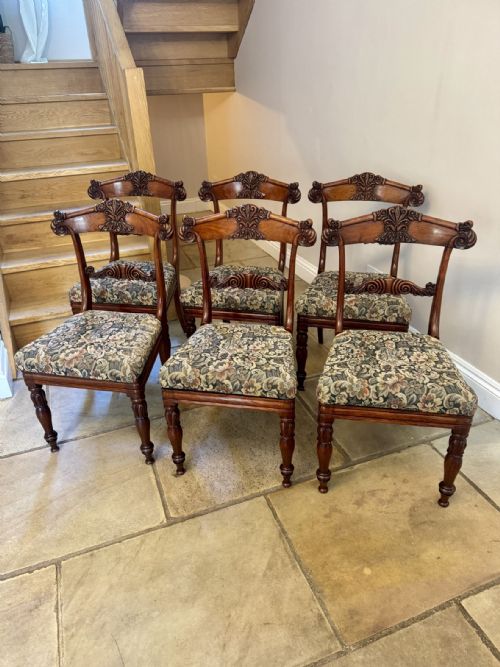
Sets demonstrate greater value when they survive in matching groups with consistent colour and uniform grain patterns across every piece, whereas individual armchairs command attention through robust vernacular joinery and distinct regional character.
William Morris·Philip Clissett·Jacob-Desmalter·Liberty and Co·Gillows
The Nineteenth Century Wooden Chair Glossary
- Windsor
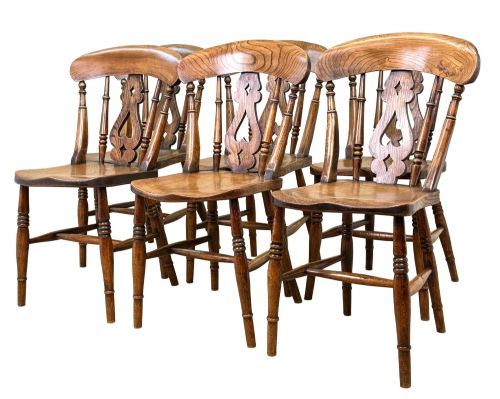
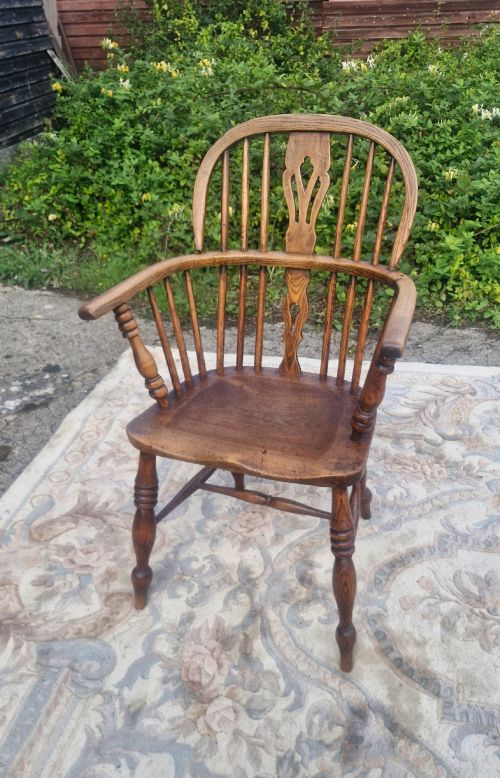
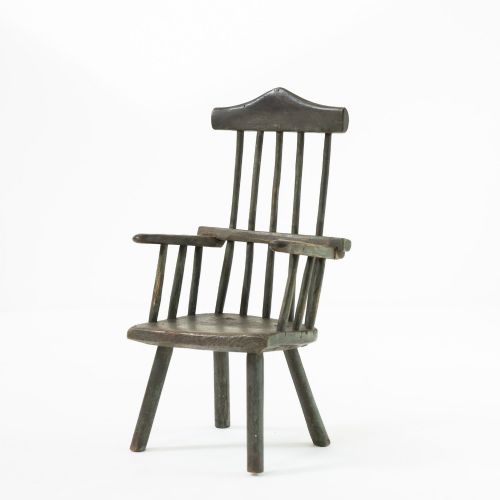
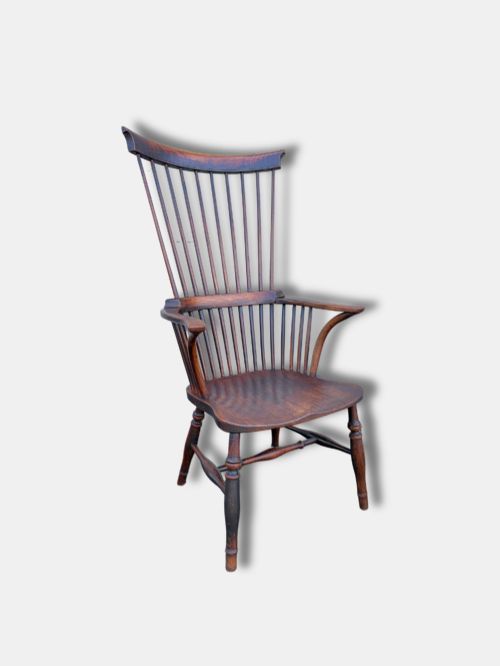
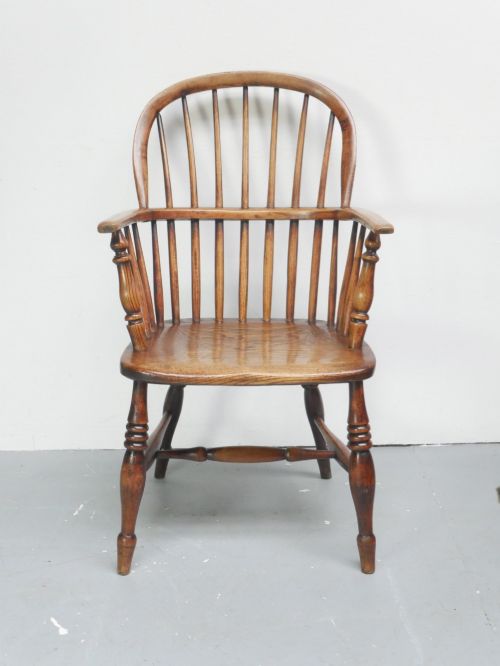
- A traditional wooden chair featuring a solid saddle-shaped seat into which turned legs and spindles are wedged directly. This form developed distinct regional variations across the British countryside.
- Bar Back
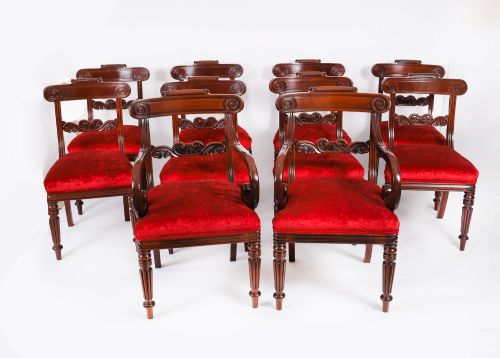
- A dining chair design characterised by a horizontal top rail shaped like the curved back of a traditional pub bar. This style appeared frequently in mahogany during the Regency and William IV periods.
- Balloon Back
- An oval or rounded upholstered backrest resembling a balloon, popular throughout the Victorian era. It frequently appeared on mahogany and walnut dining chairs.
- Fauteuil
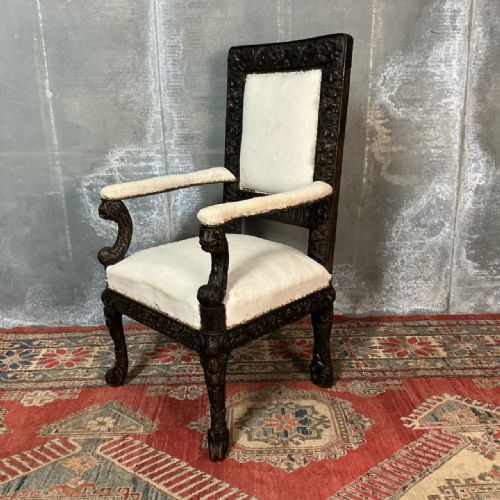
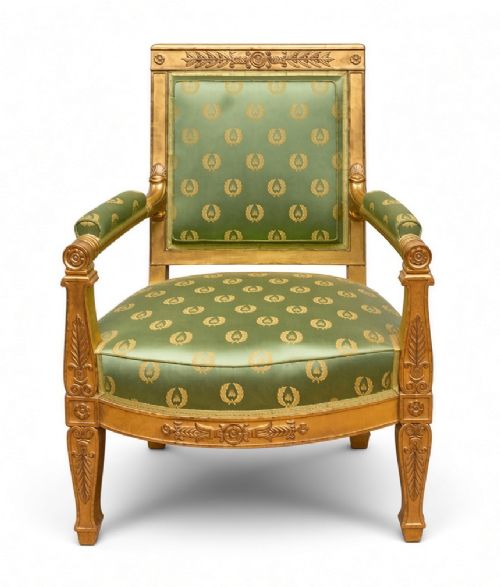
- An open-armed upholstered armchair with exposed wooden framing, originating in France. Nineteenth-century examples often follow earlier Louis styles.
- Mashrabiya
- An architectural wooden screen made from turned bobbin or spindle elements assembled into intricate geometric lattices. It occasionally decorated late nineteenth-century corner chairs.
Nineteenth Century Wooden Chair: Frequently Asked Questions
How do I identify a Windsor chair?
A Windsor chair is built around a thick wooden seat that receives the legs from below and the back spindles from above. You will typically see them constructed from mixed timbers such as elm seats paired with ash or beech spindles.
Country versions often display local vernacular turns and unpainted wood surfaces that show decades of domestic use.
Are these chairs suitable for daily dining?
Many nineteenth-century dining chairs were built from dense hardwoods like mahogany and oak, making them structurally robust for regular modern use. Solid timber construction handles daily sitting well when joints remain tight and stable.
Sets of dining chairs should be checked for consistent height and seat clearance relative to standard tables before daily deployment.
What is a hall chair?
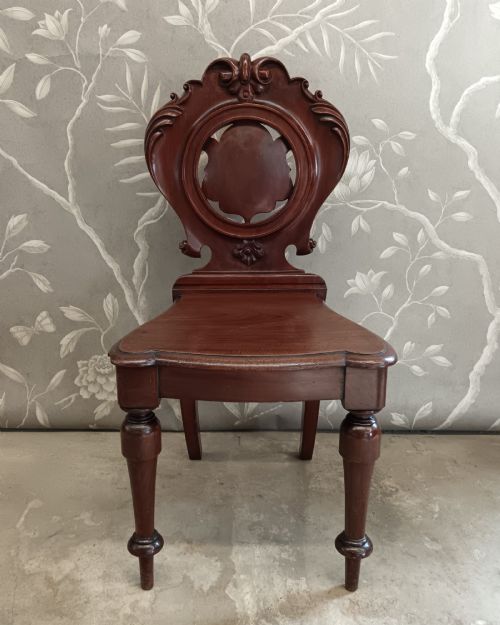
Hall chairs were traditionally placed in entrance halls rather than around dining tables, serving as secondary seating for visitors. They usually feature solid wooden seats and carved or painted backs displaying family crests or armorial bearings.
Because they were meant for brief waiting periods, they prioritize upright posture and decorative presence over deep comfort.
How do I care for antique wood?
Maintain nineteenth-century wooden surfaces by dusting with a dry cloth and occasionally applying natural beeswax to nourish the timber. Avoid placing chairs near direct heat sources or rapid temperature shifts that cause wood to dry and split.
Protect rush and cane seats by keeping them away from excessive moisture and supporting them with proper seat pads if necessary.