


Nineteenth Century Tableware
Nineteenth century tableware brings together porcelain, earthenware, silver and ironstone to set a layered, historic table.
Nineteenth Century Tableware
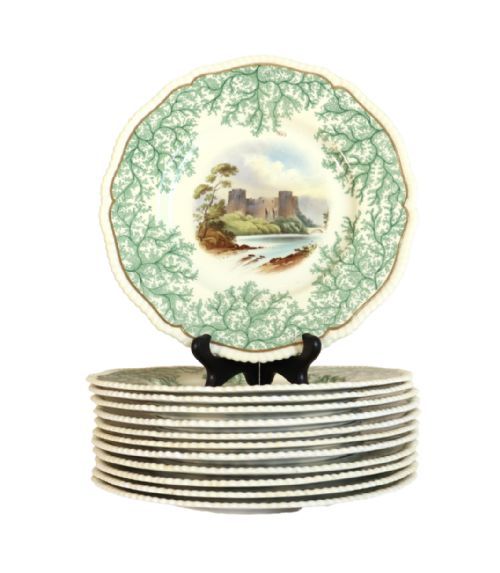
Nineteenth century tableware covers everything required to serve dinner, tea and dessert across the Georgian, Regency and Victorian eras. You encounter plates, tureens, butter dishes, tea plates and salt cellars spanning the hundred-year span.
The material palette is broad, ranging from utilitarian pewter and robust ironstone to fine porcelain and sterling silver. Many examples carry printed or hand-painted botanical, floral and scenic patterns reflecting contemporary tastes.
Sets vary from single decorative plates to part dinner services and matching pairs of serving dishes. English factories dominate the selection alongside continental European and Russian makers.
Materials and production techniques
Pottery and porcelain pieces rely on traditional ceramic bodies including earthenware, creamware, pearlware, ironstone and felspar porcelain, often finished with coloured glaze or transfer-printed decoration.
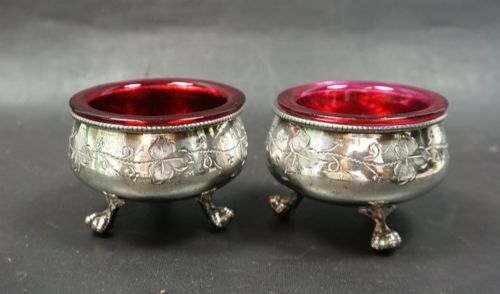
Metal items utilise sterling silver, silver plate and pewter, frequently paired with glass liners or enriched with gold leaf and cloisonné enamel work.
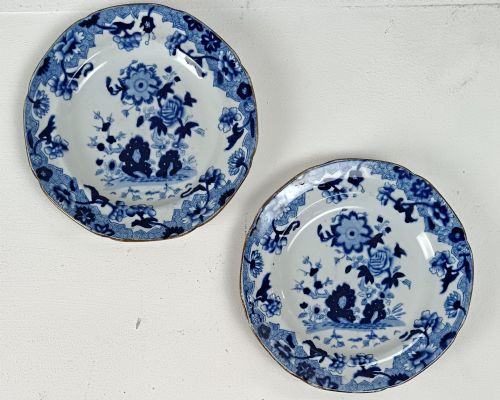
Decoration combines hand-painted brushwork with transfer-printing and blue and white techniques, creating durable surfaces designed for daily dining or formal display.
A novelty farmyard cruet from eighteen seventy brings eccentric nineteenth century animal whimsy straight to the dining table.
Judging the quality of the pieces
Quality rests on the crispness of the transfer print, the precision of hand-painted brushwork and the preservation of original gilding and enamel colours. Superior ceramics show refined paste bodies and clean, even glazing without firing distortions.
Provenance and maker attribution elevate certain items, particularly when paired with recorded patterns from established works. The survival of complete sets or matched pairs maintains higher desirability than isolated fragments.
Spode·Wedgwood·Coalport·Tiffany and Co·Meissen·William Adams·Kornilov Brothers
The Nineteenth Century Tableware Glossary
- Ironstone
- A durable, dense type of earthenware patented in the nineteenth century to rival porcelain. It provides a robust body suitable for heavy daily use.
- Transferware
- Pottery decorated by applying a printed design from an engraved copper plate onto the ceramic surface via tissue paper. This technique enabled uniform patterns in blue and white.
- Pearlware
- A refined earthenware developed with a bluish-white glaze that pooled slightly in crevices to mimic Chinese porcelain. It was widely produced during the late Georgian and Regency periods.
- Creamware
- A light-coloured refined earthenware with a warm, buttery lead glaze perfected in the eighteenth century and continued into the nineteenth. It forms the body of many botanical services.
- Sucrier
- A covered pot or bowl designed specifically for holding loose sugar at the tea table. These often match tea plates and porcelain services.
Nineteenth Century Tableware: Frequently Asked Questions
What is ironstone tableware?
Ironstone is a heavy, durable ceramic body developed to withstand regular dining use while offering a clean white surface for printed or painted decoration. It bridges the gap between everyday earthenware and expensive porcelain.
Items made from ironstone include dinner services, plates and desert dishes, prized for their resilience and bold decorative patterns like grasshopper designs.
How do I care for antique silver tableware?
Silver plate and sterling silver pieces require gentle cleaning with appropriate silver polish to maintain their surface without removing thin plating or engraving. Avoid harsh abrasives and store items away from moisture.
Items such as salt cellars with glass liners should have the liners washed separately to prevent chemical reactions between salt and metal.
What makes transferware different from hand-painted pottery?
Transferware uses an inked copperplate to stamp designs onto paper, which is then transferred onto the clay body before firing. This mechanical process allowed factories to produce intricate scenic patterns consistently.
Hand-painted pieces show individual brushstrokes and minor variations, reflecting the direct hand of the decorator on porcelain or earthenware.
How can I date nineteenth century ceramics?
Dating relies on factory marks, pattern names, material composition and stylistic clues such as Regency shapes or Victorian neoclassical motifs. Blue and white transfer prints often correspond to specific registration dates or archival production periods.
Comparing glaze characteristics, such as the bluish tint of pearlware or the warm tone of creamware, helps narrow down the decade of manufacture.