
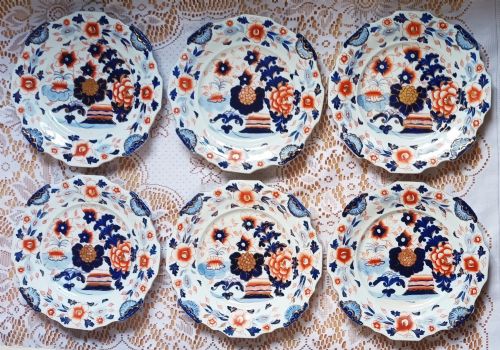


Masons Chinoiserie Plates
These masons chinoiserie plates bring striking orientalist motifs and robust bodies to the table, offering a durable centrepiece for collectors and diners alike.
Masons Chinoiserie Plates
When you search for masons chinoiserie plates, you encounter an array of heavy ceramic vessels spanning the Georgian, Regency, Victorian, and Edwardian periods. The selection includes decorative plates, large charger plates, serving platters, and footed cheese dishes.
You are most likely to meet 19th-century ironstone dinnerware and chargers adorned with traditional orientalist motifs, such as exotic birds, pagodas, and grasshopper patterns. These forms range from standard dining plates to substantial serving dishes designed for country house hospitality.
The objects combine utility with display, drawing on Georgian and Regency design traditions alongside later Victorian interpretations. Their enduring appeal lies in the weight of the ceramic body paired with vibrant hand-applied decoration.
How they were made
Potters utilised patented ironstone ceramic formulations to create dense, durable bodies that resisted chipping far better than standard earthenware. This heavy ceramic base provided a stable canvas for extensive surface decoration.
Artisans applied rich enamel colours and gold leaf accents over a smooth glaze, often combining transfer printing with hand-painted details. Firing fixed the pigments deep into the glaze, securing the vivid orange, yellow, and green hues seen across the patterns.
Listings feature ironstone ceramic bodies decorated across the Georgian, Regency, Victorian, and Edwardian periods.
What varies in quality
The standard of a piece rests heavily on the crispness of the enamel work and the precision of the gilding. Early Regency and Georgian examples often display finer hand-brushing on complex motifs like the grasshopper or exotic bird patterns.
Depth of colour and the preservation of the gold leaf distinguish finer charger plates and serving platters from standard production wares. The alignment of the transfer print beneath the glaze also marks the care taken during manufacture.
C.J. Mason·Mason's Patent Ironstone
The Masons Chinoiserie Plates Glossary
- Ironstone
- A heavy, durable ceramic body patented in the 19th century to imitate oriental porcelain. It forms the solid foundation for nearly all the plates and platters found here.
- Chinoiserie
- A European decorative style reflecting Chinese artistic influences through whimsical landscapes, pagodas, and exotic figures. It dominates the patterns on these plates.
- Charger
- A large decorative plate traditionally used as a base under other courses or displayed on its own. These oversized pieces often showcase the most elaborate bird and pagoda scenes.
- Enamel
- Opaque vitreous glass fused to the ceramic surface to provide vibrant colours. Artisans painted these pigments over the glaze to build up complex orientalist designs.
- Imari
- A Japanese export style characterised by iron red, underglaze blue, and gold, which heavily influenced British makers. Victorian variations of this palette appear frequently in the listings.
Masons Chinoiserie Plates: Frequently Asked Questions
Are these plates suitable for daily use?
These historical ironstone pieces possess a robust ceramic body originally built for heavy dining service. However, the presence of delicate enamel and gold leaf means gentle hand washing preserves the surface better than machine dishwashing.
Using them for special occasions protects the antique glaze from unnecessary wear while still letting you appreciate their weight and form at the table.
How do I date a Mason's ironstone plate?
Dating relies on observing the combination of period styles, ceramic weight, and backstamps where present. Georgian and Regency pieces often show finer hand-painting and distinct early ironstone formulations.
Later Victorian and Edwardian examples tend to feature brighter grounds, such as orange or yellow, paired with transfer-printed oriental motifs.
What is the difference between a charger and a dinner plate?
Chargers are significantly larger decorative plates designed to anchor a table setting or display major pictorial scenes. Standard dinner plates are smaller and scaled for individual portions of food.
Both utilise the same ironstone body and chinoiserie patterns, but chargers provide a wider canvas for complex compositions like exotic birds and pagodas.
Why are some patterns called Japan pattern?
Makers used the term Japan pattern to describe designs inspired by imported Japanese Imari ceramics. These typically incorporate iron red, blue, and gold leaf in intricate geometric and floral arrangements.
They represent a specific cross-cultural aesthetic popular during the Regency and Victorian eras.
How should I display a large ironstone platter?
Large platters and cheese dishes benefit from sturdy plate stands that support their substantial ceramic weight safely. Placing them away from direct sunlight protects the vibrant enamel colours from fading over time.
Their deep wells and decorative rims make them ideal focal points on sideboards or open dining room shelving.