
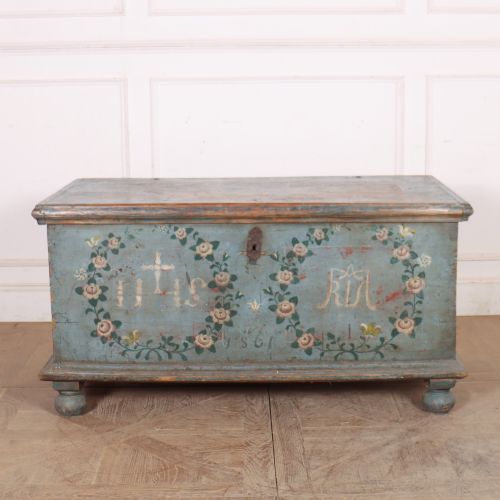


Nineteenth Century Swedish Furniture
Nineteenth century swedish furniture brings practical warmth and restrained neoclassical design into a room through pale woods and painted finishes.
Nineteenth Century Swedish Furniture
Nineteenth century swedish furniture encompasses practical household forms designed for storage and daily living, ranging from chests of drawers to kitchen tables. Buyers hunting for nineteenth century swedish furniture frequently encounter useful case pieces like linen cupboards and trunks alongside dining and occasional tables.
The aesthetic draws heavily on Scandinavian country traditions and Biedermeier styles, blending simple utility with refined neoclassical restraint. Pieces span the broader nineteenth century alongside related items from the eighteenth century, showing regional shifts in taste and form.
What varies in quality
Quality separates ordinary utilitarian items from superior examples through the selection of timber and the sophistication of the veneer work. Birch and burr walnut veneers require expert handling to maintain smooth, unbroken surfaces across large drawer fronts and table tops.
The refinement of the decorative scheme also dictates the tier of a piece, distinguishing simple painted pine from sophisticated neoclassical console tables and serpentine chests. Proportions and the crispness of surviving paint finishes further separate standard country pieces from elite metropolitan work.
Alder root surfaces hide their knots in plain sight.
The Nineteenth Century Swedish Furniture Glossary
- Biedermeier
- A central European style emphasising clean lines and minimal ornamentation, which strongly influenced Scandinavian furniture design. It favoured domestic comfort and the natural grain of woods like birch.
- Falu paint
- A traditional deep red paint originating from copper mines in Dalarna, Sweden. It protected timber exteriors on buildings and practical furniture alike.
- Pine
- A soft, accessible coniferous timber widely used for country furniture carcases and painted surfaces. It accepted pigmented finishes readily and supported everyday domestic utility.
- Demi lune
- A half-moon shape characteristic of console tables designed to sit flush against a wall. This profile offered a decorative surface without occupying excessive floor space.
Nineteenth Century Swedish Furniture: Frequently Asked Questions
How do I clean painted swedish furniture?
Dust surfaces gently with a dry, soft cloth to prevent accumulation. Avoid harsh chemical cleaners that can damage historic painted finishes.
Maintain stable indoor humidity to protect the underlying pine or birch timber from warping. Lift pieces rather than dragging them across floors to preserve original legs and feet.
What rooms suit a swedish chest of drawers?
Bedrooms benefit greatly from these multi-drawer case pieces for organising clothing and linens. Their restrained proportions also allow them to function effectively in hallways and living rooms.
The pale wood tones and painted surfaces help brighten darker corners or smaller spaces without overwhelming the room.
How do I identify biedermeier pieces?
Look for unadorned surfaces that highlight the natural grain of birch or walnut veneer. Forms remain functional and geometric, avoiding heavy carving in favour of clean architectural lines.
Hardware is typically understated, allowing the polished timber to serve as the primary visual decoration.
Were these pieces painted originally?
Many items were painted during the nineteenth century using local pigments to brighten dark interiors during long winters. Paint finishes ranged from simple functional coats on pine to sophisticated neoclassical schemes on occasional tables.
Surviving paint often shows signs of age and wear that document its historical use.