
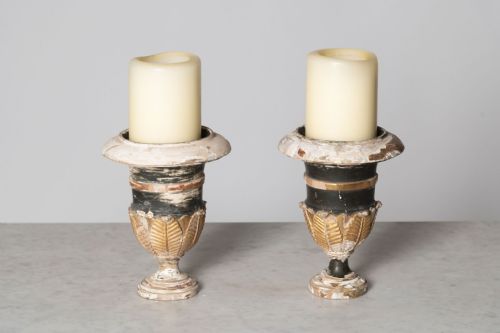


Light Wood Candle Stand
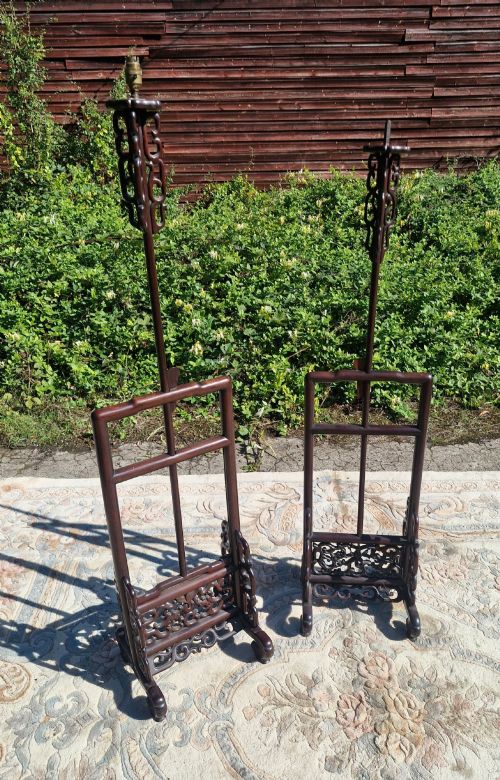
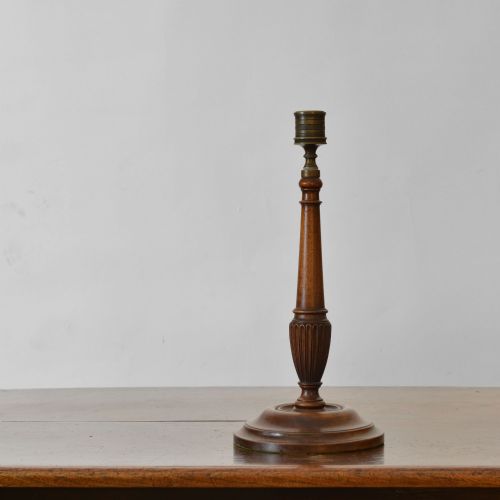
A light wood candle stand brings warmth and height to a room, holding tapers on tables or standing as a carved torchere.
Light Wood Candle Stand
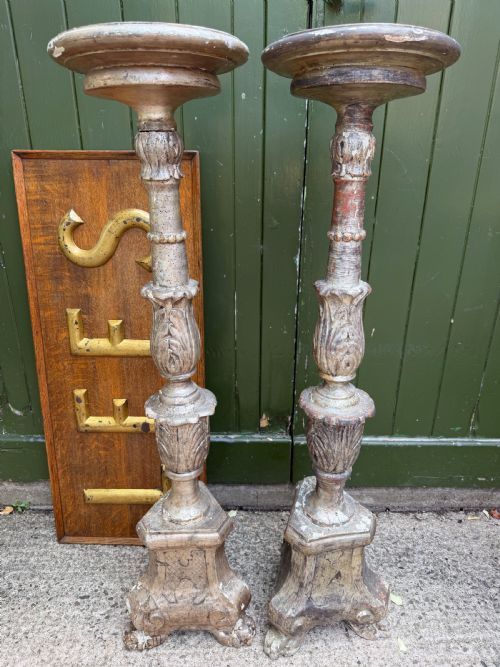
When you search for a light wood candle stand, you encounter turned timber candlesticks, tall torcheres, and small treen taper holders spanning multiple centuries. The selection ranges from compact oak and mahogany desk pieces to towering floor-standing Italian pinewood and walnut torcheres.
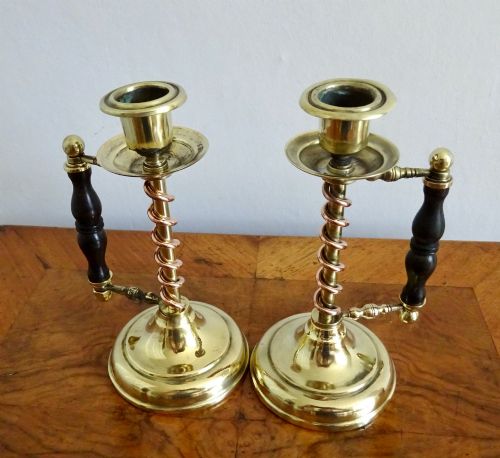
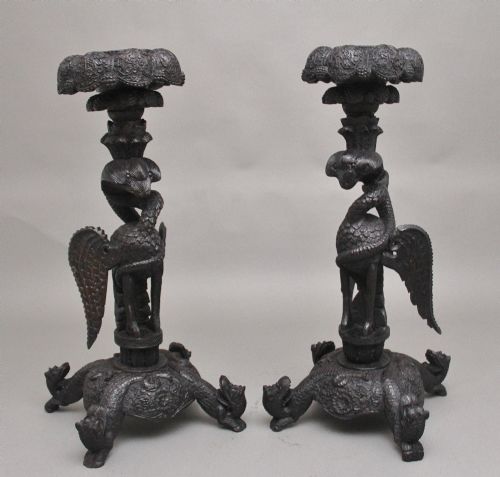
You meet pairs intended for mantelpieces alongside single sculptural figures and folk-art carvings in teak, olive wood, and birch. Many examples combine turned wooden shafts with brass or copper mounts, while others rely entirely on carved detail and grain.
The forms extend from simple barley twist shafts to elaborate Italian baroque bases and French candle holders. Most items originate from nineteenth and early twentieth century workshops, utilising native and exotic hardwoods.
How they were made
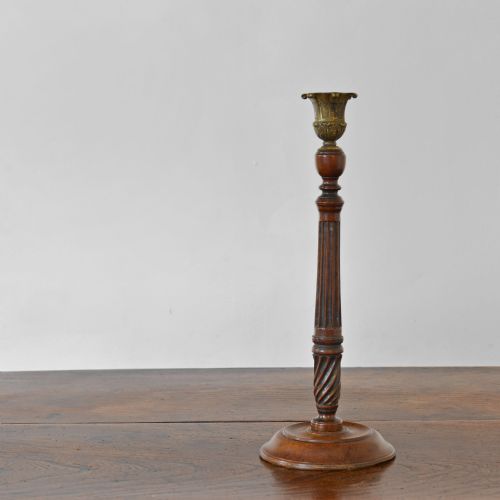
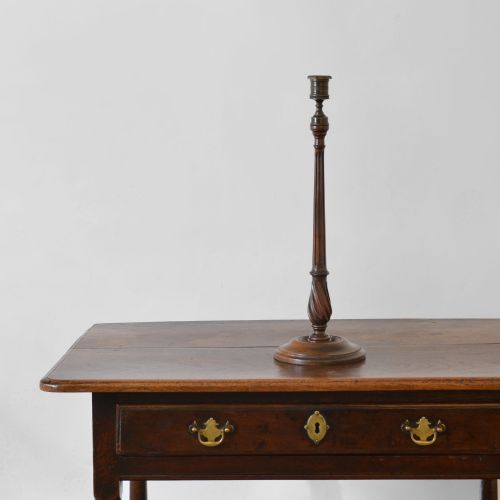
Turners shaped timber on lathes to produce smooth columns, bobbin shapes, and spiral barley twists in oak, mahogany, and walnut. Craftsmen joined sections with pegged tenons or threaded brass fittings to support the weight of the upper drip pans and sockets.
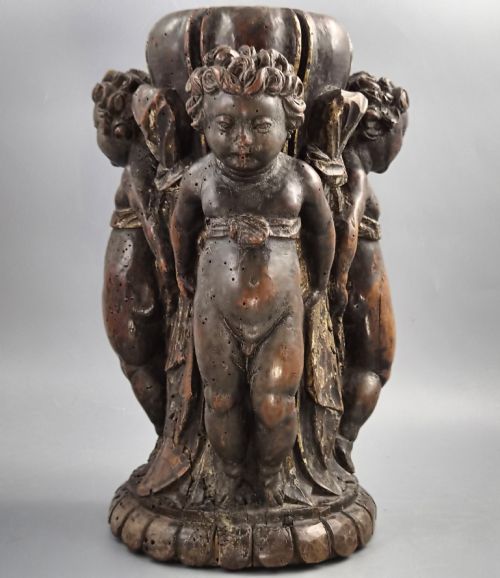
Carvers worked by hand on softer pine, walnut, and fruitwood to create figurative supports, putti, and foliate scrolls, often finishing the surfaces with silver leaf or giltwood. Treen items utilised dense hardwoods like lignum vitae and olive wood, turned down to thin sections for travelling sets and taper holders.
Listings feature woods including mahogany, oak, walnut, birch, teak, and olive wood.
What varies in quality
The distinction rests in the crispness of the turning and the depth of the hand-carving on the timber columns. Superior examples display balanced proportions, carefully chosen grain patterns, and secure joinery between the base, stem, and candle socket.
Lesser items show mechanical tooling marks, crude repairs to the timber, or poorly matched pairs where heights and turning pitches differ. The integration of secondary materials, such as fitted brass candle cups and metal weighted bases, alters the stability and finish of the piece.
The Light Wood Candle Stand Glossary
- Torchere
- A tall stand designed to elevate a light source, ranging from slender wooden columns to carved figural pedestals. These pieces often feature circular tops and heavy bases for stability.
- Barley twist
- A spiral form carved or turned along the length of a wooden column, popular in seventeenth century furniture and revived during the Victorian and Edwardian periods. This technique catches the light along the diagonal ridges of the grain.
- Pricket candlestick
- A candle holder featuring an upright metal spike that pushes into the base of a large candle, rather than sitting inside a socket. These items frequently appear in larger floor-standing formats.
Light Wood Candle Stand: Frequently Asked Questions
How do I clean wooden candle stands?
Dust the turned surfaces gently with a dry, soft cloth to prevent grime settling into the grain or carved recesses. Avoid liquid polishes and water, which can damage aged finishes and lift gilt layers.
Apply a microcrystalline wax sparingly if the bare timber appears dry, buffing it off completely after a few minutes. Keep the stands away from direct heat sources and strong sunlight to prevent the timber from splitting.
Were these stands used for lighting?
Earlier examples provided essential illumination before gas and electric lighting became common in domestic interiors. Tall torcheres held heavy wax candles to light dark corners of formal rooms.
Smaller treen taper holders sat on desks for lighting pipes or sealing wax on letters. Many surviving pairs retain their original metal sockets and drip pans from this period of daily use.
How do I spot a marriage?
Inspect the joint where the vertical shaft meets the base to check for matching timber species, wear patterns, and appropriate age. Composite items often combine older turned sections with replacement bases or modern brass hardware.
Look for consistency in the turning technique and tool marks across the entire height of the object. A true pair should match not only in height but in the precise pitch of the grain and lathe work.