



Nineteenth Century River Painting
A nineteenth century river painting captures the water meadows, urban quaysides and Highland streams of the Victorian era with oil and watercolour.
Nineteenth Century River Painting
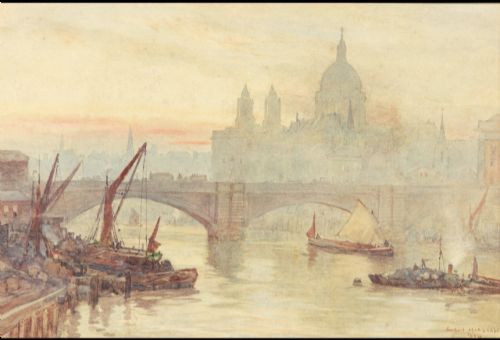
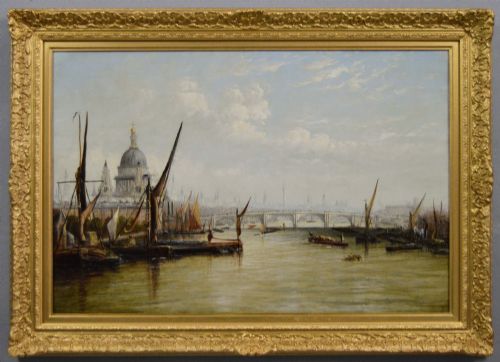
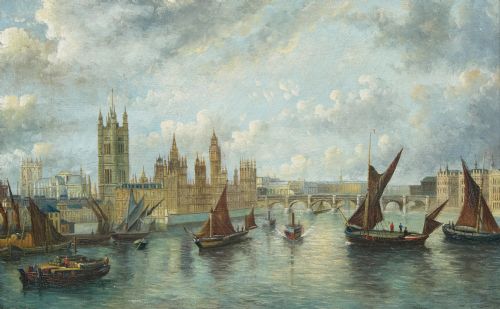
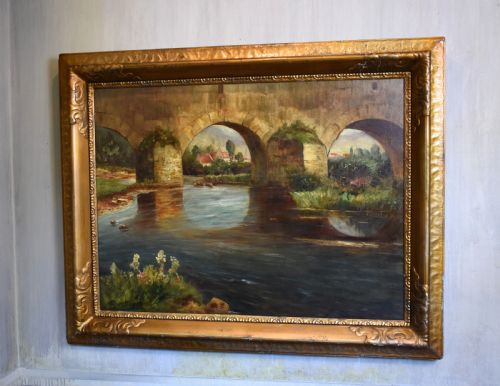
A nineteenth century river painting depicts watercourses ranging from the Thames in London to Welsh estuaries and French landscapes. These works record rural waterways, industrial bridges and pastoral scenes through the lens of Victorian and Barbizon sensibilities.
Most examples found here employ oil on canvas or watercolour on paper, framed in giltwood or plain wood. They bridge the gap between topographical record and romantic atmosphere, showing livestock, boats and figures beside the flow.
The periods stretch from the early decades of the eighteen hundreds through the Victorian mainstream into the turn of the twentieth century. Buyers encounter both detailed townscapes and loose impressionistic studies of river life.
How they were made
Artists applied oil paint to canvas or watercolour pigments to paper, mounted behind glass with giltwood or timber frames. The support dictated the finish, with canvas allowing rich impasto and paper lending itself to translucent washes.
Gold leaf often gilds the inner liners of the frames, setting off the tones of the water and sky within the composition. Pigments were worked by hand, capturing the specific light of Welsh rivers, French canals and English fenlands.
What varies in quality
The strength of the composition and the confidence of the brushwork separate the finest works from standard decorative pieces. A master hand defines the movement of water and the play of light with economy and precision.
The preservation of the original paper or canvas, alongside the condition of the gold leaf and wood frame, influences the integrity of the piece. Untouched surfaces retain the truest balance of nineteenth century tone.
Francis Moltino·Paul Désiré Trouillebert·Cornelius Pearson·Sidney Richard Percy·Robert Winchester Fraser·Walter Follen Bishop·Claude Cardon·John Syer junior·Henry Birtles·Franz Reder Broili·Thomas Swift Hutton·Walter John Bayes·Henry H Parker·Ludwig Hermann·Thomas Bush Hardy·Stuart Lloyd·Etty Horton·Arthur Anderson Fraser
The Nineteenth Century River Painting Glossary
- Barbizon School
- A group of French painters who gathered near Fontainebleau to work directly from nature, influencing later landscape and river painting. Their focus on atmospheric realism shifted art away from strict classical studio traditions.
- Impressionism
- A nineteenth century movement marked by relatively small, thin yet visible brush strokes and open composition. It prioritised accurate depiction of light in its changing qualities.
- Giltwood
- Wood that has been coated with gold leaf or gold paint, standard for framing nineteenth century fine art. This finish enhances the luminous qualities of the canvas or watercolour within.
- Eyot
- A small island, particularly one in a river, frequently chosen as a subject by Victorian watercolourists and oil painters. These quiet landforms provided a natural focal point for pastoral compositions.
Nineteenth Century River Painting: Frequently Asked Questions
What subjects do these paintings show?
The works depict a range of waterways, from busy urban bridges and quaysides to quiet Welsh estuaries, fens and Highland streams.
Animals, boats and figures harvesting or crossing bridges often populate the riverbanks alongside inns and watermills.
How do I choose between oil and watercolour?
Oil paintings on canvas offer deeper texture and rich impasto, whereas watercolours on paper present a delicate, translucent quality.
Both mediums were popular during the Victorian period, though watercolours typically require protection behind glass.
Where were these river scenes painted?
Artists travelled across Britain and the Continent to capture specific waterways, recording locations from Swansea Bay and the Tyne to the Thames and French landscapes.
Inscribed titles on the reverse or mount often identify the exact river, bog or townscape depicted.
How should I frame and display them?
Many retain their original giltwood frames, which complement the tones of the nineteenth century palette.
Keep them away from direct sunlight and damp conditions to protect the paper, canvas and gold leaf finish.