

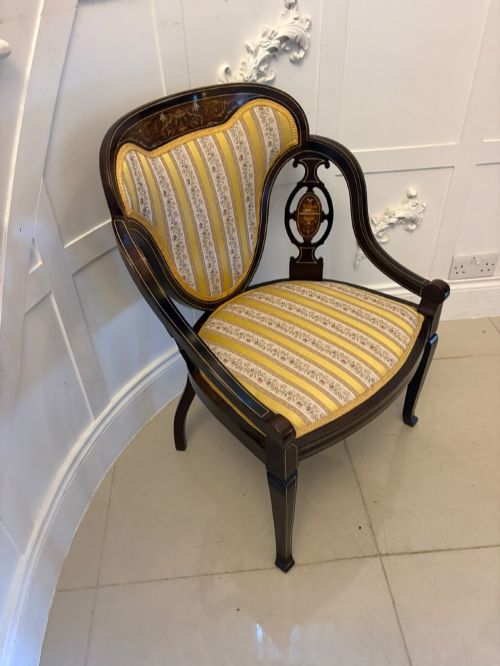
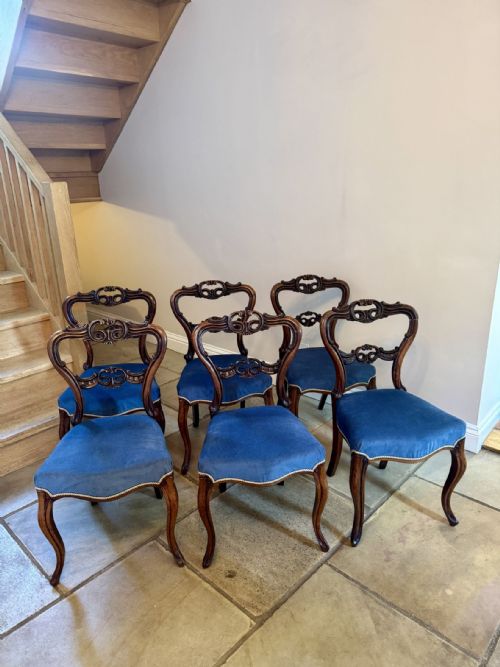
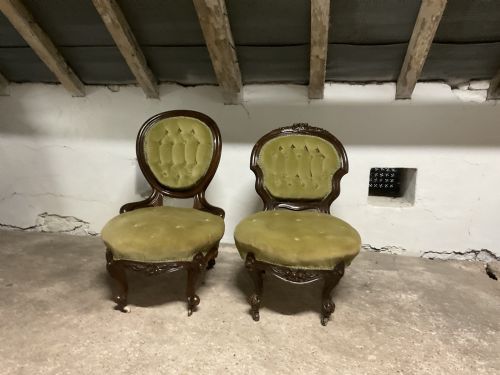
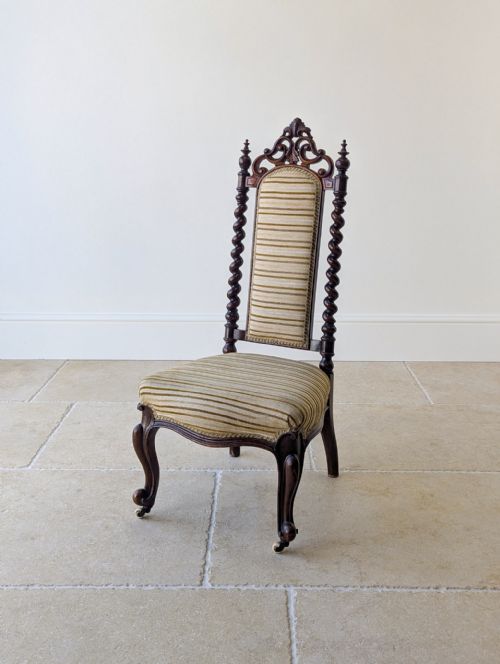
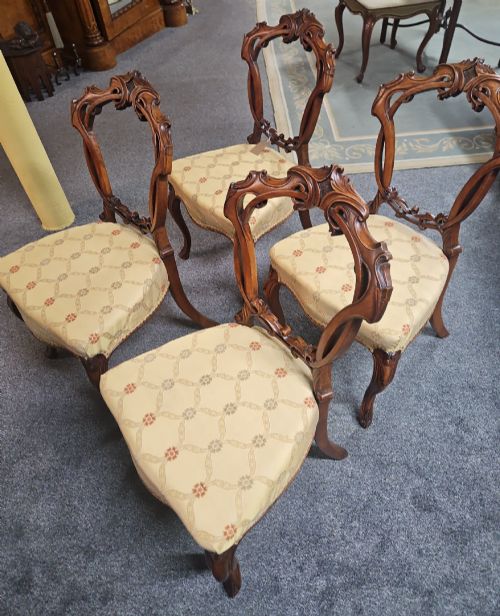
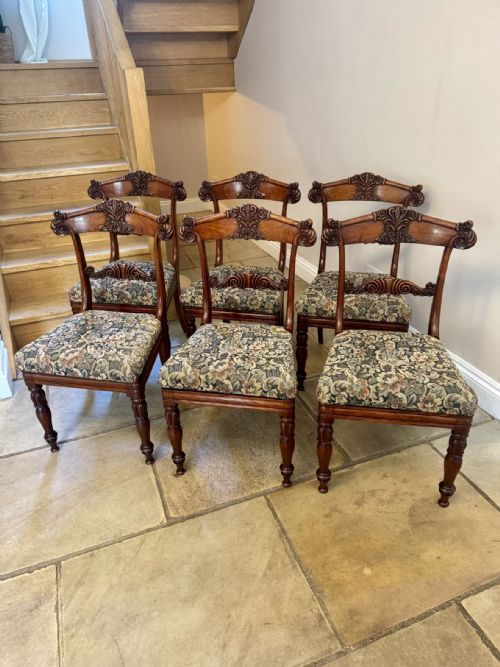


Nineteenth Century Parlour Chair
These nineteenth century parlour chair selections offer seating built to anchor formal rooms with rich timber and period upholstery.
Nineteenth Century Parlour Chair
A nineteenth century parlour chair comprises seating designed for formal reception rooms, drawing rooms, and private chambers during the Victorian and Regency eras. These pieces appear in forms ranging from single side chairs and nursing chairs to matching sets of dining chairs and complete salon suites.
The most common examples on this page are Victorian mahogany and rosewood balloon back chairs alongside Regency dining sets. Buyers also encounter walnut armchairs, French Empire salon suites, and Louis XVI style giltwood seating originating from the nineteenth century.
How they were made
Cabinetmakers utilised dense timbers such as mahogany, rosewood, and walnut to construct the frames of these chairs. These woods were carved, turned, and sometimes inlaid with marquetry or finished with gilding depending on the prevailing style.
Upholstery formed an integral part of production, utilising fabrics like velvet alongside traditional stuffing materials and brass elements. Frames often incorporated curved wooden backs, such as the classic balloon shape, joined to sturdy legs with traditional woodworking joints.
Nineteenth Century Parlour Chair Retail Price Guide 2026
Typical asking prices for nineteenth century parlour chair among the pieces listed under this phrase on Sellingantiques today, from the lower quarter to the upper quarter. They describe what is for sale here now, not the wider market.
Object forms on this page include dining chairs, side chairs, armchairs, nursing chairs, and complete salon suites.
What varies in quality
The distinction between standard commercial seating and the finest workshop output lies in the depth of timber carving and the selection of figured wood veneers. Superior pieces display crisp mouldings, balanced proportions, and substantial framing timbers that endure centuries of use.
Sets and suites demonstrate greater value when they survive intact without mismatched replacements or altered components. The refinement of decorative details, from French Empire brass mounts to subtle walnut turnings, dictates the standing of individual examples within the broader range.
Charles Roodhouse
The Nineteenth Century Parlour Chair Glossary
- Balloon back
- A chair back shaped in a continuous curve resembling a balloon, popular in the Victorian period. This form provides ergonomic support while presenting a graceful silhouette.
- Giltwood
- Timber treated with gold leaf or gold paint to create a brilliant decorative surface. This finish is frequently found on French Empire and Louis XVI style salon suites.
- Marquetry
- Decorative veneer work created by fitting pieces of various woods into a patterned background. Craftsmen applied this technique to elaborate cabinet furniture and parlour seating.
- Salon suite
- A matching set of upholstered seating comprising armchairs, side chairs, and settees designed for a formal drawing room. These grouped pieces share identical timber frames and upholstery fabric.
- Nursing chair
- A low-seated Victorian chair originally designed for women to sit comfortably while tending to infants or sewing. The reduced height distinguishes them from standard dining and parlour chairs.
Nineteenth Century Parlour Chair: Frequently Asked Questions
How do I identify a Victorian parlour chair?
Victorian parlour chairs generally feature dark dense timbers like walnut, mahogany, or rosewood combined with curved framing such as the characteristic balloon back. They often retain deep upholstery fabrics or show evidence of traditional springing.
Compare the timber grain and carving depth against standard catalogued pieces from the nineteenth century to gauge authenticity and period details.
Can I use these chairs for daily dining?
Many nineteenth century dining chairs and parlour sets remain structurally robust enough for regular seating around a table. Check the stability of the joints and the condition of the internal webbing before heavy daily use.
Rotating pieces within a set helps distribute wear evenly across antique timber frames and historical upholstery.
What is the difference between a side chair and an armchair?
Side chairs are built without armrests, designed to sit neatly against walls or around a dining table when not in use. Armchairs include structural arm supports, offering a more commanding presence suited to drawing rooms or corners of a parlour.
Both forms often share matching decorative vocabulary within larger salon suites and dining sets.
How do French styles differ from English Victorian pieces?
French Empire and Louis XVI style pieces frequently incorporate giltwood finishes, brass mounts, and architectural symmetry reflecting continental European taste. English Victorian and Regency chairs rely more heavily on exposed mahogany, rosewood, and walnut timber grains with fluid carved details.
Examining the underlying wood and ornamentation clarifies the geographic origin and stylistic influence of each chair.