




Nineteenth Century Open Bookcase
A nineteenth century open bookcase brings warmth to a room while holding volumes within reach.
Nineteenth Century Open Bookcase
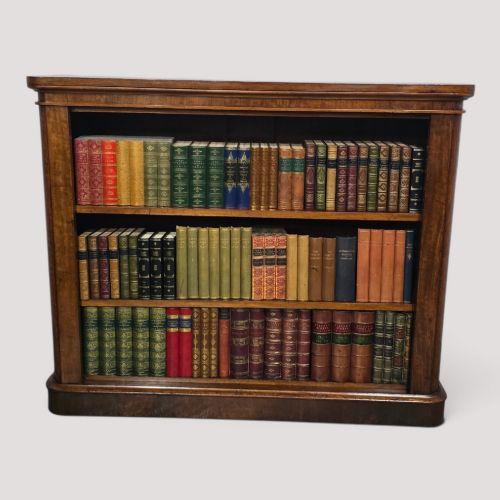
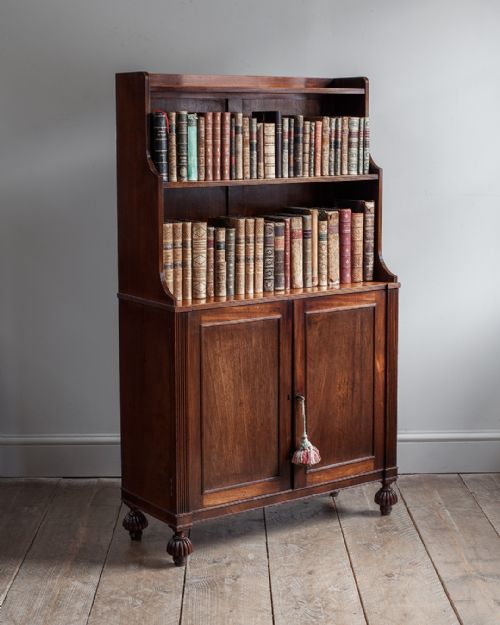
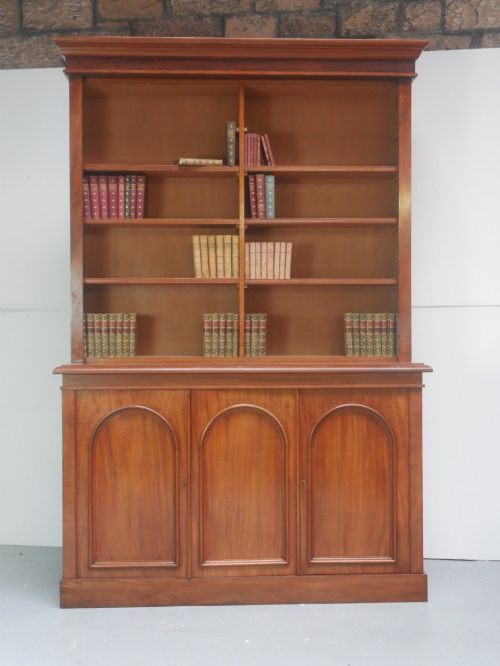
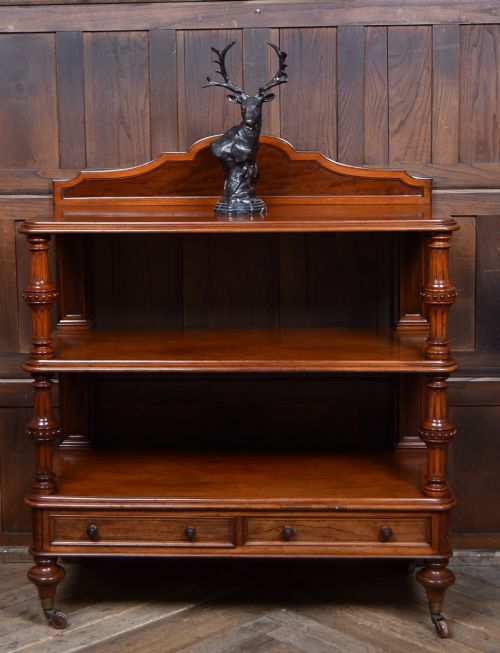
A nineteenth century open bookcase spans formal breakfront designs, dwarf proportions, and multi-tiered waterfall shelves. These pieces emerge across periods including Regency, Victorian, and William IV.
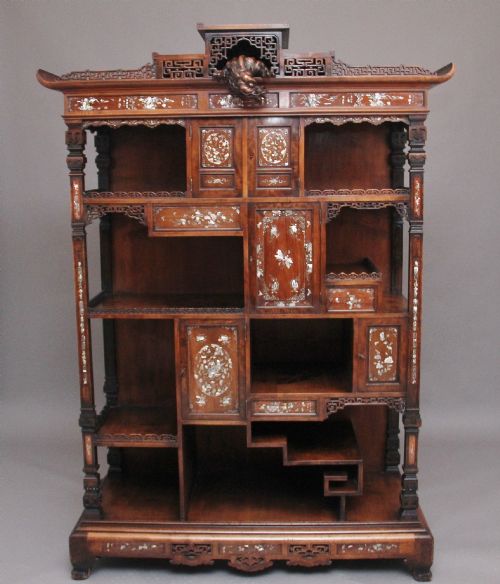
Makers construct these items primarily in mahogany and rosewood, alongside oak variants that display Jacobean or Gothic Revival styles. Smaller whatnot stands and specialised display cabinets appear frequently within this selection.
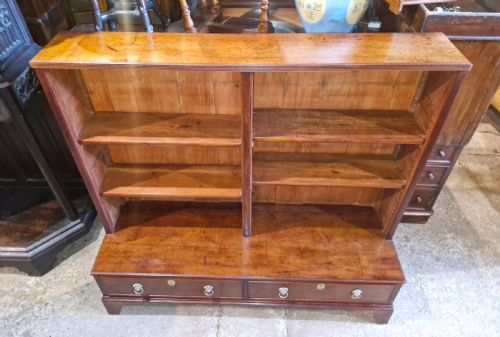
The assortment ranges from large freestanding library furniture to diminutive pieces designed for smaller chambers. Many incorporate adjustable shelving or lower cupboards alongside the primary open storage.
Materials and construction methods
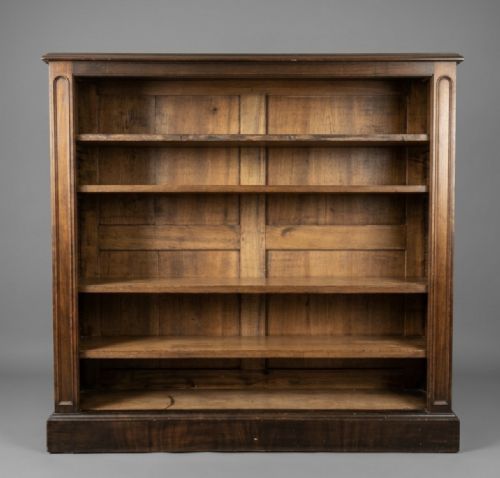
Cabinetmakers select dense hardwoods such as mahogany and rosewood, often applying flame veneers and contrasting cross banding. Workshops incorporate brass inlay, gilded details, and mother of pearl to enrich the timber surfaces.
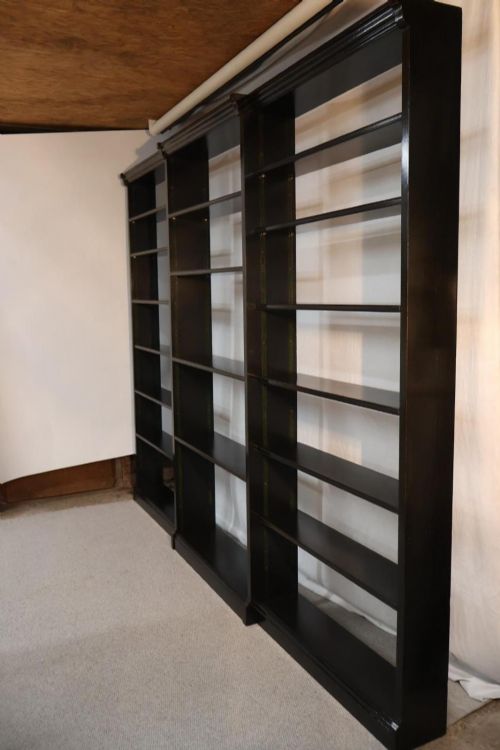
Structural elements include solid oak backs and sturdy shelving fitted into breakfront frameworks. Certain pieces feature ebonised finishes, simulated paint effects, or carved oak motifs associated with the Gothic Revival and Jacobean revival idioms.
Some nineteenth century rosewood bookcases hide leather dummy books behind their doors for secret charm.
Distinctions in craftsmanship
Quality rests upon the selection of timber figures, such as flame mahogany or richly grained rosewood, matched evenly across the facade. Superior examples exhibit precise boxwood stringing, refined brass inlay, and intact parcel gilt highlights.
Construction integrity shows in the weight of the solid timber, the execution of carved details like those found on oak panels, and the stability of multi-tiered structures like whatnot stands.
Victor Raulin
The Nineteenth Century Open Bookcase Glossary
- Waterfall bookcase
- A tiered shelving unit where each successive shelf steps back from the one below, often featuring an open front.
- Breakfront
- A cabinet or bookcase whose central section projects forward from the flanking outer sections.
- Dwarf bookcase
- A low-standing bookcase designed to sit beneath dado height, keeping books easily accessible.
- Whatnot
- A piece of freestanding furniture consisting of multiple open shelves for displaying small objects or books.
- Chiffonier
- A low cabinet featuring shelving on top, combining display space with enclosed storage.
Nineteenth Century Open Bookcase: Frequently Asked Questions
What periods do these bookcases cover?
These pieces date from the nineteenth century, encompassing Georgian, Regency, William IV, and Victorian eras.
Styles span from formal classical lines to Gothic Revival and the Aesthetic Movement.
Are the shelves adjustable?
Many examples feature adjustable open shelving, allowing storage for books of varying heights.
Some solid oak and mahogany editions retain traditional fixed shelf configurations.
What woods were commonly used?
Makers predominantly worked with mahogany and rosewood, frequently enhanced by decorative veneers.
Oak appears in Jacobean style and Gothic Revival pieces, alongside ebonised wood finishes.
How do waterfall bookcases differ?
Waterfall bookcases feature stepped tiers that recede progressively from bottom to top.
They provide open fronted storage in compact formats like dwarf or freestanding units.
Did these bookcases serve other uses?
Certain designs combine open shelves with lower cabinets, chiffonier elements, or leather dummy books.
Whatnot stands and display pieces additionally accommodate ornaments alongside bound volumes.